With Glad and Generous Hearts

Sabbath Day Thoughts — “With Glad and Generous Hearts” Acts 2:42-47

She was just so darned cute. Strawberry-blonde curls, big blue eyes in a rounded heart-shaped face, a smattering of freckles strewn across her cheeks—what my Grandmommie referred to as the “Angel’s Kisses.” Strangers stopped in the grocery to pinch her cheeks. The batting of those big blue eyes earned her sips of other’s drinks or bites of their snacks. You know the kind of kid I am talking about. Irresistible!

We shared a room for years during which time I was the Felix to her Oscar. I lined my toys up in careful rows while hers were scattered about in joyful chaos. Science experiments of old food and medicine cabinet concoctions moldered beneath her bed while my floor might harbor a lonely dust bunny. My crayons were never broken and always carefully packed away in their original box after coloring. Her crayons were often where she left them: scattered across the table, kicked beneath the radiator, broken to bits and added to those aforementioned science experiments. My clothes were folded and tucked away in drawers. Hers lingered in wrinkled piles on the floor until our mother insisted that they go in the hamper where they belonged.

We resolved our differences by angling an imaginary line down the center of the room. Her side was a marvel of mayhem. My side was proto-Presbyterian—everything decent and in order. I silently rejoiced when our family moved to a larger home when I was nine and I got my own room that doubled as the guestroom. It was easier to share with visiting kin than it was with my sister. But even in my new space there were signs of little fingers constantly touching my stuff. Clothes with mysterious stains, toys askew, doors ajar. Sharing is not easy.

Our reading from the Acts of the Apostles reveals radical acts of generosity and sharing in the early church. It wasn’t long after Pentecost. God had poured out the Holy Spirit upon timid disciples, and before you could say lickety-split, they were preaching to complete strangers in ways that changed minds and prompted belief. That Pentecost Spirit must have also inspired their life in community: warm fellowship, homes opened for bountiful meals, dedicated times of prayer in the Temple, and radical sharing—possessions sold and proceeds distributed for the good of all. It was a community so remarkable, so appealing, that everyone wanted a piece of that. Day by day, the Lord added to their number.

It didn’t stop there, either. If we keep reading Acts, we learn about the Cypriot rabbi Barnabas, Paul’s friend. He saw the need in Jerusalem and sold everything he owned—that’s right everything—and gave it to the apostles. Then there was Lydia, the first Greek to accept the gospel. No sooner had she been baptized than she insisted that Paul and his friends stay with her in Philippi, a long friendship that would help fund much of Paul’s outreach to the Gentiles. And then Paul himself, when he learned that there was a famine in Jerusalem, barnstormed through his Gentile churches seeking financial gifts to relieve the pressing hunger of their Jewish Christian kin. That’s a lot of sharing.

According to Bible scholar and historian Rita Halteman Finger, for the past 500 years, since the Reformation, western Christians have played down the nature of the early Christian community and the importance of sharing. It’s been argued that the community described in Acts is symbolic and idealized. They say these practices were likely just short-lived and limited. It’s really not practical in today’s context or with today’s people. After all, we are a sinful lot, prone to self-interest. We may want this sort of community, but let’s get real. It’s pretty pie in the sky. Matthew Skinner, who teaches at Luther Seminary, uncomfortably points out that it is tempting for us to write off today’s scripture reading, because if we take it seriously, then it will cost us, and we are not sure we want to pay that price.

In some ways, Matt Skinner is right. Unbridled generosity, heartfelt sharing, isn’t easy. Let’s face it, every dollar in the offering plate is a dollar not squirreled way in our 401k or IRA for our retirement. Sure, we want to help the poor, but we also want to make sure our generosity is merited and well-spent. Is the recipient someone who will turn their life around and pay it forward to another? Is this someone who is truly deserving, who works hard but has more month than money? Or, maybe we feel that we have worked hard for what we have and others can do what we did—they can pull themselves up by their own bootstraps, too. Or, maybe we are burned out on giving in a world where the enormity of need is simply overwhelming.

We long for the beloved community. We want to live with glad and generous hearts. But some days, it is a whole lot easier to draw an imaginary line down the center of the room. Some days, it is easier to look the other way or close our eyes to our neighbor’s need, trusting that someone else will step up. Some days, it is easier to say, “America first,” gut our support of USAID, and shrug off the consequences for our global neighbors, from closure of medical clinics, to the end of life-saving immunizations and medications, to the spread of AIDS and tuberculosis. We long for the beloved community, but sharing is hard. Help us, Jesus.

Maybe that early Christian community in the Acts of the Apostles can help us, too. Those glad and generous hearts were nurtured in a fellowship that devoted themselves to the apostles’ teaching, to being together, to the breaking of bread, and to the prayers. They listened to stories of the life that the apostles shared with Jesus. They meditated upon the Lord’s Sermon on the Mount, and the parables, and the great commandment to love God and neighbor. They shared favorite recipes and laughed around the table. They watched one another’s children and celebrated the little joys—first tooth, first steps, first words. They broke the bread and lifted the cup, remembering how Jesus had done this in the Last Supper. They prayed hard, going to the Temple at the appointed times, praying for one another’s concerns, and listening for the leading of the Holy Spirit.

In that fertile mix of fellowship and spirituality, they began to change. They considered the limitless love of God for them and saw that all they had and all they were was God’s gracious gift. They pondered the generous love of Jesus, who welcomed strangers, taught unlikely disciples, included women, blessed children, forgave sinners, and poured out his very life to reconcile them to God and one another. As they came to understand God’s limitless love for them, a love that was revealed so completely in Jesus, their hearts softened. Their hands opened. They lived with glad and generous hearts.

So perhaps we can prove wrong that 500-year history of biblical interpretation that argues that the beloved community of the Acts of the Apostles is just an idealized, pie-in-the-sky, rose-colored-glasses kind of place. Perhaps we can prove that the beloved community is real and here and now. We can begin by devoting ourselves to the apostles’ teachings—feasting on the Word in worship and through the weekly Bible Study. We can forge fellowship with shared meals and shared lives, whether we are enjoying coffee hour hospitality or digging into the best potluck in town on Committee Night, whether we are cooking up a hot dish for someone laid up with illness or knitting and crocheting prayer shawls with Heart and Hands, whether we are getting our hands dirty in the church garden or singing together in the choir. We can pray hard, sharing our joys and concerns in worship, interceding for others with the prayer chain, or sharing those simple everyday invitations like, “May I pray for you?”

As we engage the Word, delight in our fellowship, and fervently pray, one thing will become abundantly clear to us. We’ll know God’s never-ending and overflowing love for us. We’ll see our lives for what they are—a blessing, an opportunity, an anticipation of the Kingdom of God. We’ll know that when we do our little bit, we make that Kingdom tangible for a world that desperately needs a love that is never-ending and overflowing.

We can trust that as we live into that beloved community, we will be changed. We’ll have a fresh appreciation for all the Lord has done for us. We’ll stop drawing those imaginary dividing lines. We’ll stop attaching strings. We’ll see our abundance as a blessing for our lives—and a blessing for the lives of others. Our hearts will soften. Our hands will open. We’ll live with glad and generous hearts, forging a blessed and irresistible community for all. May it be so.

Resources

Scott Shauf. “Commentary on Acts 2:42-47” in Preaching This Week, May 11, 2014. Accessed online at https://www.workingpreacher.org/commentaries/revised-common-lectionary/fourth-sunday-of-easter/commentary-on-acts-242-47-4

Sharon Betsworth. “Commentary on Acts 2:42-47” in Preaching This Week, April 30, 2023. Accessed online at https://www.workingpreacher.org/commentaries/revised-common-lectionary/fourth-sunday-of-easter/commentary-on-acts-242-47-6

Jeremy Williams. “Commentary on Acts 2:42-47” in Preaching This Week, April 26, 2026. Accessed online at https://www.workingpreacher.org/commentaries/revised-common-lectionary/fourth-sunday-of-easter/commentary-on-acts-242-47-7

Matt Skinner. “Commentary on Acts 2:42-47” in Preaching This Week, April 13, 2008. Accessed online at https://www.workingpreacher.org/commentaries/revised-common-lectionary/fourth-sunday-of-easter/commentary-on-acts-242-47-2


Acts 2:42-47

42 They devoted themselves to the apostles’ teaching and fellowship, to the breaking of bread and the prayers. 43 Awe came upon everyone because many wonders and signs were being done through the apostles. 44 All who believed were together and had all things in common; 45 they would sell their possessions and goods and distribute the proceeds to all, as any had need. 46 Day by day, as they spent much time together in the temple, they broke bread at home and ate their food with glad and generous hearts, 47 praising God and having the goodwill of all the people. And day by day the Lord added to their number those who were being saved.



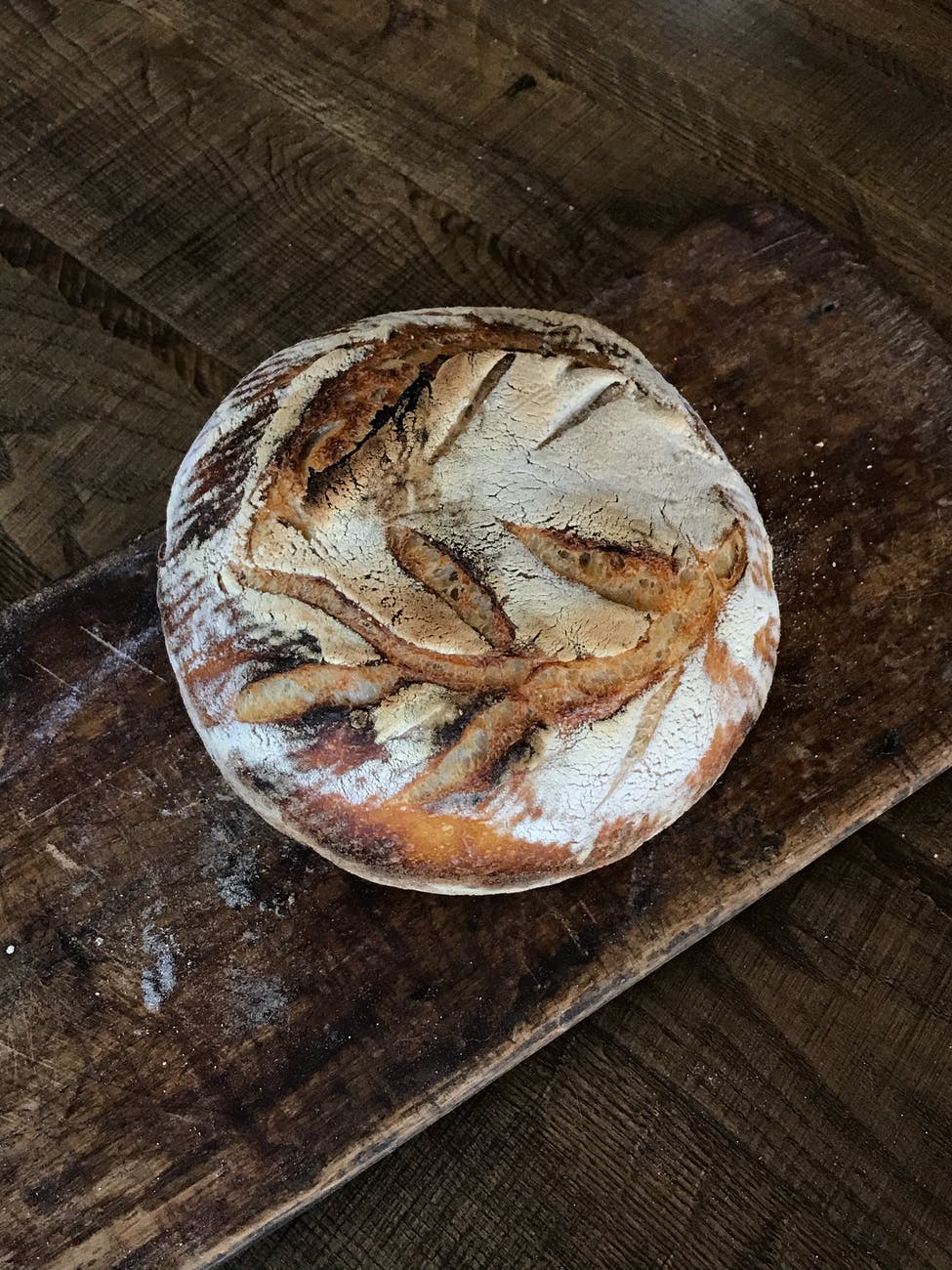
Photo by Engin Akyurt on Pexels.com

“To the Fig Tree on 9th and Christian”

Poem for a Tuesday — Ross Gay “To the Fig Tree on 9th and Christian”

Tumbling through the
city in my
mind without once
looking up
the racket in
the lugwork probably
rehearsing some
stupid thing I
said or did
some crime or
other the city they
say is a lonely
place until yes
the sound of sweeping
and a woman
yes with a
broom beneath
which you are now
too the canopy
of a fig its
arms pulling the
September sun to it
and she
has a hose too
and so works hard
rinsing and scrubbing
the walk
lest some poor sod
slip on the silk
of a fig
and break his hip
and not probably
reach over to gobble up
the perpetrator
the light catches
the veins in her hands
when I ask about
the tree they
flutter in the air and
she says take
as much as
you can
help me
so I load my
pockets and mouth
and she points
to the step-ladder against
the wall to
mean more but
I was without a
sack so my meager
plunder would have to
suffice and an old woman
whom gravity
was pulling into
the earth loosed one
from a low slung
branch and its eye
wept like hers
which she dabbed
with a kerchief as she
cleaved the fig with
what remained of her
teeth and soon there were
eight or nine
people gathered beneath
the tree looking into
it like a constellation pointing
do you see it
and I am tall and so
good for these things
and a bald man even
told me so
when I grabbed three
or four for
him reaching into the
giddy throngs of
wasps sugar
stoned which he only
pointed to smiling and
rubbing his stomach
I mean he was really rubbing his stomach
it was hot his
head shone while he
offered recipes to the
group using words which
I couldn’t understand and besides
I was a little
tipsy on the dance
of the velvety heart rolling
in my mouth
pulling me down and
down into the
oldest countries of my
body where I ate my first fig
from the hand of a man who escaped his country
by swimming through the night
and maybe
never said more than
five words to me
at once but gave me
figs and a man on his way
to work hops twice
to reach at last his
fig which he smiles at and calls
baby, c’mere baby,
he says and blows a kiss
to the tree which everyone knows
cannot grow this far north
being Mediterranean
and favoring the rocky, sun-baked soils
of Jordan and Sicily
but no one told the fig tree
or the immigrants
there is a way
the fig tree grows
in groves it wants,
it seems, to hold us,
yes I am anthropomorphizing
goddammit I have twice
in the last thirty seconds
rubbed my sweaty
forearm into someone else’s
sweaty shoulder
gleeful eating out of each other’s hands
on Christian St.
in Philadelphia a city like most
which has murdered its own
people
this is true
we are feeding each other
from a tree
at the corner of Christian and 9th
strangers maybe
never again.

in The American Poetry Review, vol. 42, no. 3.

Poet, professor, and essayist Ross Gay is all about joy. His four books of poetry include Be Holding, winner of the PEN American Literary Jean Stein Award; and Catalog of Unabashed Gratitude, winner of the 2015 National Book Critics Circle Award and the 2016 Kingsley Tufts Poetry Award. His first collection of essays – The Book of Delights – was a New York Times bestseller. His current work Inciting Joy is a Publisher’s Weekly best book of 2022. Editor John Freeman says Ross’s work, “throws off so much light, I’ve often wondered if it was powered by a superior energy source.” Ross Gay teaches at Indiana University, where he gives out lots of “A” grades and invites students to wonder with him.

Photo by Zaid Ahmed on Pexels.com

Greed

Sabbath Day Thoughts — “Greed” John 12:1-8

Monsignor Charles Pope leads a weekly Bible Study at the White House for President Biden.  In more than thirty years of parish ministry, Charles Pope has spent a lot of time in the confessional, hearing sins and prescribing penance.  Father Pope says that greed is the most under-reported of sins.  We tend to think that everyone else is greedy, but we never think that we make too much money or have too much stuff.  Faith leaders in the Protestant tradition say the same thing.  Rev. Tim Keller, the well-known author and longtime pastor of Redeemer Presbyterian Church in Manhattan, relates that he once led a weekly Bible Study on the Seven Deadly Sins.  The week that the study was least attended was the one when he taught about greed.  Keller says, “Maybe the best sign of greed is that you aren’t willing to even admit the possibility that you are enslaved to it.”

Greed is the artificial, rapacious desire for and pursuit of wealth and possessions.  Two of the Ten Commandments speak to greed: the prohibitions on stealing and covetousness.  In the gospels, greed is the sin that Jesus most frequently spoke against, from his warning to tax collectors against collecting more than authorized (Lk 3:13) to his Parable of the Rich Fool, which reminds us that we can’t take it with us and we are truly fools if our worldly goods are more important than our relationship with God (Lk 12:13-21). Indeed, Jesus saw wealth as an idol, cautioning that we cannot serve God and Mammon.

Throughout the Christian tradition, we have been warned about the dangers of greed.  Thomas Aquinas believed that greed is a three-fold sin.  Greed is a sin against neighbor because one man’s riches cannot over-bound without another man being in need.  Greed is a sin against the self because our “affections are disordered” by loving and delighting in material things.  And greed is a sin against God because we scorn the eternal for our love of the temporal.  Dante’s Inferno places greedy souls in the fourth Circle of Hell, where misers, hoarders, and spendthrifts eternally battle one another.  Martin Luther was especially concerned with greed, calling those who are avaricious “money gluttons.”  According to Luther, the greedy man “would have the whole world perish of hunger and thirst, misery and want, so far as in him lies, so that he may have all to himself, and everyone may receive from him as from God, and be his serfs forever.”

Our contemporary understanding of greed takes into account its destructive nature, as well as its acceptance.  Psychologist Erich Fromm saw greed as “a bottomless pit which exhausts the person in an endless effort to satisfy the need without ever reaching satisfaction.”  We may be blind to our own greed and the greed of others, thanks to our cultural context.  We are constantly barraged by marketing that tells us that love is revealed in the gift of a diamond that is forever or a brand-new car with a big bow on top delivered on Christmas morning.  Who doesn’t want to be loving?  Only 2% of Americans think we are wealthy “upper class” people, but on a world stage, we are wealthy beyond the imagining of most. 

We also tend to confuse our wants with our needs, and so the more we earn, the more we spend.  Not many of us are like billionaire Warren Buffet who still lives in the same home in Omaha that he bought in 1958.  Instead, more money means more expense, whether we are socking it away in our retirement nest egg, driving a better car, or moving into that nicer neighborhood.  Our growing affluence isn’t necessarily good for others.  A shocking 2008 study discovered the radical generosity of the poor.  Researchers found that 60% of Americans who live in poverty give their money and time to help others while only 32% of people who live above the poverty line are willing to share.  Author, editor, and theologian Brad Littlejohn teaches that greed is spiritually dangerous because it leads to a false sense of security and an inward-focused self-absorption that allows us to ignore the needs of others.

Our biblical paradigm for greed is Judas.  In today’s gospel reading, the Lord would soon be arrested, tortured, and executed.  But that night, Mary of Bethany did something beautiful.  She anointed Jesus with precious oil of nard, all the way from the Himalayas, purchased at great price.  It was a decadent act of generous love. The indignant Judas denounced Mary before the disciples.  Although he claimed he was advocating on behalf of the poor, Luke tells us that Judas was greedy.  The money spent on that costly anointing could have lined his pockets. Within the week, Judas would betray Jesus for thirty pieces of silver.  He is the poster child for greed, alienated from his better self, robbing the poor, rejecting the love of Christ, and denying the authority of God.

We’ll be relieved to hear that the remedy for greed is not poverty.  It’s generosity, the virtue of being liberal in giving.  Jesus expected his followers to be generous.  He instructed them to sell their possessions and give to the poor (Lk 12:33-34).  Aristotle taught that generosity is the noble and appropriate mean between two opposing extremes—stinginess and wastefulness. Aquinas saw generosity as a dimension of agape (charitas), the generous love that Jesus taught us, the love that always gives in the best interest of the other.  Martin Luther encouraged generosity, saying, “Possessions belong in your hands, not in your heart.”

Our biblical example of generosity is the poor widow. You may remember that during Holy Week, Jesus took a seat in the Temple to watch folks deposit their offering in the treasury.  Many costly gifts were given, yet the gift that excited Jesus the most was two small coins (copper mites or leptons), given by an impoverished widow.  The Lord praised her generosity, because it was an offering of all she had and all she was—her whole self (Lk 21:1-4).  We remember that Jesus was likewise unfailingly generous, sharing freely of himself to heal, help, and feed his neighbors.  Truly, Holy Week reminds us that Jesus made the greatest gift of all, laying down his life in the ultimate object lesson of God’s generous love for us.

The bad news is that Americans are not as generous as we like to think.  2/3 of us believe that it is important to be generous, yet about half of us give nothing at all to charity.  Only 17% of Americans give habitually, building it into their budget.  Only 16% of Americans make generosity part of their long-term plans, like estate planning and legacy gifts. The definitive survey on Christian giving by sociologists Smith, Emerson, and Herzog learned that adults who do not witness generosity as children, do not practice generosity as grown-ups.  They also found that if American Christians gave in keeping with their income, they would give between $46-85 billion more each year—a generosity that could forever change our communities, where churches remain at the heart of helping vulnerable neighbors and transforming lives.

The good news is that generosity can be learned, cultivated, and grown.  Sociologists point out that being consistently generous involves planning.  It’s a habit that we can intentionally build into busy lives.  This could involve making a formal financial pledge to the charitable concerns that we wish to support, or it could also look like putting dates for volunteering on the calendar.  Studies have found that giving, both in treasure and time, grows when it is routinized and becomes a habit. 

The social scientists say that we are in the right place to become more generous: church.  Local churches are consistent “climates of giving,” places where financial gifts meet known community needs. We get personally involved in ministries, missions, and volunteer opportunities that reinforce the “virtuous cycle” of generosity.  We find that being generous is rewarding because we see the difference that we make in the world, and we become part of a supportive, giving-oriented web of relationships that grows with time.  Within churches, our teamwork builds caring, friendship, and generosity.

Generosity is also grown when we practice it in families and teach it to our children and grandchildren.  Generous parents make for generous kids.  The family that talks about the importance of generosity and practices it together by using those fish banks for OGHS or participating in the Souper Bowl of Caring or walking together in the CROP Walk, these families create a home environment where generosity becomes part of our mental make-up.  Those generous kids grow up to believe that they can and will make a caring difference that can transform the world through their personal generosity.

When we get the better of our greed by growing our generosity, not only does the world become a better and more equitable place, we also return to right relationship with God and with neighbor.  Prof. Will Mari of Louisiana State University, reminds us that it’s not just our stuff that is not our own, it’s our whole lives.  Truly, all we have and all we are is God’s gracious gift. We find ultimate meaning when we devote ourselves to a generosity and service that is “good, godly, and healthy.” Generosity poises us to live the life that God would have us live — open to what may come.  C.S. Lewis in a letter to his dear friend Arthur Greeves in Dec. 1943 wrote, “The great thing about life is to stop regarding all the unpleasant things [that come along] as interruptions of life.  The truth is that what I call interruptions are real life—the life God is sending me day by day.” What is the life that God is sending to us?

God is so generous to us, my friends.  May we live with open hands, open hearts, and open hours, sharing generously of ourselves to the glory of God and for the good of our neighbor.

Resources:

Will Mari. “The Only Bright Spot in American Giving” in Christianity Today, Nov. 30, 2017. Accessed online at christianitytoday.com.

Marika Suval. “Just How Generous Are Americans Really?” on Wisconsin Public Radio, March 9, 2016. Accessed online at www.wpr.org/listen/892341

W. Bradford Littlejohn. “The 7 Deadly Sins in a Digital Age: 3. Greed” in Reformation 21, Nov. 24, 2014. Accessed online at www.reformation21.org.

Charles Pope. “The Seven Deadly Sins: Greed” in Community in Mission, April 2, 2019. Accessed online at blog.adw.org

Doug Ponder. “Seven Deadly Sins: Greed,” Jan. 14, 2016. Accessed online at www.remnantresource.org.


John 12:1-8

12 Six days before the Passover Jesus came to Bethany, the home of Lazarus, whom he had raised from the dead. 2 There they gave a dinner for him. Martha served, and Lazarus was one of those at the table with him. 3 Mary took a pound of costly perfume made of pure nard, anointed Jesus’ feet, and wiped them with her hair. The house was filled with the fragrance of the perfume. 4 But Judas Iscariot, one of his disciples (the one who was about to betray him), said, 5 “Why was this perfume not sold for three hundred denarii and the money given to the poor?” 6 (He said this not because he cared about the poor, but because he was a thief; he kept the common purse and used to steal what was put into it.) 7 Jesus said, “Leave her alone. She bought it so that she might keep it for the day of my burial. 8 You always have the poor with you, but you do not always have me.”


Photo by Engin Akyurt on Pexels.com

Unfailing

Sabbath Day Thoughts – 1 Kings 17:7-15

He toddled after me.  Bare feet kicked pebbles and stirred small storms of dust.  He was practicing his words.  “Deshe,” he said, handing over a tuft of dry grass, brittle with drought.  I added the grass to my basket. 

Giza etz?” he said tentatively, holding up a stick, just the right size for kindling.  Into the basket it went. 

Perach.” He smiled shyly, extending a tiny wilted bouquet of chamomile, clenched in his small fist. 

Such a good boy!  So generous!  I tucked the flowers behind my ear and scooped him up, holding him next to my heart.  I could feel his little ribs beneath his robe and see the delicate throb of a vein, pulsing at his temple.

It hadn’t always been like this.  My husband, like his father and his father’s father, had gone to sea.  We Phoenicians are a seafaring people, weaving a vast web of trade that spans the Great Sea from Sidon to Cyrene, Rome, Malta, and beyond.  We pluck fish from the ocean depths, harvest rare pearls from the Gulf of Arabia, and hew great ships from the cedars of Lebanon.  For men, it is an adventurous but dangerous life, always at the mercy of wind and wave.  For women, it brings loneliness.  Always the siren call of the water pulls our men back.  Always, there is the waiting.

They said my husband was killed by a lightning strike.  First the rigging caught, then the weathered decking.  When the fire reached the amphorae of olive oil in the hull, it launched a ball of fire into the sky, worthy of the Great Lighthouse of Alexandria.  I don’t know if he drowned or if he burned, but I do know the tight cage of fear that had held my heart ever since.

Our son was weeks old.  There was no patriarch to take us in, no kindly kinsman to offer protection.  In Zarephath, my neighbors made the sign of the evil eye behind my back, worried that my misfortune would rub off on them.  The large amphorae of flour, oil, and salt fish that my husband had left behind slowly emptied, despite every economy.  I had grown slight with hunger and my milk had eventually failed.

I was collecting wood for a final fire, a last loaf to be baked, a little oil to be poured out.  My child, perched on my hip, looked at me with enormous eyes set in wan cheeks that had once been chubby.  As my eyes filled with tears, he demanded to be put down, little arms pushing and legs kicking.  With both feet on the ground, he stretched up a hand for me to hold. 

Ezra, Ama!” (Help, Mama!) he said.  He tugged on my hand, pulling me homeward.  Help?  Whose help?

We saw him outside the city gate.  He looked like he had been sleeping rough for a long time.  His tunic was rumpled, the armpits stained with rings of sweat.  His beard was enormous and wild.  Bits of straw clung to his shaggy hair.  He held a long, sturdy, wooden staff, the sign of a patriarch or a . . .

Navi!” (prophet), my little boy said.  His hands clapped with delight and chuckles swelled his small, empty belly.

Hearing my child, the prophet turned with a sharp look, taking in our skinny forms.  “Shalom!” he greeted us, “Please, could I trouble you for some water?”

All the wadis had gone dry with drought, but within the walls of Zarephath, our deep well remained true.  It was a simple thing to fulfill his request, but as I nodded and turned to do so, he stopped me.

“And please, a little bread with that?  Surely, you have a little something to share with Yahweh’s messenger.”

I thought of the handful of flour and trickle of oil at the bottom of my jars, and the fear that clenched my heart held even tighter.  Of all the people in Zarephath to ask for help, why choose us?  Our poverty was obvious. 

Lechem?” (bread), my son said, pointing to the prophet.

I sighed.  “You do not know what you ask, my friend.  My cupboard is bare.  We are headed home to eat our final few morsels and call it quits.”

But the prophet wouldn’t take my no for an answer.  “Please!” he insisted, sounding both compassionate and authoritative, “Don’t be afraid.  Make me a small loaf, bring it here; then, bake for yourself and the boy.  Yahweh will bless you!”

It made no sense.  Why would I ever consider such a thing at the expense of my child?  Yet, my son seemed to have reached a different conclusion.

Lechem, AmaLechem!” (Bread, Mama!  Bread!).  He stomped his feet, pointed at the prophet, and pulled me toward home.

It was against my better judgment.  I stirred the coals from last night’s fire.  I fed it with tufts of grass, which caught with a soft chuff.  I carefully added our sticks and watched as tongues of flame leapt up.  I scooped out most of the last of our meal, mixed it with water, and kneaded it into a smooth cake.  I stretched it thin, rubbed it with the last of the oil and slapped it onto the baking stone, now so hot that it sizzled beneath the oiled dough.  The fragrance of baking bread made our stomachs roar as the little loaf puffed and turned golden.  With skilled fingers, I plucked an edge and flipped it over, revealing a well-browned bottom.

“What am I doing?” I asked my son.  His cheeks had pinked with the fire’s warmth.

Lechem, Ama!  Lechem!” he repeated, pointing back to the city gate.

I wrapped the loaf in a cloth and slipped it into my basket.  I filled a cup with water and stood swaying in the doorway, basket in one hand, cup in the other.  “Stay or go?” I wondered.  My son made the decision for me, stomping off on his short legs to the city gate where the prophet waited.  I followed, questioning my every step.

I don’t know what I was expecting.  A choir of angels?  The peal of thunder?  A heavenly affirmation?  What I got when we found the prophet, waiting outside the gate, was a thank you.  “Now, go and do the same thing for yourself,” the prophet instructed.  He dismissed us with a nod, said his blessing, and began to devour his loaf with grimy hands.

I picked up my boy, balancing him on my hip as I walked slowly home.  I had heard that Yahweh, the great God of Israel, is a generous god with unfailing love for the lost and the poor.  Yet here we were, the widow, the orphan, and a stranger, clinging to life by our fingernails, preparing to eat our last bread before returning to our ancestors.  Maybe my neighbors were right.  Maybe the gods Baal and Asherah had cursed me.  Maybe I deserved what was surely coming in the days ahead.

By now, we were home.  I set my child down and pushed the door open.  He walked over to the great flour jar, taller than he was, and patted it with both hands.  “Lechem, AmaLechem?”  He sounded hopeful.

“Yes, my love, bread.” I answered.  I tied an apron on and pushed back my sleeves.  I crossed the floor and pried the heavy clay top off the amphora. 

Below, my son was stamping his feet.  “Lechem, lechem, lechem!”

I was so shocked by what I saw within that I dropped the clay top.  It hit the hard earthen floor with a dull thud and split in two.  There, within the amphora, finely milled flour rose all the way to the top.  I plunged my hands in, and felt the silky dryness slipping through my fingers.

My son had moved to the oil jar.  Again, he placed his palms on the rounded sides.  He patted with his small hands and sang in a tattoo rhythm, “Shemen zayitShemen zayit!” (Olive oil! Olive oil!).

I pried off the top and gasped.  The oil jar was filled to the brim, the first pressing, fragrant, clear, and golden green.  A few bubbles rose to the top and rested on the surface, as if freshly filled.  My boy was laughing now, spinning with childish delight until he plopped down onto his bottom with a breathless thud.

I sat down next to my son, dizzy with hunger and mystery.  Perhaps Baal and Asherah had cursed me.  But Yahweh, the holy and almighty One of Israel, had blessed me.  In an instant, the certainty of our death had changed to the promise of life.  My heart felt funny, felt wild and free, felt like the cage that had bound it since the death of my husband had been sprung.  I put my hands to my head to stop the world from spinning.  As my son crawled into my lap, I laughed and cried until I felt empty and filled with a peace that I had not known since my husband’s death.

Perhaps it was the generosity of Yahweh that made me do it.  When God is so good, how can you keep it to yourself?  I picked up my son and went back to the city gate where we found the prophet dozing in the sun.  Crumbs from my little loaf dotted his beard.  A smear of oil had been wiped on the front of his tunic. 

I put down my boy and he nudged the prophet’s sandal with his little bare foot.  “Navi?”  I asked.

He opened an expectant eye.  “Call me Elijah.”

“Elijah, my son and I would like you to stay with us.  Will you come?”  The boy smiled.  He reached out one hand to the prophet and with the other pointed home.

The prophet rose and brushed the crumbs from his beard.  He balanced his staff against the city wall then reached down to pick up my son, who settled comfortably into his arms.  The Prophet Elijah smiled, “We thought you would never ask.”


Photo by Marina Leonova on Pexels.com