The Rock of Refuge

Sabbath Day Thoughts — “The Rock of Refuge” Psalm 31:1-5, 15-16

There are 120 million people worldwide in need of refuge this morning. Some are refugees, forced to leave their homeland to seek the safety of another nation. Some are internally displaced people, still within their homeland but driven from their homes. Persecution, war, ethnic violence, human rights abuses, natural disaster, famine, and civil unrest ripple across the planet. One in sixty-seven world citizens needs a rock of refuge.

Hugo Carrasco is a Dreamer. His parents brought him from Mexico to the United States when he was a child. He didn’t know he was undocumented until high school when he wanted to get a driver’s license. Hugo volunteered for Young Life as a mentor for at-risk youth while working for a restaurant. He married Leslie, whom he met through church. They have two children. One day, he was arrested in an ICE raid. He learned that although he is married to a US citizen, he isn’t eligible for citizenship because he is “illegal,” and because he was arrested on a work violation, he is now ineligible for the work papers and path to citizenship offered by DACA—the Deferred Action for Childhood Arrivals program. Hugo needs a rock of refuge.

As college students in Venezuela, Mariana and Antonio took to the streets to protest the oppressive regime of Nicolas Maduro. When the military intervened, the protest descended into violence. As Mariana sought refuge, a man got out of his car and held a gun to her head. She kept running. Four years later, while visiting Venezuelan friends in Miami, Mariana and Antonio learned that they were eligible for Temporary Protected Status (TPS). The status was developed in 1990 as a way to protect individuals fleeing armed conflict, natural disasters, or other unlivable conditions in their home countries. Mariana and Antonio were awarded TPS. They moved to Miami and embarked on successful careers in finance until last April when the current administration cancelled protected status for Venezuelans. They need a rock of refuge.

Marceline Washikala is a third-generation refugee. Her family fled Congo for Tanzania when her grandfather was killed in the first civil war. Opportunities for school in refugee camps are limited, so Marceline only completed the third grade. When she was eighteen, the family was moved to Oregon for resettlement. Although her younger siblings were able to enroll in public school. Marceline was told she was too old and had too little education to join them. She had finally found a home, but adapting to a new culture and new language was hard.  Marceline needed a rock of refuge.

We are not refugees seeking a new home in the United States, yet I think we all know how it feels to need safety, strength, shelter, protection, and the promise of opportunity. Our declining health or the medical crisis of a loved one leaves us longing for a rock of refuge. The uncertainty of our personal economics, from the soaring cost of living to the dwindling of our retirement savings, leaves us longing for a rock of refuge. The fractures in our civil society which pit neighbor against neighbor, and the bitter differences that alienate us from our families leave us longing for a rock of refuge. We can pray along with the psalmist, “In you, O Lord, I seek refuge; do not let me ever be put to shame; in your righteousness deliver me. Incline your ear to me; rescue me speedily. Be a rock of refuge for me, a strong fortress to save me.”

Psalm 31 is attributed to King David. He needed refuge. Long before he rose to kingship in Israel, David was persecuted by powerful political enemies. As a young shepherd boy, David’s ability to soothe King Saul with music and his daring defeat of the giant Goliath landed him a spot in the royal court. Yet as David’s reputation as a leader on and off the battlefield grew, so did the jealousy of the king. In fact, David was forced into exile after Saul first tried to kill him and then attempted to arrest him on charges of sedition. David spent all of his young adult life on the run. Always one step ahead of Saul’s death squads, he sheltered with the King of Moab, sojourned with Philistine enemies in Gath, and lived in a cave in the harsh and unforgiving landscape of the Judean Wilderness.

David believed that God alone was his rock of refuge. In the seven short verses of today’s reading, David described God as the one who will not let us be disgraced, who saves us, listens to us, and rescues us. God leads and guides, frees us from the snares of enemies, redeems us, delivers us, shows us favor, and saves us with steadfast love. Who doesn’t need that? David’s word choice is telling. In Psalm 31, he repeatedly uses the Hebrew verb, ḥāsâ. It has a double meaning. It means to seek refuge or flee for protection, and it also means to put trust in someone, to confide in someone, to hope in someone. Despite his adversity, David knew that God alone was the one he could trust and hope in because God is our refuge. God had chosen him as a shepherd boy. God had battled with him against the mighty Goliath. God would deliver him from the persecution of Saul. God is a refuge because God’s love is faithful, trustworthy, and steadfast.

A number of years ago, one of my New Testament professors, David Cortez-Fuentes, pointed out that David wasn’t the only one to pray with Psalm 31. He called my attention to Jesus’ words from the cross in Luke 23:46. Crying out with a loud voice, Jesus said the words of the psalmist, “Father, into your hands I commend my spirit.” Having said this, he breathed his last. Jesus’ choice to pray with Psalm 31, even as he suffered and died, reflects his reliance on God as a refuge, his confidence in God’s love.

Jesus’ dying prayer reminds us that God is both refuge and refugee. In Jesus, God knows what it is to feel as we do—vulnerable and at-risk, embattled and under-supported, alienated and persecuted. In the midst of our powerlessness, we need a rock of refuge. Can we trust—as David did and as Jesus did—that God is both our promise of refuge and our hope for the future? The kingship awaited David. A resurrection miracle awaited Jesus. May we, too, dare to trust that our rock of refuge has goodness and mercy in store for us.

Perhaps we can even dare to share that trust with those who need it most right now, our vulnerable and embattled neighbors who desperately need the hope that is found in our rock of refuge. Hugo Carrasco, that dreamer who was scooped up in an ICE raid in Maricopa County Arizona, had strong support from his family, church, and Young Life community. He found a good lawyer who was able to have him released from detention after three months, but he is still “illegal.” His kids are teens now, but the immigration crack down underway across the nation leaves them in fear that their father could be taken away. Like others who were brought to this country illegally as children, Hugo lives with the constant threat of deportation to a land that is not his home. He is praying to his rock of refuge.

Mariana and Antonio, who lost their Temporary Protected Status as Venezuelans, face an uncertain future. Mariana says, “It has given me anxiety, a lot of sadness, a feeling of injustice.” Any day now, she or Antonio could be taken into custody and sent back to Venezuela where, although Nicolas Maduro is no longer in power, the government remains unchanged and the persecutors who once held a gun to her head have never faced consequences or checks. Mariana says, “I feel like my life is on hold.” She is praying to her rock of refuge.

Marceline Washikala, that Congolese refugee in Oregon, found an advocate in the school system who fought to enroll her in the 12th grade at North Salem High School where she had been denied status. She graduated and subsequently earned a degree in business administration from the local community college. She has helped her mother open a market for African food. She also works for the school district as a language specialist for families who speak Swahili. She dreams of getting a four-year degree and becoming a social worker, who can assist refugees and immigrants, like her. Marceline attends the First Free Methodist Church and directs the Uhuru Youth Choir, which is comprised of people from Congo, Tanzania, Mozambique, Egypt, and Kenya. They sing gospel music in various languages at churches, festivals, and hospitals in the Salem area. Marceline has finally found safety. She has finally found home. Marceline sings along with the psalmist, a song of praise for her rock of refuge. Amen.

Resources

–. “Conflict Between the Houses of David and Saul.” Bible Hub. https://biblehub.com/topical/c/conflict_between_the_houses_of_david_and_saul.htm

Brown-Driver-Briggs Lexicon. STRONGS H2620. “ḥāsâ.” Accessed online at https://www.blueletterbible.org/lexicon/h2620/rsv/wlc/0-1/

Hugo Carrasco. “I live in fear of deportation: My life as an undocumented worker” in Salon, May 17, 2014. Accessed online at https://www.salon.com/2014/05/17/i_live_in_fear_of_deportation_my_life_as_an_undocumented_worker/

Grace Berry and Abigail Wilt. “‘It is complete chaos’: TPS recipients search for solutions after protections end under Trump” in News 21, Sept. 4, 2025. Accessed online at https://upheaval.news21.com/stories/it-is-complete-chaos-temporary-protected-status-recipients-search-for-solutions-after-the-trump-administration-ends-protections/

Zachary Kasper. “Just Waiting for a Miracle” in The Immigrant Story, April 6, 2024. Accessed online at https://theimmigrantstory.org/waiting-for-a-miracle/

Danish Refugee Council. “How many refugees are there in the world?” Accessed online at https://help.refugees.now/en/news/how-many-refugees-are-there-in-the-world/

Joel LeMon. “Commentary on Psalm 31” in Preaching This Week, May 14, 2017. Accessed online at https://www.workingpreacher.org/commentaries/revised-common-lectionary/fifth-sunday-of-easter/commentary-on-psalm-311-5-15-16-3

J. Clinton McCann, Jr. “Commentary on Psalm 31” in Preaching This Week, May 18, 2014. Accessed online at https://www.workingpreacher.org/commentaries/revised-common-lectionary/fifth-sunday-of-easter/commentary-on-psalm-311-5-15-16-4

John E. White. “Homiletical Perspective on Psalm 31” in Feasting on the Word, Year A, vol. 2. Westminster John Knox Press, 2010.


Psalm 31:1-5, 15-16

To the leader. A Psalm of David.

In you, O Lord, I seek refuge;
    do not let me ever be put to shame;
    in your righteousness deliver me.
Incline your ear to me;
    rescue me speedily.
Be a rock of refuge for me,
    a strong fortress to save me.

You are indeed my rock and my fortress;
    for your name’s sake lead me and guide me;
take me out of the net that is hidden for me,
    for you are my refuge.
Into your hand I commit my spirit;
    you have redeemed me, O Lord, faithful God.

15 My times are in your hand;
    deliver me from the hand of my enemies and persecutors.
16 Let your face shine upon your servant;
    save me in your steadfast love.
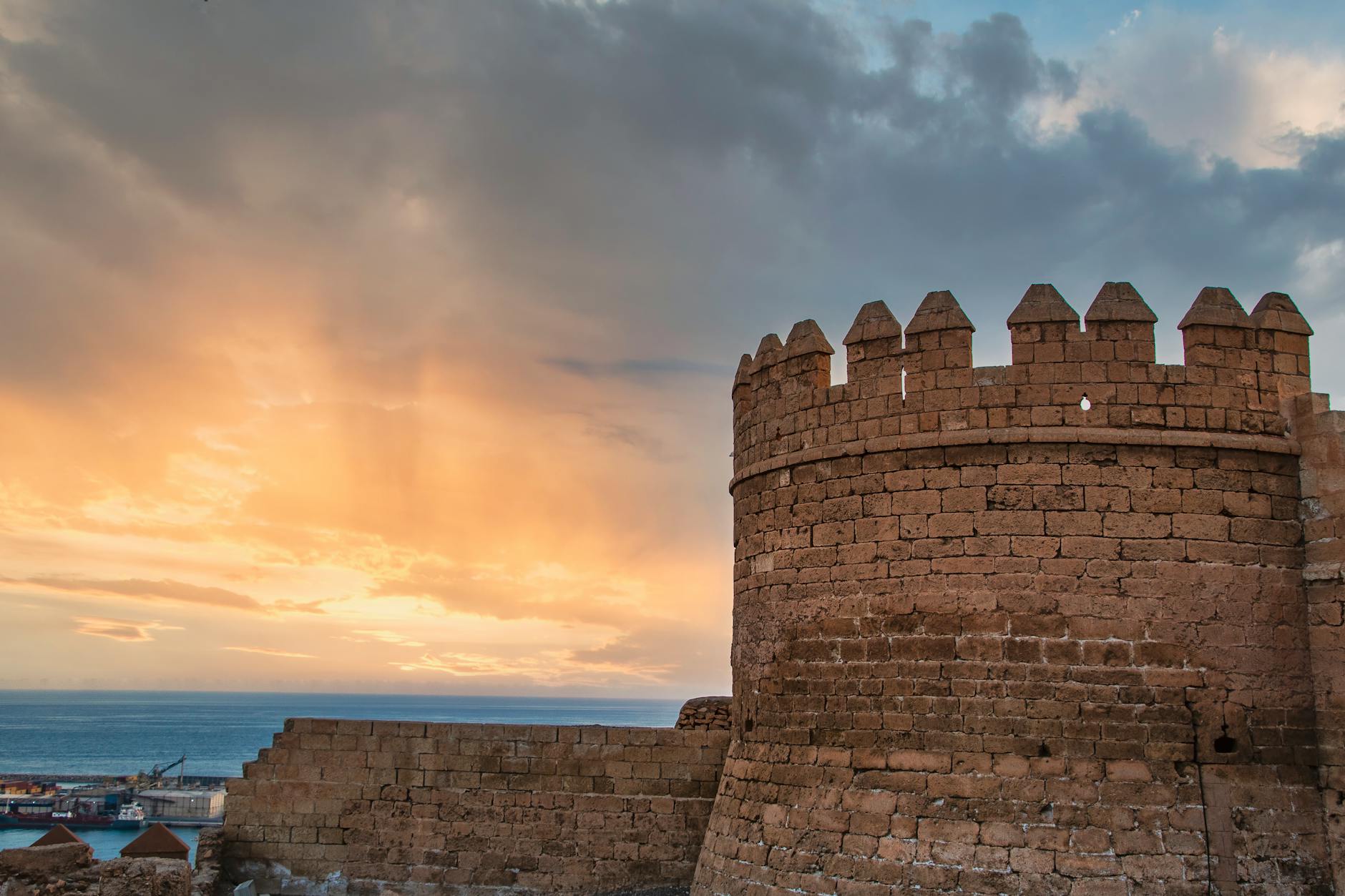
Photo by Enrique on Pexels.com

Have Mercy

Sabbath Day Thoughts — “Have Mercy” Luke 10:25-37

It was a Sunday morning and Rev. Stephen Farris was late. He was filling in at a small church for a few months, and it was an icy day, not unlike today. By the time he got his car defrosted, he knew he was cutting it close. Wouldn’t you know that he hit every red light along the way? At the biggest intersection, while he sat anxiously waiting for the light to change, an older man, leaning on a cane, started to slowly cross the road in front of him. As the crosswalk light turned amber and then red, the older man tried to hurry. His cane slipped on a patch of ice and he fell, heavily.

In the split second that it took Pastor Stephen to put the car in park and reach for the door to get out, many thoughts flashed through his mind. He thought about the time it would take to help the man, call the rescue squad, and ensure he got to safety. He thought about the disappointment of his parishioners, who would sit in the pews waiting and wondering. Another thought crossed his mind. He could just drive away. He would make it to church in time to start the service, and he could trust that someone with more time would come along to ensure that the fallen man got the help he needed.

The story of the Good Samaritan is so familiar to us that most of us know it by heart. It all starts with a provocative question, “Who is my neighbor?” As Jesus tells his story, we can imagine the steep and windy road where the poor man was attacked by robbers and left bloodied, bruised, naked, and nearly lifeless in a ditch. We can see first the priest and then the Levite hurry by, even though they are righteous men who should help. We can see the Samaritan, that hated outsider, stopping for pity’s sake: tending wounds, transporting, lodging, and arranging for further needs. It’s an example story in which the enemy is held up as the neighbor by virtue of his extraordinary mercy, and we are told to go and do likewise.

Mercy, in Hebrew hesed, is a fundamental virtue of Judaism. Our Israelite ancestors believed that they were called to be merciful because God is merciful. God had chosen Abraham and Sarah to be a blessed covenant people, even though they were old, childless, and as good as dead. Later, in God’s mercy, God had heard the cries of the Hebrew people in bondage to Pharaoh and sent Moses with ten plagues to soften Pharaoh’s hard heart and set the people free. God had brought Israel through forty years in the wilderness to a land flowing with milk and honey. God’s mercy was a freely given gift to a people in special need.

The prophets called the people of Israel to see that mercy, hesed, wasn’t just for some. A close translation of Micah 6:8 calls us to “seek justice, love mercy (hesed), and walk humbly” with God. Mercy involves active concern for the wellbeing of all the people of God, not just those known personally to us. In fact, God spoke through the prophets that the people of Israel had a particular duty to show mercy to the most vulnerable people of the community: the widow, orphan, and resident alien (Jer. 22:3, Zech. 7:9-10).

The early church was founded upon this ancestral virtue of mercy, hesed. From its earliest days, the church saw Jesus as the ultimate revelation of God’s mercy. Jesus was God’s shocking and merciful choice to be flesh, live among us, and suffer for us. Jesus, of course, served as both role model and instructor in the way of mercy. Whether feeding crowds or reaching out a helping hand to heal the leper, Jesus showed his followers what mercy looks like. He also left them with a few roadmaps, like the story of the Good Samaritan, to show us the way.

Jesus’ friends followed his example, responding to God’s incredible mercy by sharing their own acts of mercy. The first office of the church—deacon—was created by the apostles in Jerusalem to address the needs of widows. The first churchwide offering, collected by the Apostle Paul from the Gentile churches in Greece, was received to help victims of famine in Jerusalem.

In his book, The Rise of Christianity, sociologist Rodney Stark argues that Christianity was transformed from a marginalized sect of Judaism to the leading religion of the Roman Empire in only three centuries because Christians practiced mercy. The apostles and those who would follow them, tended to souls and to bodies. They shared the core practices of mercy that Jesus taught in his Parable of the Sheep and Goats. They fed the hungry, gave drink to the thirsty, clothed the naked, tended the sick, visited prisoners, and welcomed strangers. As they did so, they trusted that they were serving Jesus, who promised to come to them in the least of these, his little brothers and sisters. In the year 1281, the Archbishop of Canterbury John Pecham called for a council of the bishops of the church to gather at Lambeth. There they established the “Seven Acts of Mercy,” which codified those merciful practices and the burial of the dead as the core mission of Christians.

This ruling on the Seven Acts of Mercy led to a flowering of medieval artwork as churches and patrons commissioned paintings, stained glass, and murals that would teach their parishioners what mercy looked like. In 1504 in the Church of St. Lawrence in Amsterdam, the Master of Alkmaar painted a series of seven panels to show the seven acts. In the panel entitled “Feeding the Hungry,” a woman holds a basket of freshly baked bread. Her husband stands with his back to a crowd of hungry neighbors and distributes the bread, passing it without prejudice to the unseen hands that wait behind him. A disabled man with twisted legs, who scoots along on his bottom, reaches up for a loaf. A poor woman with a naked child waits her turn. A blind man in a tattered cloak with a little person tied to his shoulders holds out a hand in hopes of bread. As you look at the panel, it gives you a little shock to see Jesus, standing at the back of the crowd. He is dressed like a medieval peasant. He isn’t looking at the bread. He looks directly at you.

Acts of mercy continue to define vibrant churches like this one. We feed the hungry through the food pantry and Jubilee Garden. We give drink to the thirsty with shallow wells for sub-Saharan Africa. We clothe the naked and meet pressing needs with the help of our Deacons Fund. We tend the sick with home-cooked meals, caring calls, prayers, cards, and visits. We have visited prisoners over the years at federal, state, and county penitentiaries. We make it a practice of welcoming all—and we affirm that each week in worship. The example of the Good Samaritan and the Seven Acts of Mercy continue to inspire us to reach out in love in response to God’s great love for us and the needs of our neighbors.

Perhaps the most pressing questions of our time is “Who is my neighbor?” Is the refugee my neighbor? How about the undocumented migrant? Is the single Mom in section-8 housing my neighbor? How about the suburban soccer Mom? Is the disabled child, who takes up classroom time and needs a special aid hired at tax payer expense, my neighbor? Are LGBTQ people my neighbor? How about the white supremacist? The Christian nationalist? The gang banger? The bleeding-heart Yankee liberal? The Q-anon conspiracy theorist? Do we draw lines, and if so, where? Believe me, there are powers and principalities who are drawing the lines even as I speak. They will be glad to tell you who is not your neighbor, who is beyond the pale of mercy.

In Jesus’ story of the Good Samaritan, the wounded man receives critically needed help from a traditional enemy. The wounded man receives the help even though, if not in such distress, he might hate, reject, and despise the Samaritan who helped him. The Samaritan proves that he is a neighbor by choosing to cross centuries-old lines of hatred and prejudice in order to be merciful to someone who needs it. When John Calvin wrote about this story, he said that it forces us to admit “that our neighbor is the man most foreign to us, for God has bound all men [and women] together for mutual aid.” Perhaps we can only truly appreciate this holy bond that makes neighbors of us all when we are the one who is lying in the ditch, weeping as we are passed by.

I’d like to return to Pastor Stephen at the icy intersection. As he put his car in park and reached for the door, his mind was flooded with possibilities. Stay and help the fallen man, even if he would be late for his responsibilities at church. Turn his head and go, let it be someone else’s problem. No one would be the wiser. Before he could pull the handle to open the door, the fallen man got up. He looked around and gave Pastor Stephen a dirty look for witnessing his icy tumble. He limped away, leaning on his cane. Pastor Stephen put the car in drive and continued to church. He made it there just in time for the service. He still wonders what he would have done if the situation had taken a different turn.

May we go forth to be merciful as God is merciful.

Resources

Douglas Otati. “Theological Perspective on Luke 10:25-37” in Feasting on the Gospels: Luke, vol. 1. Westminster John Knox Press, 2014.

Mary Miller Brueggemann. “Pastoral Perspective on Luke 10:25-37” in Feasting on the Gospels: Luke, vol. 1. Westminster John Knox Press, 2014.

Stephen J. Farris. “Homiletical Perspective on Luke 10:25-37” in Feasting on the Gospels: Luke, vol. 1. Westminster John Knox Press, 2014.

Katherine Sakenfeld. “Love (OT)” in The Anchor Bible Dictionary, vol. 4, K-N. Doubleday, 1992.

Philip H. Towner. “Mercy” in Baker’s Evangelical Dictionary of Biblical Theology. Baker Books, 1996.

Steven Croft. “The Seven Acts of Mercy” in Letters from the Bishop, The Diocese of Oxford, Feb. 27, 2016.

Rodney Stark. The Rise of Christianity. Harper Collins, 1997.


Luke 10:25-37

25 An expert in the law stood up to test Jesus. “Teacher,” he said, “what must I do to inherit eternal life?” 26 He said to him, “What is written in the law? What do you read there?” 27 He answered, “You shall love the Lord your God with all your heart and with all your soul and with all your strength and with all your mind and your neighbor as yourself.” 28 And he said to him, “You have given the right answer; do this, and you will live.”

29 But wanting to vindicate himself, he asked Jesus, “And who is my neighbor?” 30 Jesus replied, “A man was going down from Jerusalem to Jericho and fell into the hands of robbers, who stripped him, beat him, and took off, leaving him half dead. 31 Now by chance a priest was going down that road, and when he saw him he passed by on the other side. 32 So likewise a Levite, when he came to the place and saw him, passed by on the other side. 33 But a Samaritan while traveling came upon him, and when he saw him he was moved with compassion. 34 He went to him and bandaged his wounds, treating them with oil and wine. Then he put him on his own animal, brought him to an inn, and took care of him. 35 The next day he took out two denarii, gave them to the innkeeper, and said, ‘Take care of him, and when I come back I will repay you whatever more you spend.’ 36 Which of these three, do you think, was a neighbor to the man who fell into the hands of the robbers?” 37 He said, “The one who showed him mercy.” Jesus said to him, “Go and do likewise.”


Master of Alkmaar. Seven Works of Mercy, from Art in the Christian Tradition, a project of the Vanderbilt Divinity Library, Nashville, TN. https://diglib.library.vanderbilt.edu/act-imagelink.pl?RC=57901 [retrieved March 30, 2025]. Original source: https://commons.wikimedia.org/wiki/File:Master_of_Alkmaar_-_The_Seven_Works_of_Mercy_(detail)_-_WGA14368.jpg.