The Rock of Refuge

Sabbath Day Thoughts — “The Rock of Refuge” Psalm 31:1-5, 15-16

There are 120 million people worldwide in need of refuge this morning. Some are refugees, forced to leave their homeland to seek the safety of another nation. Some are internally displaced people, still within their homeland but driven from their homes. Persecution, war, ethnic violence, human rights abuses, natural disaster, famine, and civil unrest ripple across the planet. One in sixty-seven world citizens needs a rock of refuge.

Hugo Carrasco is a Dreamer. His parents brought him from Mexico to the United States when he was a child. He didn’t know he was undocumented until high school when he wanted to get a driver’s license. Hugo volunteered for Young Life as a mentor for at-risk youth while working for a restaurant. He married Leslie, whom he met through church. They have two children. One day, he was arrested in an ICE raid. He learned that although he is married to a US citizen, he isn’t eligible for citizenship because he is “illegal,” and because he was arrested on a work violation, he is now ineligible for the work papers and path to citizenship offered by DACA—the Deferred Action for Childhood Arrivals program. Hugo needs a rock of refuge.

As college students in Venezuela, Mariana and Antonio took to the streets to protest the oppressive regime of Nicolas Maduro. When the military intervened, the protest descended into violence. As Mariana sought refuge, a man got out of his car and held a gun to her head. She kept running. Four years later, while visiting Venezuelan friends in Miami, Mariana and Antonio learned that they were eligible for Temporary Protected Status (TPS). The status was developed in 1990 as a way to protect individuals fleeing armed conflict, natural disasters, or other unlivable conditions in their home countries. Mariana and Antonio were awarded TPS. They moved to Miami and embarked on successful careers in finance until last April when the current administration cancelled protected status for Venezuelans. They need a rock of refuge.

Marceline Washikala is a third-generation refugee. Her family fled Congo for Tanzania when her grandfather was killed in the first civil war. Opportunities for school in refugee camps are limited, so Marceline only completed the third grade. When she was eighteen, the family was moved to Oregon for resettlement. Although her younger siblings were able to enroll in public school. Marceline was told she was too old and had too little education to join them. She had finally found a home, but adapting to a new culture and new language was hard.  Marceline needed a rock of refuge.

We are not refugees seeking a new home in the United States, yet I think we all know how it feels to need safety, strength, shelter, protection, and the promise of opportunity. Our declining health or the medical crisis of a loved one leaves us longing for a rock of refuge. The uncertainty of our personal economics, from the soaring cost of living to the dwindling of our retirement savings, leaves us longing for a rock of refuge. The fractures in our civil society which pit neighbor against neighbor, and the bitter differences that alienate us from our families leave us longing for a rock of refuge. We can pray along with the psalmist, “In you, O Lord, I seek refuge; do not let me ever be put to shame; in your righteousness deliver me. Incline your ear to me; rescue me speedily. Be a rock of refuge for me, a strong fortress to save me.”

Psalm 31 is attributed to King David. He needed refuge. Long before he rose to kingship in Israel, David was persecuted by powerful political enemies. As a young shepherd boy, David’s ability to soothe King Saul with music and his daring defeat of the giant Goliath landed him a spot in the royal court. Yet as David’s reputation as a leader on and off the battlefield grew, so did the jealousy of the king. In fact, David was forced into exile after Saul first tried to kill him and then attempted to arrest him on charges of sedition. David spent all of his young adult life on the run. Always one step ahead of Saul’s death squads, he sheltered with the King of Moab, sojourned with Philistine enemies in Gath, and lived in a cave in the harsh and unforgiving landscape of the Judean Wilderness.

David believed that God alone was his rock of refuge. In the seven short verses of today’s reading, David described God as the one who will not let us be disgraced, who saves us, listens to us, and rescues us. God leads and guides, frees us from the snares of enemies, redeems us, delivers us, shows us favor, and saves us with steadfast love. Who doesn’t need that? David’s word choice is telling. In Psalm 31, he repeatedly uses the Hebrew verb, ḥāsâ. It has a double meaning. It means to seek refuge or flee for protection, and it also means to put trust in someone, to confide in someone, to hope in someone. Despite his adversity, David knew that God alone was the one he could trust and hope in because God is our refuge. God had chosen him as a shepherd boy. God had battled with him against the mighty Goliath. God would deliver him from the persecution of Saul. God is a refuge because God’s love is faithful, trustworthy, and steadfast.

A number of years ago, one of my New Testament professors, David Cortez-Fuentes, pointed out that David wasn’t the only one to pray with Psalm 31. He called my attention to Jesus’ words from the cross in Luke 23:46. Crying out with a loud voice, Jesus said the words of the psalmist, “Father, into your hands I commend my spirit.” Having said this, he breathed his last. Jesus’ choice to pray with Psalm 31, even as he suffered and died, reflects his reliance on God as a refuge, his confidence in God’s love.

Jesus’ dying prayer reminds us that God is both refuge and refugee. In Jesus, God knows what it is to feel as we do—vulnerable and at-risk, embattled and under-supported, alienated and persecuted. In the midst of our powerlessness, we need a rock of refuge. Can we trust—as David did and as Jesus did—that God is both our promise of refuge and our hope for the future? The kingship awaited David. A resurrection miracle awaited Jesus. May we, too, dare to trust that our rock of refuge has goodness and mercy in store for us.

Perhaps we can even dare to share that trust with those who need it most right now, our vulnerable and embattled neighbors who desperately need the hope that is found in our rock of refuge. Hugo Carrasco, that dreamer who was scooped up in an ICE raid in Maricopa County Arizona, had strong support from his family, church, and Young Life community. He found a good lawyer who was able to have him released from detention after three months, but he is still “illegal.” His kids are teens now, but the immigration crack down underway across the nation leaves them in fear that their father could be taken away. Like others who were brought to this country illegally as children, Hugo lives with the constant threat of deportation to a land that is not his home. He is praying to his rock of refuge.

Mariana and Antonio, who lost their Temporary Protected Status as Venezuelans, face an uncertain future. Mariana says, “It has given me anxiety, a lot of sadness, a feeling of injustice.” Any day now, she or Antonio could be taken into custody and sent back to Venezuela where, although Nicolas Maduro is no longer in power, the government remains unchanged and the persecutors who once held a gun to her head have never faced consequences or checks. Mariana says, “I feel like my life is on hold.” She is praying to her rock of refuge.

Marceline Washikala, that Congolese refugee in Oregon, found an advocate in the school system who fought to enroll her in the 12th grade at North Salem High School where she had been denied status. She graduated and subsequently earned a degree in business administration from the local community college. She has helped her mother open a market for African food. She also works for the school district as a language specialist for families who speak Swahili. She dreams of getting a four-year degree and becoming a social worker, who can assist refugees and immigrants, like her. Marceline attends the First Free Methodist Church and directs the Uhuru Youth Choir, which is comprised of people from Congo, Tanzania, Mozambique, Egypt, and Kenya. They sing gospel music in various languages at churches, festivals, and hospitals in the Salem area. Marceline has finally found safety. She has finally found home. Marceline sings along with the psalmist, a song of praise for her rock of refuge. Amen.

Resources

–. “Conflict Between the Houses of David and Saul.” Bible Hub. https://biblehub.com/topical/c/conflict_between_the_houses_of_david_and_saul.htm

Brown-Driver-Briggs Lexicon. STRONGS H2620. “ḥāsâ.” Accessed online at https://www.blueletterbible.org/lexicon/h2620/rsv/wlc/0-1/

Hugo Carrasco. “I live in fear of deportation: My life as an undocumented worker” in Salon, May 17, 2014. Accessed online at https://www.salon.com/2014/05/17/i_live_in_fear_of_deportation_my_life_as_an_undocumented_worker/

Grace Berry and Abigail Wilt. “‘It is complete chaos’: TPS recipients search for solutions after protections end under Trump” in News 21, Sept. 4, 2025. Accessed online at https://upheaval.news21.com/stories/it-is-complete-chaos-temporary-protected-status-recipients-search-for-solutions-after-the-trump-administration-ends-protections/

Zachary Kasper. “Just Waiting for a Miracle” in The Immigrant Story, April 6, 2024. Accessed online at https://theimmigrantstory.org/waiting-for-a-miracle/

Danish Refugee Council. “How many refugees are there in the world?” Accessed online at https://help.refugees.now/en/news/how-many-refugees-are-there-in-the-world/

Joel LeMon. “Commentary on Psalm 31” in Preaching This Week, May 14, 2017. Accessed online at https://www.workingpreacher.org/commentaries/revised-common-lectionary/fifth-sunday-of-easter/commentary-on-psalm-311-5-15-16-3

J. Clinton McCann, Jr. “Commentary on Psalm 31” in Preaching This Week, May 18, 2014. Accessed online at https://www.workingpreacher.org/commentaries/revised-common-lectionary/fifth-sunday-of-easter/commentary-on-psalm-311-5-15-16-4

John E. White. “Homiletical Perspective on Psalm 31” in Feasting on the Word, Year A, vol. 2. Westminster John Knox Press, 2010.


Psalm 31:1-5, 15-16

To the leader. A Psalm of David.

In you, O Lord, I seek refuge;
    do not let me ever be put to shame;
    in your righteousness deliver me.
Incline your ear to me;
    rescue me speedily.
Be a rock of refuge for me,
    a strong fortress to save me.

You are indeed my rock and my fortress;
    for your name’s sake lead me and guide me;
take me out of the net that is hidden for me,
    for you are my refuge.
Into your hand I commit my spirit;
    you have redeemed me, O Lord, faithful God.

15 My times are in your hand;
    deliver me from the hand of my enemies and persecutors.
16 Let your face shine upon your servant;
    save me in your steadfast love.

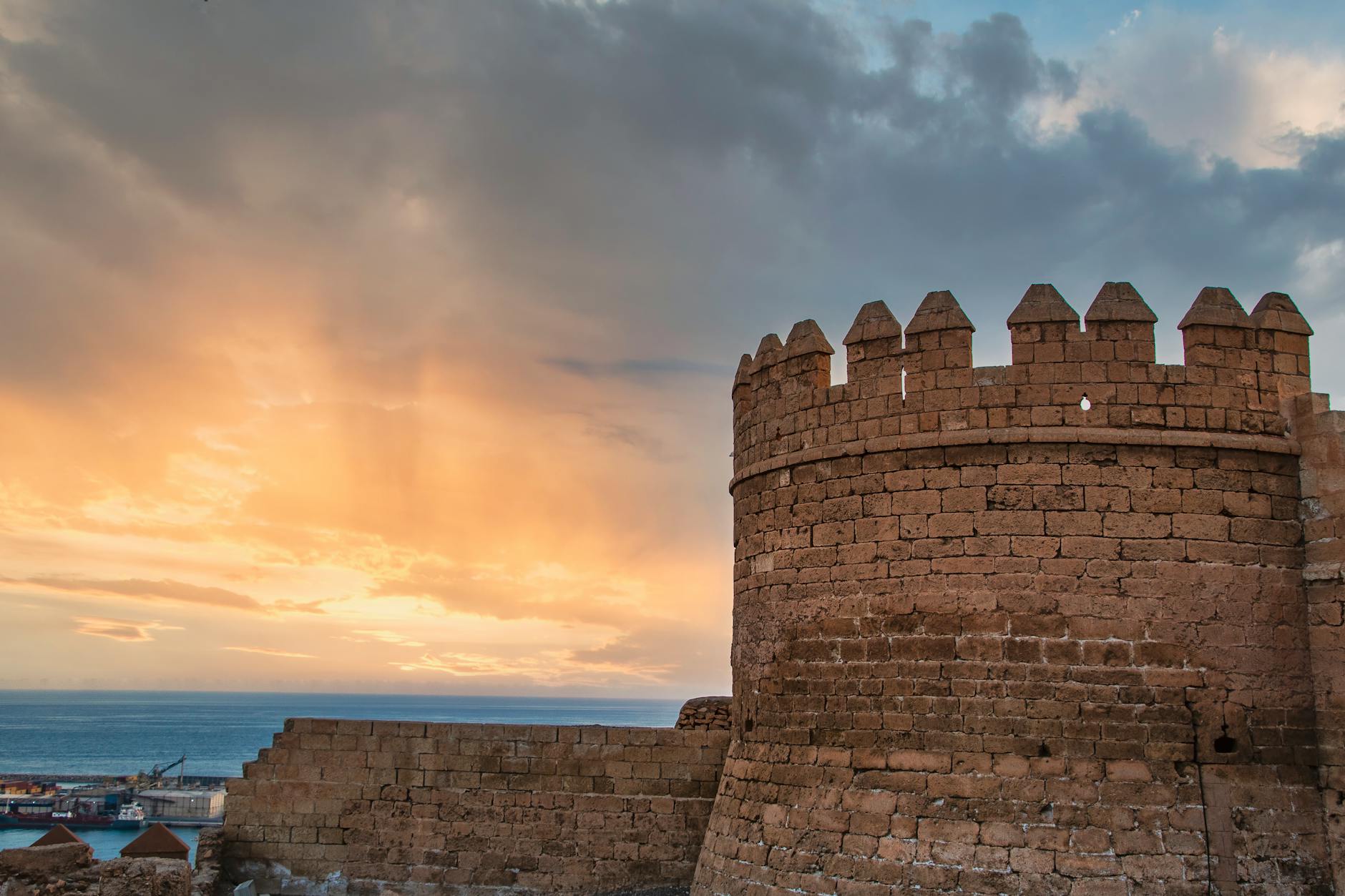
Photo by Enrique on Pexels.com

Meeting the Gardener

Sabbath Day Thoughts — “Meeting the Gardener” John 20:1-18

The world is filled with weeping places this morning. In northern Nigeria, vulnerable people are hungry. They live with lingering violence of the terrorist organization Boko Haram, which has made international headlines for abductions, murders, and other criminal activity. They’ve been hit by natural and manmade disasters, too. Flooding has caused crops to fail. Corruption and poor governance exploit the poor, serve the rich, and sell justice to the highest bidder. According to Nigerian Peacemaker Peter Egwudah, life in northern Nigeria is a long-running struggle with food insecurity. Hardest hit are women, children, the elderly, and those with disabilities.

The world is filled with weeping places this morning. The family of Kilmar Abrego Garcia is weeping. Kilmar came to the United States illegally from El Salvador in 2011, sent north by his family to escape gang violence there. Here, he has worked construction, married Jennifer Vasquez Sura­—a US citizen, and supported his family. His five-year-old child has autism, is deaf in one ear, and cannot communicate verbally. Kilmar was mistakenly accused of being an MS-13 gang member by a paid informant, who had never met him or even been in the same state. Last month, he was deported to the Terrorism Confinement Center in Tecoluca, El Salvador. Although the courts have called for his release and return, the Abrego Garcia family waits and weeps, unsure if they will ever see their husband and father again.

The world is filled with weeping places this morning. We know those who weep: the neighbor who struggles with a bleak diagnosis, the friend who has lost a job, the parent who laments the untimely death of a child, the family member who wrestles with addiction, the person on a fixed income whose retirement savings have been hard hit by volatile markets. We know those who weep; sometimes we are the ones who weep.

It is hard to see the Lord when we are in our weeping places. Just ask Mary Magdalene. Mary walked to the tomb in the pre-dawn darkness. Her footsteps echoed through the streets of the sleeping city. Her heart was heavy with memories of recent days. A week ago, Jesus had made a triumphal entry to Jerusalem, but things had gone terribly and unthinkably wrong. Powerful opponents had conspired to bring about his arrest through the betrayal of a trusted friend. Injustice had been served by both the Temple court and Pontius Pilate. On Friday, Mary’s world had descended into violence and chaos as her teacher was brutally beaten and scourged, taunted with insults and mockery, reviled in hate, and crucified. Mary wept at the tomb, thinking that the world’s evil had outmatched God’s goodness, and now her Lord was nowhere to be found. Mary wept.

It is hard to see the Lord when we are in our weeping places. When the doctor breaks the bad news or the boss hands us the pink slip, we wonder “Why me, God?” When we are bowed down with grief and cannot see tomorrow, we ask, “Why this, Lord?” When addiction controls our lives and wreaks havoc within our families we ask, “Where are you, God?” When we are gripped by fear and worried about the future, we lament “Lord, why would you let this happen?” In our weeping places, we feel powerless and overwhelmed. In our weeping places, we fear that God is distant and we are alone.

As she raised her voice in lamentation outside the empty tomb, Mary learned that Christ was with her in her weeping place. Eyes blurred by tears and ears closed with grief, Mary first mistook Jesus for the gardener, come to clean up any mess left behind by Friday’s hasty burial. But then her tears came to an end as she heard her name, “Mary,” spoken by that most beloved of voices.

On Easter morning, we remember Mary’s tears, and we proclaim again the beautiful, terrible truth of the incarnation and the cross. God loved us so much that God would become flesh and live among us with mercy, healing, and infinite compassion. God’s love would stop at nothing to be reconciled to us and to reconcile us to one another—willing even suffering death upon a cross. But God’s love wins the victory over sin and death. God shows up in our weeping places with our name upon God’s lips and a purpose for our lives.

On Easter morning, we can face our tears head on, because we see that we are not alone. When the test results arrive and the doctor shakes her head, the risen Lord is with us. When the pink slip is in and the job possibilities are out, the risen Christ is with us. When untimely loss sends us into the valley of the shadow of death, we are not alone for God is with us. When we feel brought low by addiction or hardship, economic chaos or uncertain times, we trust that Jesus is in our midst with a love that is stronger than all the tears our world can serve up.

Bible scholars like to call our attention to the placement of Jesus’ tomb within a garden. They say it recalls God’s amazing work of creation, described in the first chapters of Genesis. They say that in breaking the power of sin and death upon the cross, God made a new creation. The separation between humanity and God came to an end, our alienation from one another is over. As new creations, we can go forth in holy, healed, and unexpected ways. It was true for Mary Magdalene. There in the garden, outside the empty tomb, Jesus the gardener gave Mary a new vocation. She became an evangelist. He sent her forth to a weeping world with a message of resurrection hope, “I have seen the Lord.”

On this Easter Sunday, may we, too, know that we are a new creation. May we, like Mary, see that we have a new vocation. We are sent into the world with the hopeful message that we have seen the Lord. Yes, the world abounds with weeping places, and yet God’s love is stronger than our tears, stronger than the hurt and harm that cause our eyes to fill and our hearts to tremble. As we go forth into the world’s weeping places, we point to the presence of Jesus, who continues to walk among the hurting and broken people of our world who fear they are alone.

Today, we will share the good news of Christ’s presence with the vulnerable people of northern Nigeria through One Great Hour of Sharing. Since 2017, our contributions have supported the work of the Civil Society Coalition for Poverty Eradication (CISCOPE). CISCOPE is at work in northern Nigeria, Sudan, Somalia, and Yemen, places where 20% families experience a severe lack of food. Beyond meeting emergency needs, CISCOPE helps families to find long-range food sufficiency through vegetable seed, agricultural machinery, teaching farming practices, and training for disaster preparedness. 70% of those helped by CISCOPE are women, children, and vulnerable people who have traditionally been ignored.

How do we bear witness to Jesus for families like that of Kilmar Abrego Garcia? It’s challenging in this highly-politicized partisan climate, where one faction characterizes Kilmar as a violent criminal while the other side champions him as a local hero. We can begin by remembering that there are families at the heart of the immigration crisis. Kilmar is the public face of an international tragedy in a world where violence, disaster, and extreme poverty have forced people from homes in places like Central America, Africa, Syria, Afghanistan, and Haiti. They flee in search of safety and opportunity. They come to lands that welcome their undocumented, underpaid labor but prefer that they remain strangers to us, subsisting in the shadows on the scraps of the land of plenty. For Kilmar and those like him around the world, we remember that Jesus, too, was a migrant. We point to the infant messiah, whose parents were forced by threat of political violence to flee their homeland and sojourn in the land of Egypt. What might our policies and actions look like, if we envisioned the infant Jesus caught in the crossfire?

What does pointing to the presence of Jesus look like for the hurting people whom we know, those who fear and mourn, despair and weep? We can begin by going to the tomb, showing up and being present for folks who weep with shared tears and abounding compassion. When the time is right, we can try, like Mary, to share how we have “seen the Lord” in our own times of hardship, loss, and pain. We can bear witness to our hurting friends and neighbors with more than words: with hot meals, honey-dos, and practical support; with abounding prayer, phone calls, and cards; with generous encouragement and lots of listening.

On Easter morning, the world is filled with weeping places, my friends, but it is also filled with the presence of Christ. The Lord has risen; he has risen indeed. We have seen the Lord. Let us go forth to those who weep with the good news of God’s amazing love.

Resources

Ben Finley. “Who is Kilmar Abrego Garcia, the man ICE mistakenly deported to an El Salvador prison?” in The Associated Press, April 18, 2025.

Rich Copley. “How your One Great Hour of Sharing gifts are used” in Presbyterian News Service, April 6, 2022. Accessed online at https://pcusa.org/news-storytelling/news/2022/4/6/how-your-one-great-hour-sharing-gifts-are-used

Joy J. Moore. “Commentary on John 20:1-18” in Preaching This Week, April 21, 2019. Accessed online at https://www.workingpreacher.org/commentaries/revised-common-lectionary/resurrection-of-our-lord-3/commentary-on-john-201-18-10

Alicia D. Myers. “Commentary on John 20:1-18” in Preaching This Week, April 12, 2020. Accessed online at https://www.workingpreacher.org/commentaries/revised-common-lectionary/resurrection-of-our-lord/commentary-on-john-201-18-11

Jason Ripley. “Commentary on John 20:1-18” in Preaching This Week, April 20, 2025. Accessed online at https://www.workingpreacher.org/commentaries/revised-common-lectionary/resurrection-of-our-lord-3/commentary-on-john-201-18-19

Rolf Jacobson. “For Such a Time as This” in Dear Working Preacher, April 5, 2020. Accessed online at https://www.workingpreacher.org/dear-working-preacher/for-a-time-such-as-this

Paul Simpson Duke. “Homiletical Perspective on John 20:11-18” in Feasting on the Gospels, John, vol. 2. Westminster John Knox Press, 2015.


John 20:1-18

20 Early on the first day of the week, while it was still dark, Mary Magdalene came to the tomb and saw that the stone had been removed from the tomb. So she ran and went to Simon Peter and the other disciple, the one whom Jesus loved, and said to them, “They have taken the Lord out of the tomb, and we do not know where they have laid him.” Then Peter and the other disciple set out and went toward the tomb. The two were running together, but the other disciple outran Peter and reached the tomb first. He bent down to look in and saw the linen wrappings lying there, but he did not go in. Then Simon Peter came, following him, and went into the tomb. He saw the linen wrappings lying there, and the cloth that had been on Jesus’s head, not lying with the linen wrappings but rolled up in a place by itself. Then the other disciple, who reached the tomb first, also went in, and he saw and believed, for as yet they did not understand the scripture, that he must rise from the dead. 10 Then the disciples returned to their homes. 11 But Mary stood weeping outside the tomb. As she wept, she bent over to look[a] into the tomb, 12 and she saw two angels in white sitting where the body of Jesus had been lying, one at the head and the other at the feet. 13 They said to her, “Woman, why are you weeping?” She said to them, “They have taken away my Lord, and I do not know where they have laid him.” 14 When she had said this, she turned around and saw Jesus standing there, but she did not know that it was Jesus. 15 Jesus said to her, “Woman, why are you weeping? Whom are you looking for?” Supposing him to be the gardener, she said to him, “Sir,[b] if you have carried him away, tell me where you have laid him, and I will take him away.” 16 Jesus said to her, “Mary!” She turned and said to him in Hebrew,[c] “Rabbouni!” (which means Teacher). 17 Jesus said to her, “Do not touch me, because I have not yet ascended to the Father. But go to my brothers and say to them, ‘I am ascending to my Father and your Father, to my God and your God.’ ” 18 Mary Magdalene went and announced to the disciples, “I have seen the Lord,” and she told them that he had said these things to her.


Unity with Diversity

Sabbath Day Thoughts — “Unity with Diversity” 1 Cor. 12:12-31a

Americans have long been at odds over the issue of immigration. Anti-immigration sentiment caused violence on the streets of New York City in the 1850s. Gang leader “Bill the Butcher” Poole formed the Know-Nothing Party to oppose immigration, particularly that of Irish Catholics. At their peak in 1855, the Know-Nothings claimed the allegiance of forty-three members of Congress. In 1853, “Bill the Butcher” died after being shot by gang (and political party) rival John Morrissey, who of course, was Irish Catholic.

In 1875, the country passed the Page Act to eliminate immigration of women from China in an effort to prevent the settlement of Chinese families in our country. Seven years later, in 1882, we implemented the Chinese Exclusion Act, which prevented the immigration of Chinese laborers for ten years. The ban was renewed in 1892, and in 1902, lawmakers decided to make it permanent. Anti-Chinese sentiment in the country was violent. In 1885, twenty-eight Chinese laborers were massacred by white miners in Rock Springs, Wyoming. Many of those Chinese workers were burned alive in their homes. Two years later, in 1887, thirty-four Chinese workers were beaten or shot to death in Hells Canyon on the Snake River.

During the Great Depression, from 1929 until 1939, we thought it would be a good idea to “repatriate” Mexican Americans, sending them south of the border to Mexico. One third of all Mexican Americans in the United States were repatriated, an estimated one to two million people. Forty to sixty percent of them were US citizens. The deportation effort was fueled in part by the words of President Herbert Hoover, who characterized Mexicans as “criminal aliens” who unfairly competed with true Americans for jobs and services.

A sad and shameful aspect of our country during World War II was the internment of Japanese Americans. Following the Japanese attack on Pearl Harbor, President Franklin Roosevelt issued Executive Order 9066 calling for all people of Japanese descent—anyone 1/16th Japanese or more including US citizens, to be incarcerated in isolated camps. In March 1942, Army-directed removals began. Japanese-Americans were given six days to dispose of their belongings other than what they could carry and report to War Relocation Centers. More than 100,000 people were detained throughout the war, often in poor conditions with inadequate food or sanitation.

If our history tells us anything, it is that we have strong opinions about who belongs and who does not. Who we need and who we do not. We find it hard to welcome, accept, and trust our neighbors, especially if their religious convictions, language, appearance, customs, or skin color are different from our own. We have a hard time finding unity in our American diversity.

The Apostle Paul’s congregation in Corinth struggled to find unity in their diversity. Corinth was one of the most racially, ethnically, religiously, and economically diverse communities on the Mediterranean with residents from every corner of the Roman Empire. In the Corinthian church, there were factions and seemingly endless quarrels that threatened to split the assembly. They quarreled about whether it was better to have been evangelized by Paul or Apollos or Peter. They disputed which spiritual gifts were best. They couldn’t agree if it was appropriate to eat meat that had been purchased in pagan meat markets. They argued about whether people should wear head coverings in worship. They brought civil lawsuits against one another. They challenged Paul’s apostolic authority, questioning whether he had the right credentials to lead the church. They even fought about what we might presume would be their rite of greatest unity—the Lord’s Supper. Did they really have to wait for slaves to finish their household chores so that the whole church could partake together?

Paul’s purpose in writing to his Corinthian friends was to put an end to all the wrangling by reminding them of the unity they were called to in Christ. In today’s reading, Paul playfully painted the picture of a human body at war with itself: eye alienated from ear, ear at odds with nose, head dead set against feet, all those parts clamoring that they don’t want to belong to the same body. Paul pointedly reminded his Corinthian friends that every member, even the most vulnerable and least respectable, was a valuable part of the body. Indeed, when one member of the body was ailing, the whole body suffered. Anyone who has ever had a toothache or a back spasm can testify to that fact. Paul capped his argument by saying that his friends were members of a very particular body—Christ’s body.  I’m certain that the Corinthians were grieved when they realized that their fractious and alienating behavior was wounding and tearing Christ, who had suffered so terribly on the cross for them.

Paul longed for the members of the Corinthian church to be in unity, to understand that all their spiritual gifts, ideas, and natural abilities were needed for the body to be whole. Indeed, their individual well-being depended upon the honoring and sharing of one another’s contributions. It was in coming together in all their differences that they would grow into God’s best hope for humanity. Paul envisioned that all those church members, working together under the direction of the Holy Spirit, could embody Jesus, could make Christ’s living presence known to their neighbors in Corinth. Imagine that—the healing, helping, wise, prophetic, prayerful Jesus walking the streets of the city! What a blessing!

If the immigration controversies that are presently swirling in our country teach us anything, it’s that we haven’t changed all that much as a nation. Anti-Irish gangs, the Chinese Exclusion Act, forced repatriation of Americans of Mexican descent, internment of Japanese-American citizens, this is part of who we are. I think we are all in agreement that we don’t want open borders and foreign criminals on our streets, any more than we want American criminals running our communities. But when we get right down to it, calls for mass deportation are an old screed, hauled out every few years to divide us, to pitch us into opposing camps, to find a scapegoat for our latest ill. We are just doing what we always do. That’s not my opinion; that’s our unfortunate history.

I’d like to think that we can do better. If the Apostle Paul were to pick up his pen this morning, he might remind us that what speaks to the church can speak to the nation. Those among us who are white Anglo-Saxon Protestants have need of our Irish Catholic brothers and sisters. And the Irish need the Chinese. The Chinese need their Mexican neighbors, just as the Mexican needs his Japanese acquaintance. Our efforts to deny, denigrate, and alienate one another are just as foolish as the eye saying, “Get rid of that ear.” Wholeness is found, not in our all being cut from the same cloth. Wholeness is found in knowing that we belong to one another. Wholeness flourishes when our spicy differences are accepted and stirred into this unfinished experiment in nationhood. Wholeness is found when there is unity that honors our diversity. When we dare to honor and accept others, Christ is embodied. He walks among us still.

There may be hope for us as a nation yet. Bias against the Irish is practically unheard of anymore, and let’s face it, on St. Patty’s Day, everyone is Irish. During World War II, China and the United States were allies, which led to the long-awaited repeal of the ban on Chinese immigration and naturalization. The passage of the Magnusson Act in 1943 allowed Chinese immigrants to apply for citizenship and register to vote. In 1976, President Gerald Ford officially repealed Executive Order 9066, which targeted Japanese-Americans. In 1988, Congress issued a formal apology and passed the Civil Liberties Act awarding $20,000 each to over 80,000 Japanese Americans as reparations for their internment. In 2005, the state of California apologized for the 1930’s Mexican Repatriation Program, for the fundamental violations of civil liberties and constitutional rights. In 2012, Los Angeles County also issued an apology and installed a memorial at the site of one of the city’s first immigration raids. Slowly, slowly, we grow. Slowly, slowly, we find healing for the body.

If I were to read for us Paul’s second letter to the Corinthians this morning, we would hear that Paul’s argument about the body of Christ was convincing. The Corinthians repented of their fractious ways. They found unity amid their diversity and a renewed zeal for the gospel that made Paul proud. May the same be said for us.

Resources

Frank L. Crouch. “Commentary on 1 Cor. 12:12-31a” in Preaching This Week, Jan. 26, 2025. Accessed online at https://www.workingpreacher.org/commentaries/revised-common-lectionary/third-sunday-after-epiphany-3/commentary-on-1-corinthians-1212-31a-

Brian Peterson. “Commentary on 1 Cor. 12:12-31a” in Preaching This Week, Jan. 24, 2016. Accessed online at https://www.workingpreacher.org/commentaries/revised-common-lectionary/third-sunday-after-epiphany-3/commentary-on-1-corinthians-1212-31a-3

Melanie A. Howard. “Commentary on 1 Cor. 12:12-31a” in Preaching This Week, Jan. 23, 2022. Accessed online at https://www.workingpreacher.org/commentaries/revised-common-lectionary/third-sunday-after-epiphany-3/commentary-on-1-corinthians-1212-31a-5

Michael A. Smith. “No, We Are Not More Divided Than Ever” in Midwest Political Science Association Blog, June 6, 2022. Accessed online at https://www.mpsanet.org/no-we-are-not-more-divided-than-ever/

Dennis Wagner. “Mexican Repatriation in the 1930s” in State of the Union History, Nov. 10, 2017. Accessed online at https://www.stateoftheunionhistory.com/2017/11/1930-herbert-hoover-mexican.html

History.com Staff. “Chinese Exclusion Act” in History, August 24, 2018. Accessed online at https://www.history.com/topics/immigration/chinese-exclusion-act-1882

Amanda Onion, Missy Sullivan, Matt Mullen and Christian Zapata. “Japanese Internment Camps” in History, April 17, 2024. Accessed online at https://www.history.com/topics/world-war-ii/japanese-american-relocation


1 Corinthians 12:12-31a

12 For just as the body is one and has many members, and all the members of the body, though many, are one body, so it is with Christ. 13 For in the one Spirit we were all baptized into one body—Jews or Greeks, slaves or free—and we were all made to drink of one Spirit.

14 Indeed, the body does not consist of one member but of many. 15 If the foot would say, “Because I am not a hand, I do not belong to the body,” that would not make it any less a part of the body. 16 And if the ear would say, “Because I am not an eye, I do not belong to the body,” that would not make it any less a part of the body. 17 If the whole body were an eye, where would the hearing be? If the whole body were hearing, where would the sense of smell be? 18 But as it is, God arranged the members in the body, each one of them, as he chose. 19 If all were a single member, where would the body be? 20 As it is, there are many members yet one body. 21 The eye cannot say to the hand, “I have no need of you,” nor again the head to the feet, “I have no need of you.” 22 On the contrary, the members of the body that seem to be weaker are indispensable, 23 and those members of the body that we think less honorable we clothe with greater honor, and our less respectable members are treated with greater respect, 24 whereas our more respectable members do not need this. But God has so arranged the body, giving the greater honor to the inferior member, 25 that there may be no dissension within the body, but the members may have the same care for one another. 26 If one member suffers, all suffer together with it; if one member is honored, all rejoice together with it.

27 Now you are the body of Christ and individually members of it. 28 And God has appointed in the church first apostles, second prophets, third teachers, then deeds of power, then gifts of healing, forms of assistance, forms of leadership, various kinds of tongues. 29 Are all apostles? Are all prophets? Are all teachers? Do all work powerful deeds? 30 Do all possess gifts of healing? Do all speak in tongues? Do all interpret? 31 But strive for the greater gifts. And I will show you a still more excellent way.


Photo by fauxels on Pexels.com