The Rock of Refuge

Sabbath Day Thoughts — “The Rock of Refuge” Psalm 31:1-5, 15-16

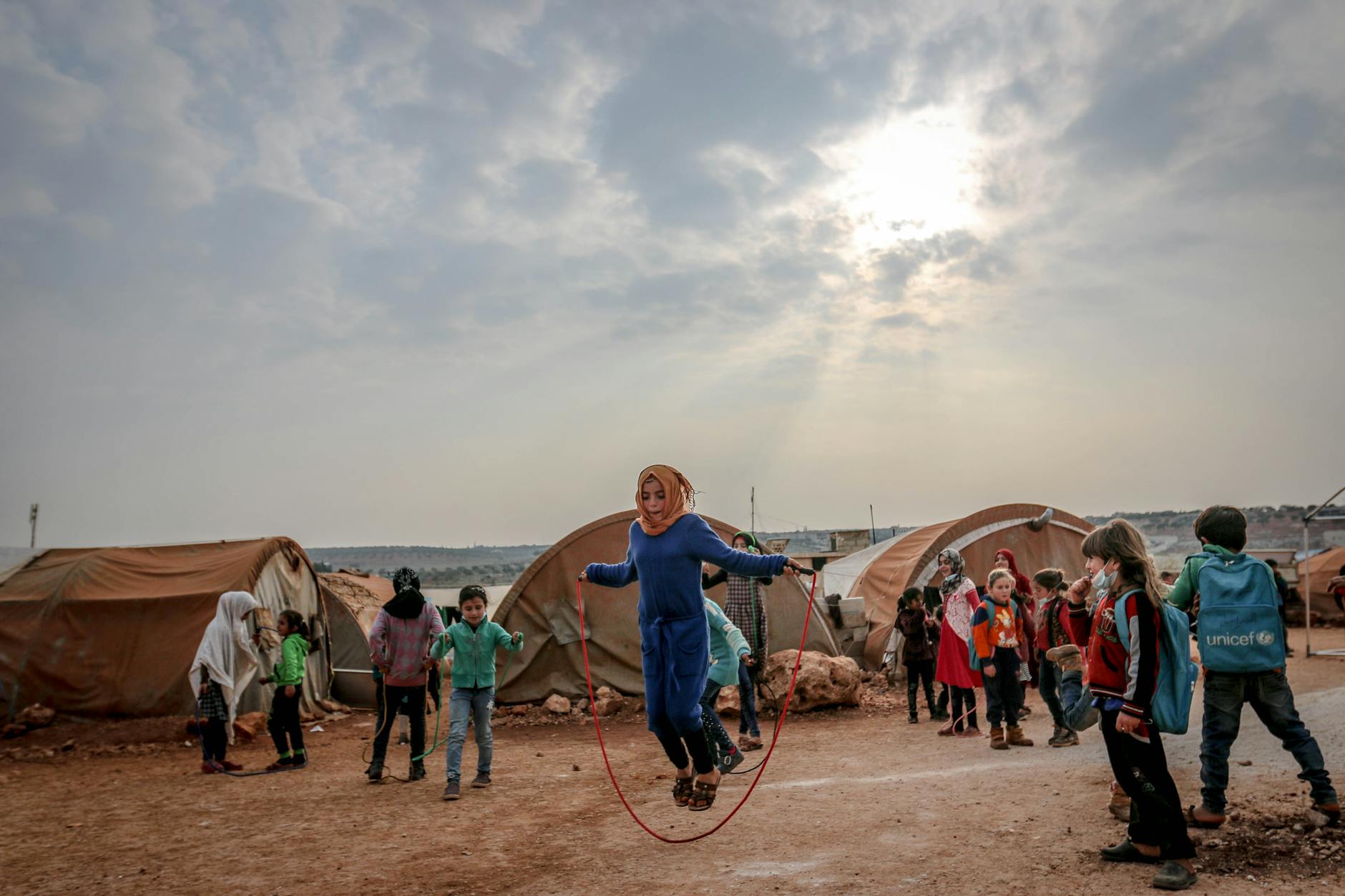
There are 120 million people worldwide in need of refuge this morning. Some are refugees, forced to leave their homeland to seek the safety of another nation. Some are internally displaced people, still within their homeland but driven from their homes. Persecution, war, ethnic violence, human rights abuses, natural disaster, famine, and civil unrest ripple across the planet. One in sixty-seven world citizens needs a rock of refuge.

Hugo Carrasco is a Dreamer. His parents brought him from Mexico to the United States when he was a child. He didn’t know he was undocumented until high school when he wanted to get a driver’s license. Hugo volunteered for Young Life as a mentor for at-risk youth while working for a restaurant. He married Leslie, whom he met through church. They have two children. One day, he was arrested in an ICE raid. He learned that although he is married to a US citizen, he isn’t eligible for citizenship because he is “illegal,” and because he was arrested on a work violation, he is now ineligible for the work papers and path to citizenship offered by DACA—the Deferred Action for Childhood Arrivals program. Hugo needs a rock of refuge.

As college students in Venezuela, Mariana and Antonio took to the streets to protest the oppressive regime of Nicolas Maduro. When the military intervened, the protest descended into violence. As Mariana sought refuge, a man got out of his car and held a gun to her head. She kept running. Four years later, while visiting Venezuelan friends in Miami, Mariana and Antonio learned that they were eligible for Temporary Protected Status (TPS). The status was developed in 1990 as a way to protect individuals fleeing armed conflict, natural disasters, or other unlivable conditions in their home countries. Mariana and Antonio were awarded TPS. They moved to Miami and embarked on successful careers in finance until last April when the current administration cancelled protected status for Venezuelans. They need a rock of refuge.

Marceline Washikala is a third-generation refugee. Her family fled Congo for Tanzania when her grandfather was killed in the first civil war. Opportunities for school in refugee camps are limited, so Marceline only completed the third grade. When she was eighteen, the family was moved to Oregon for resettlement. Although her younger siblings were able to enroll in public school. Marceline was told she was too old and had too little education to join them. She had finally found a home, but adapting to a new culture and new language was hard.  Marceline needed a rock of refuge.

We are not refugees seeking a new home in the United States, yet I think we all know how it feels to need safety, strength, shelter, protection, and the promise of opportunity. Our declining health or the medical crisis of a loved one leaves us longing for a rock of refuge. The uncertainty of our personal economics, from the soaring cost of living to the dwindling of our retirement savings, leaves us longing for a rock of refuge. The fractures in our civil society which pit neighbor against neighbor, and the bitter differences that alienate us from our families leave us longing for a rock of refuge. We can pray along with the psalmist, “In you, O Lord, I seek refuge; do not let me ever be put to shame; in your righteousness deliver me. Incline your ear to me; rescue me speedily. Be a rock of refuge for me, a strong fortress to save me.”

Psalm 31 is attributed to King David. He needed refuge. Long before he rose to kingship in Israel, David was persecuted by powerful political enemies. As a young shepherd boy, David’s ability to soothe King Saul with music and his daring defeat of the giant Goliath landed him a spot in the royal court. Yet as David’s reputation as a leader on and off the battlefield grew, so did the jealousy of the king. In fact, David was forced into exile after Saul first tried to kill him and then attempted to arrest him on charges of sedition. David spent all of his young adult life on the run. Always one step ahead of Saul’s death squads, he sheltered with the King of Moab, sojourned with Philistine enemies in Gath, and lived in a cave in the harsh and unforgiving landscape of the Judean Wilderness.

David believed that God alone was his rock of refuge. In the seven short verses of today’s reading, David described God as the one who will not let us be disgraced, who saves us, listens to us, and rescues us. God leads and guides, frees us from the snares of enemies, redeems us, delivers us, shows us favor, and saves us with steadfast love. Who doesn’t need that? David’s word choice is telling. In Psalm 31, he repeatedly uses the Hebrew verb, ḥāsâ. It has a double meaning. It means to seek refuge or flee for protection, and it also means to put trust in someone, to confide in someone, to hope in someone. Despite his adversity, David knew that God alone was the one he could trust and hope in because God is our refuge. God had chosen him as a shepherd boy. God had battled with him against the mighty Goliath. God would deliver him from the persecution of Saul. God is a refuge because God’s love is faithful, trustworthy, and steadfast.

A number of years ago, one of my New Testament professors, David Cortez-Fuentes, pointed out that David wasn’t the only one to pray with Psalm 31. He called my attention to Jesus’ words from the cross in Luke 23:46. Crying out with a loud voice, Jesus said the words of the psalmist, “Father, into your hands I commend my spirit.” Having said this, he breathed his last. Jesus’ choice to pray with Psalm 31, even as he suffered and died, reflects his reliance on God as a refuge, his confidence in God’s love.

Jesus’ dying prayer reminds us that God is both refuge and refugee. In Jesus, God knows what it is to feel as we do—vulnerable and at-risk, embattled and under-supported, alienated and persecuted. In the midst of our powerlessness, we need a rock of refuge. Can we trust—as David did and as Jesus did—that God is both our promise of refuge and our hope for the future? The kingship awaited David. A resurrection miracle awaited Jesus. May we, too, dare to trust that our rock of refuge has goodness and mercy in store for us.

Perhaps we can even dare to share that trust with those who need it most right now, our vulnerable and embattled neighbors who desperately need the hope that is found in our rock of refuge. Hugo Carrasco, that dreamer who was scooped up in an ICE raid in Maricopa County Arizona, had strong support from his family, church, and Young Life community. He found a good lawyer who was able to have him released from detention after three months, but he is still “illegal.” His kids are teens now, but the immigration crack down underway across the nation leaves them in fear that their father could be taken away. Like others who were brought to this country illegally as children, Hugo lives with the constant threat of deportation to a land that is not his home. He is praying to his rock of refuge.

Mariana and Antonio, who lost their Temporary Protected Status as Venezuelans, face an uncertain future. Mariana says, “It has given me anxiety, a lot of sadness, a feeling of injustice.” Any day now, she or Antonio could be taken into custody and sent back to Venezuela where, although Nicolas Maduro is no longer in power, the government remains unchanged and the persecutors who once held a gun to her head have never faced consequences or checks. Mariana says, “I feel like my life is on hold.” She is praying to her rock of refuge.

Marceline Washikala, that Congolese refugee in Oregon, found an advocate in the school system who fought to enroll her in the 12th grade at North Salem High School where she had been denied status. She graduated and subsequently earned a degree in business administration from the local community college. She has helped her mother open a market for African food. She also works for the school district as a language specialist for families who speak Swahili. She dreams of getting a four-year degree and becoming a social worker, who can assist refugees and immigrants, like her. Marceline attends the First Free Methodist Church and directs the Uhuru Youth Choir, which is comprised of people from Congo, Tanzania, Mozambique, Egypt, and Kenya. They sing gospel music in various languages at churches, festivals, and hospitals in the Salem area. Marceline has finally found safety. She has finally found home. Marceline sings along with the psalmist, a song of praise for her rock of refuge. Amen.

Resources

–. “Conflict Between the Houses of David and Saul.” Bible Hub. https://biblehub.com/topical/c/conflict_between_the_houses_of_david_and_saul.htm

Brown-Driver-Briggs Lexicon. STRONGS H2620. “ḥāsâ.” Accessed online at https://www.blueletterbible.org/lexicon/h2620/rsv/wlc/0-1/

Hugo Carrasco. “I live in fear of deportation: My life as an undocumented worker” in Salon, May 17, 2014. Accessed online at https://www.salon.com/2014/05/17/i_live_in_fear_of_deportation_my_life_as_an_undocumented_worker/

Grace Berry and Abigail Wilt. “‘It is complete chaos’: TPS recipients search for solutions after protections end under Trump” in News 21, Sept. 4, 2025. Accessed online at https://upheaval.news21.com/stories/it-is-complete-chaos-temporary-protected-status-recipients-search-for-solutions-after-the-trump-administration-ends-protections/

Zachary Kasper. “Just Waiting for a Miracle” in The Immigrant Story, April 6, 2024. Accessed online at https://theimmigrantstory.org/waiting-for-a-miracle/

Danish Refugee Council. “How many refugees are there in the world?” Accessed online at https://help.refugees.now/en/news/how-many-refugees-are-there-in-the-world/

Joel LeMon. “Commentary on Psalm 31” in Preaching This Week, May 14, 2017. Accessed online at https://www.workingpreacher.org/commentaries/revised-common-lectionary/fifth-sunday-of-easter/commentary-on-psalm-311-5-15-16-3

J. Clinton McCann, Jr. “Commentary on Psalm 31” in Preaching This Week, May 18, 2014. Accessed online at https://www.workingpreacher.org/commentaries/revised-common-lectionary/fifth-sunday-of-easter/commentary-on-psalm-311-5-15-16-4

John E. White. “Homiletical Perspective on Psalm 31” in Feasting on the Word, Year A, vol. 2. Westminster John Knox Press, 2010.


Psalm 31:1-5, 15-16

To the leader. A Psalm of David.

In you, O Lord, I seek refuge;
    do not let me ever be put to shame;
    in your righteousness deliver me.
Incline your ear to me;
    rescue me speedily.
Be a rock of refuge for me,
    a strong fortress to save me.

You are indeed my rock and my fortress;
    for your name’s sake lead me and guide me;
take me out of the net that is hidden for me,
    for you are my refuge.
Into your hand I commit my spirit;
    you have redeemed me, O Lord, faithful God.

15 My times are in your hand;
    deliver me from the hand of my enemies and persecutors.
16 Let your face shine upon your servant;
    save me in your steadfast love.
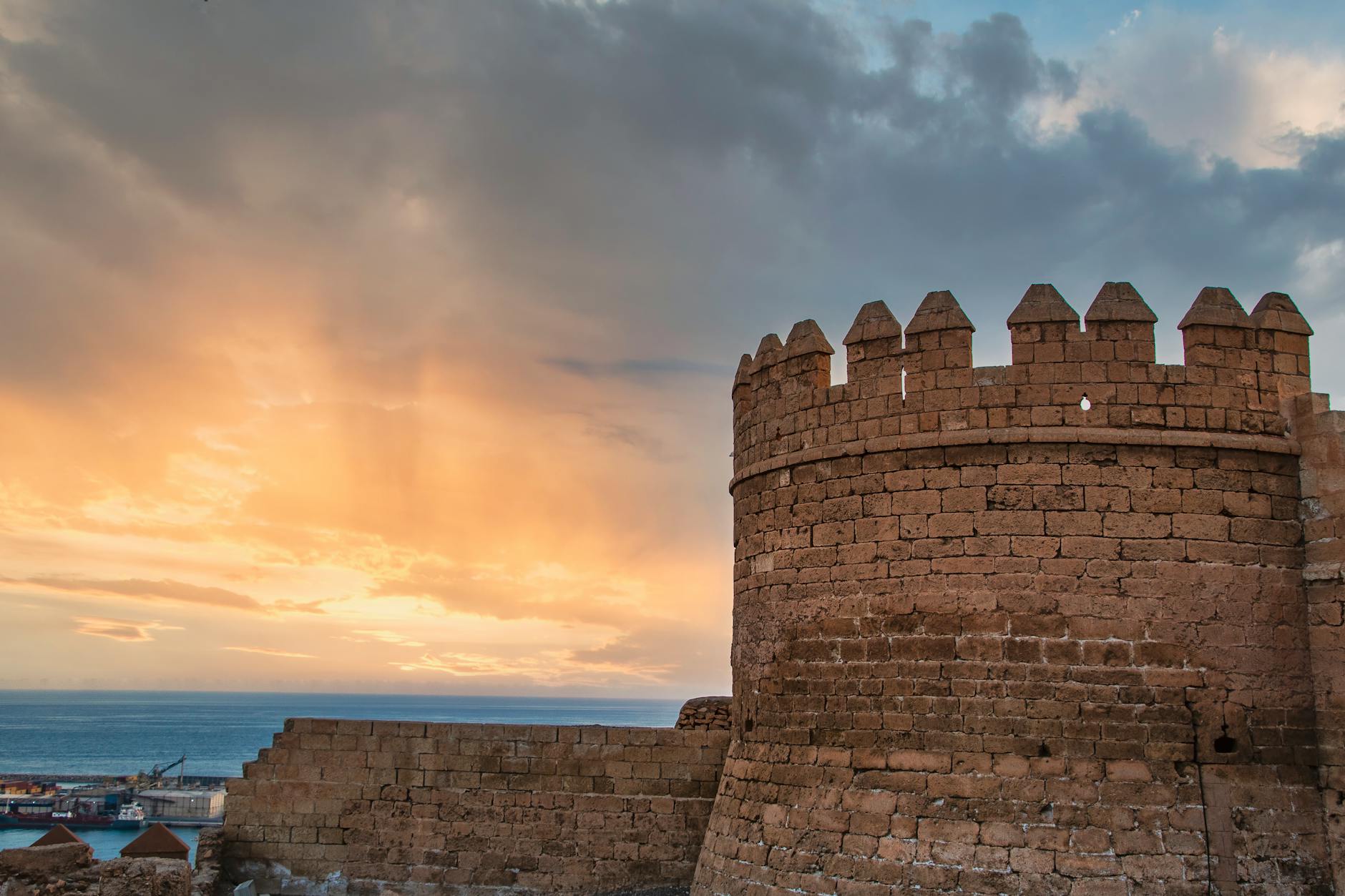
Photo by Enrique on Pexels.com

Good Shepherds

Sabbath Day Thoughts — “Good Shepherds” John 10 and 1 John 3:16-24

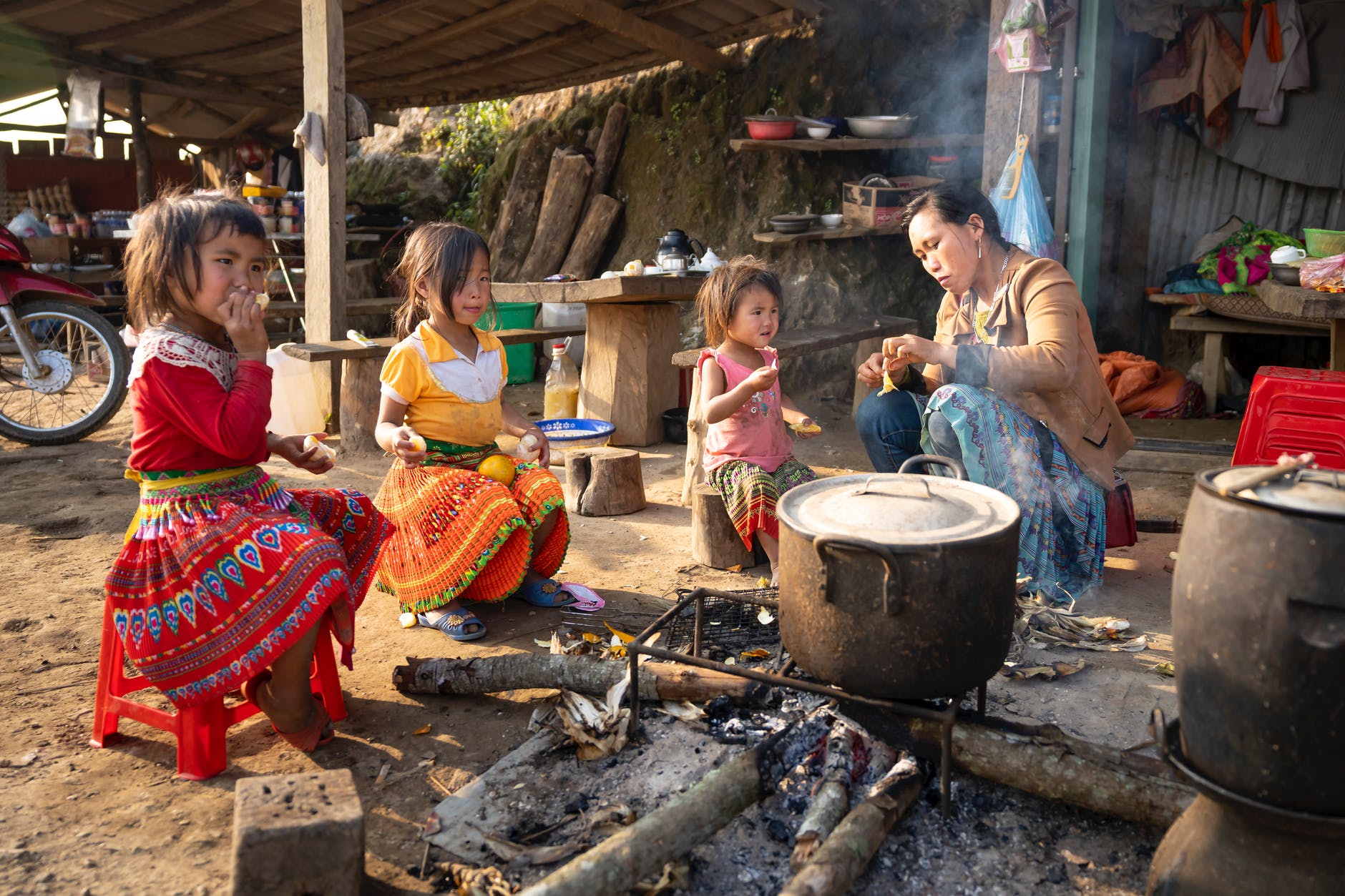
There are 35.3 million refugees in our world, global neighbors who have been forced to flee their homes and cross borders in search of safety and a future. A further 62.5 million people are internally displaced, still residing within their country of origin but homeless. 10 million people are asylum seekers. For them, going home would mean certain death. Last year saw the largest single-year increase in the forced displacement of people in modern history, more even than in the chaos of the Second World War.

4.5 million people of Sudan have been forced to flee amid civil violence. Awad decided to flee to the neighboring village of Mafot when fighting erupted in his hometown. His 80-year-old mother Dawa was too frail to make the two-day journey by foot, so Awad hid her in the bush for three days while he moved his wife and nine children to safety. Awad returned for his mother and carried her to Mafot. After several months, the artillery shells again began to fall. Awad’s family fled further. For 15 days, Awad carried his elderly mother and his daughter Zainab on his back, until they reached the border crossing into South Sudan. Awad’s family now lives with 56,000 other refugees in the Gendrassa camp. Awad knows he will never go home, but he hopes for a day when he will again farm.

The civil conflict in Syria is now in its 14th year. Syrians account for 20% of the world’s refugee population with 6.5 million people hosted in 131 countries. Within Syria, 13.5 million people, more than half of the population, are displaced. Yehia is a Syrian farmer, who raised wheat and barley near the city of Hama. Before the civil war, Yehia says that the family had “the best life.” But in 2017, fighting destroyed their family home. Yehia’s 10-year-old son and one-year-old daughter were killed along with five other family members. Rescuers pulled his four-year-old girl Shahad from the rubble and rushed her to a local clinic, where an overworked medic stitched her badly lacerated face. They then fled for the border. On the way, they were stopped at dozens of checkpoints, where they feared being detained and imprisoned. Seventeen hours later, after midnight, they arrived in Lebanon with nothing but a suitcase. Now at a refugee camp in Lebanon, Yehia is doing what he can to support the surviving members of his family.

In its first year, the Russian invasion drove eight million people out of Ukraine. Almost four million Ukrainians are internally displaced, driven from their homes by violence. Elena Yurchuk worked as a nurse in the northern town of Chernihiv. She tended the injured in a hospital that overflowed with the wounded and dying, even as the Russian bombs fell around them. When the hospital was reduced to rubble, Elena, like many of her neighbors, fled for her life. In a hastily packed car, Elena and her family set out for the Romanian border town of Suceava. Along the way, a car with a young family that followed them was blown up. Elena says, “I don’t know if I have a home or not. Our city is under siege and we barely escaped.”

In a world where 108 million people live the precarious life of refugees and the displaced, the promise of a Good Shepherd sounds especially sweet. When Jesus chose the metaphor of the Good Shepherd to describe himself and his ministry, he drew on a favorite image from the world of the ancient Near East. Kings, emperors, and religious leaders were characterized as shepherds of the people.  Good shepherds protected their people from foreign invaders, provided food in times of famine, took particular care of vulnerable widows and orphans, and maintained justice in the land.  Bad shepherds were more like wolves.  They profited at the people’s expense by conscripting men for endless warfare, taxing villages to pay for imperial luxuries, neglecting the widow and orphan, and selling justice to the highest bidder.  The Hebrew scriptures, whether we are reading the twenty-third psalm or the Prophet Ezekiel (34), affirm that God is the best shepherd, and God longs for a world where people are shepherded with compassion and infinite care – with abundant pastures, flowing streams, protection from enemies, and safety even in the presence of death.

Jesus tells us that he is the Good Shepherd, sent by God to care for God’s people.  Jesus’ life was an object lesson in good shepherding. He worked miracles of healing that brought new life to even the most hopeless of cases.  He fed hungry crowds abundantly, multiplying scanty provisions to satisfy multitudes.  Jesus specially cared for the most vulnerable members of the flock, widows and children, lepers and demoniacs.  Jesus sought and saved the lost. He dined with social refugees, like sinners, tax collectors, and prostitutes. In Jesus, we saw the perfect fulfillment of God’s promise to raise up a messianic Good Shepherd to redeem the lost, lonely, hurting, and oppressed people of Israel. 

Perhaps Jesus’s good shepherding was strengthened by his own experience of vulnerability. As refugees, Jesus’s family fled Bethlehem for the safe haven of Egypt, just one step ahead of Herod’s death squad. A homeless rabbi, Jesus lamented that foxes had holes, birds had nests, yet he had no place to lay his head. A target of powerful religious and political enemies, Jesus endured the criticism of scribes and Pharisees, elders and priests. He suffered the insults, torture, and injustice of Herod and Pilate. Jesus, our Good Shepherd, knew first hand a world where bad shepherds called the shots, and he longed to set it straight.

In a world where refugees and displaced people abound, the Good Shepherd reminds us that we cannot turn a blind eye to the suffering of our global neighbors. We belong to one another, just as we belong to God. Jesus told his friends that he had other sheep, that did not belong to their fold. Those other sheep listened for his voice, and he longed to welcome them. Whether we call Saranac Lake our home, we shelter like Awad in the Gendrassa Camp of South Sudan, we seek safety like Yehia in Lebanon, or like Elena we are on the run from war-torn Ukraine, we are a single global flock, loved by a sovereign God. Professor Gennifer Benjamin Brooks of Garrett Evangelical Seminary says that we cannot love the shepherd without loving the flock, in all the diversity of our world.

Being a member of the Good Shepherd’s flock becomes a call to action, to work for the help and healing of our world. We are summoned to the task of shepherding, of living with and for the best interest of others. Jesus tells us that the Good Shepherd lays down his life for the sheep. Indeed, on a lonely cross, stationed between two common criminals, beaten and bloodied, subjected to the verbal abuse of jeering crowds, the good shepherd laid down his life for the flock and reconciled us to God and one another.

In his first letter, the Apostle John characterized the Christian life as living for others, writing, “We know love by this, that Jesus laid down his life for us—and we ought to lay down our lives for one another. How does God’s love abide in anyone who has the world’s goods and sees a brother or sister in need and yet refuses help? Little children, let us love, not in word or speech, but in truth and action.” That imperative to act has prompted this church to give generously to One Great Hour of Sharing, lace up our sneakers and stride out for CROP Walk, and advocate for humanitarian parole for the Hamidullah Family languishing in Kabul, Afghanistan. All are ministries that serve the most vulnerable members of the world’s flock. The more we listen to and follow the shepherd’s voice, the more we live with his care and compassion, the more our world begins to resemble that holy Kingdom where the Good Shepherd reigns triumphant and eternal. 

We, who follow the Good Shepherd, seek a different kind of future for the exiled and displaced. We long to build a world where the global flock knows its belovedness and belongingness. It will be a world where Awad plants fields of green and his family puts down roots. It’s a world where Yehia and the war-ravaged people of Syria go back to ancestral homes amid the blessing of peace. It’s a world where Elena returns to the mundane duties of nursing in Ukraine, safe from the blast of bombs. May we make it so.

I’d like to close this message with “A Prayer to the Shepherd” written by Andrew King, who blogs at “A Poetic Kind of Place.”

O Lord our Shepherd,

may your flock not want

in the refugee camps

of Yarmouk, of Darfur, of Dadaab.

May life-giving pastures of nourishment be theirs

in Sudan, in Niger, in Chad.

May waters of peacefulness and healing flow

in Somalia, in Syria, in Ukraine.

And may souls be restored in our own cities and towns

where violence and hunger still live.

O Lord our Shepherd,

death shadows the valleys

and the houses and hills of our lands.

May the strength of your grace and

the assurance of your love

ever with us and ever embracing,

bring comfort to the grieving and alone.

May there be a table of reconciliation prepared

where enemies may sit down in peace

and may the cup of joy overflow for those

whose suffering has been their drink.

Let your goodness and mercy attend your flock,

O Shepherd, our Lord,

and may all your flock dwell

in the unity of your love

as long as life endures.


Resources:

Andrew King. “A Prayer to the Shepherd” in A Poetic Kind of Place, April 10, 2016. Accessed online at https://earth2earth.wordpress.com/tag/the-good-shepherd/

USA for UNHCR. “Refugee Statistics” in Refugee Facts 2024. Accessed online at Refugee Statistics | USA for UNHCR (unrefugees.org)

–. “Refugee Stories: Mapping a Crisis.” The Choices Program, Brown University Department of History. Accessed online at www.choices.ed

Stephen McGrath. “Ukraine refugees tell harrowing tales even as numbers ease” in The Associated Press, March 13, 2022. Accessed online at Ukraine refugees tell harrowing tales even as numbers ease | AP News.

Lucy Lind Hogan. “Commentary on John 10:11-18” in Preaching This Week, April 29, 2012. Accessed online at Commentary on John 10:11-18 – Working Preacher from Luther Seminary

Gennifer Benjamin Brooks. “Commentary on John 10:11-18” in Preaching This Week, April 25, 2021. Accessed online at Commentary on John 10:11-18 – Working Preacher from Luther Seminary

Susan Hedahl. “Commentary on John 10:11-18” in Preaching This Week, May 3, 2009. Accessed online at Commentary on John 10:11-18 – Working Preacher from Luther Seminary


John 10:1-26

10“Very truly, I tell you, anyone who does not enter the sheepfold by the gate but climbs in by another way is a thief and a bandit. 2The one who enters by the gate is the shepherd of the sheep. 3The gatekeeper opens the gate for him, and the sheep hear his voice. He calls his own sheep by name and leads them out. 4When he has brought out all his own, he goes ahead of them, and the sheep follow him because they know his voice. 5They will not follow a stranger, but they will run from him because they do not know the voice of strangers.” 6Jesus used this figure of speech with them, but they did not understand what he was saying to them. 7So again Jesus said to them, “Very truly, I tell you, I am the gate for the sheep. 8All who came before me are thieves and bandits; but the sheep did not listen to them. 9I am the gate. Whoever enters by me will be saved, and will come in and go out and find pasture. 10The thief comes only to steal and kill and destroy. I came that they may have life, and have it abundantly. 11“I am the good shepherd. The good shepherd lays down his life for the sheep. 12The hired hand, who is not the shepherd and does not own the sheep, sees the wolf coming and leaves the sheep and runs away—and the wolf snatches them and scatters them. 13The hired hand runs away because a hired hand does not care for the sheep. 14I am the good shepherd. I know my own and my own know me, 15just as the Father knows me and I know the Father. And I lay down my life for the sheep. 16I have other sheep that do not belong to this fold. I must bring them also, and they will listen to my voice. So there will be one flock, one shepherd. 17For this reason the Father loves me, because I lay down my life in order to take it up again. 18No one takes it from me, but I lay it down of my own accord. I have power to lay it down, and I have power to take it up again. I have received this command from my Father.”

19Again the Jews were divided because of these words. 20Many of them were saying, “He has a demon and is out of his mind. Why listen to him?” 21Others were saying, “These are not the words of one who has a demon. Can a demon open the eyes of the blind?”

22At that time the festival of the Dedication took place in Jerusalem. It was winter, 23and Jesus was walking in the temple, in the portico of Solomon. 24So the Jews gathered around him and said to him, “How long will you keep us in suspense? If you are the Messiah, tell us plainly.” 25Jesus answered, “I have told you, and you do not believe. The works that I do in my Father’s name testify to me; 26but you do not believe, because you do not belong to my sheep. 27My sheep hear my voice. I know them, and they follow me. 


Photo by Ahmed akacha on Pexels.com

“Ordinance on Arrival”

Poem for a Tuesday – by Naomi Lazard

“Welcome to you
who have managed to get here.
It’s been a terrible trip;
you should be happy you have survived it.
Statistics prove that not many do.
You would like a bath, a hot meal,
a good night’s sleep. Some of you
need medical attention.
None of this is available.
These things have always been
in short supply; now
they are impossible to obtain.

This is not

a temporary situation;
it is permanent.
Our condolences on your disappointment.
It is not our responsibility
everything you have heard about this place
is false. It is not our fault
you have been deceived,
ruined your health getting here.
For reasons beyond our control
there is no vehicle out.”


Naomi Lazard is an American poet, children’s literature author, and playwright. She is the winner of two Fellowships from the National Endowment for the Arts and a former president of the Poetry Society of America. Her poem “Ordinance on Arrival” appears in A Book of Luminous Things, ed. Czeslaw Milosz (New York: Harcourt Brace & Company, 1996), p. 304.


“When a foreigner resides among you in your land, do not mistreat them. The foreigner residing among you must be treated as your native-born. Love them as yourself, for you were foreigners in Egypt. I am the LORD your God.

Leviticus 19:33-34.

Photo by Quang Nguyen Vinh on Pexels.com