The Rock of Refuge

Sabbath Day Thoughts — “The Rock of Refuge” Psalm 31:1-5, 15-16

There are 120 million people worldwide in need of refuge this morning. Some are refugees, forced to leave their homeland to seek the safety of another nation. Some are internally displaced people, still within their homeland but driven from their homes. Persecution, war, ethnic violence, human rights abuses, natural disaster, famine, and civil unrest ripple across the planet. One in sixty-seven world citizens needs a rock of refuge.

Hugo Carrasco is a Dreamer. His parents brought him from Mexico to the United States when he was a child. He didn’t know he was undocumented until high school when he wanted to get a driver’s license. Hugo volunteered for Young Life as a mentor for at-risk youth while working for a restaurant. He married Leslie, whom he met through church. They have two children. One day, he was arrested in an ICE raid. He learned that although he is married to a US citizen, he isn’t eligible for citizenship because he is “illegal,” and because he was arrested on a work violation, he is now ineligible for the work papers and path to citizenship offered by DACA—the Deferred Action for Childhood Arrivals program. Hugo needs a rock of refuge.

As college students in Venezuela, Mariana and Antonio took to the streets to protest the oppressive regime of Nicolas Maduro. When the military intervened, the protest descended into violence. As Mariana sought refuge, a man got out of his car and held a gun to her head. She kept running. Four years later, while visiting Venezuelan friends in Miami, Mariana and Antonio learned that they were eligible for Temporary Protected Status (TPS). The status was developed in 1990 as a way to protect individuals fleeing armed conflict, natural disasters, or other unlivable conditions in their home countries. Mariana and Antonio were awarded TPS. They moved to Miami and embarked on successful careers in finance until last April when the current administration cancelled protected status for Venezuelans. They need a rock of refuge.

Marceline Washikala is a third-generation refugee. Her family fled Congo for Tanzania when her grandfather was killed in the first civil war. Opportunities for school in refugee camps are limited, so Marceline only completed the third grade. When she was eighteen, the family was moved to Oregon for resettlement. Although her younger siblings were able to enroll in public school. Marceline was told she was too old and had too little education to join them. She had finally found a home, but adapting to a new culture and new language was hard.  Marceline needed a rock of refuge.

We are not refugees seeking a new home in the United States, yet I think we all know how it feels to need safety, strength, shelter, protection, and the promise of opportunity. Our declining health or the medical crisis of a loved one leaves us longing for a rock of refuge. The uncertainty of our personal economics, from the soaring cost of living to the dwindling of our retirement savings, leaves us longing for a rock of refuge. The fractures in our civil society which pit neighbor against neighbor, and the bitter differences that alienate us from our families leave us longing for a rock of refuge. We can pray along with the psalmist, “In you, O Lord, I seek refuge; do not let me ever be put to shame; in your righteousness deliver me. Incline your ear to me; rescue me speedily. Be a rock of refuge for me, a strong fortress to save me.”

Psalm 31 is attributed to King David. He needed refuge. Long before he rose to kingship in Israel, David was persecuted by powerful political enemies. As a young shepherd boy, David’s ability to soothe King Saul with music and his daring defeat of the giant Goliath landed him a spot in the royal court. Yet as David’s reputation as a leader on and off the battlefield grew, so did the jealousy of the king. In fact, David was forced into exile after Saul first tried to kill him and then attempted to arrest him on charges of sedition. David spent all of his young adult life on the run. Always one step ahead of Saul’s death squads, he sheltered with the King of Moab, sojourned with Philistine enemies in Gath, and lived in a cave in the harsh and unforgiving landscape of the Judean Wilderness.

David believed that God alone was his rock of refuge. In the seven short verses of today’s reading, David described God as the one who will not let us be disgraced, who saves us, listens to us, and rescues us. God leads and guides, frees us from the snares of enemies, redeems us, delivers us, shows us favor, and saves us with steadfast love. Who doesn’t need that? David’s word choice is telling. In Psalm 31, he repeatedly uses the Hebrew verb, ḥāsâ. It has a double meaning. It means to seek refuge or flee for protection, and it also means to put trust in someone, to confide in someone, to hope in someone. Despite his adversity, David knew that God alone was the one he could trust and hope in because God is our refuge. God had chosen him as a shepherd boy. God had battled with him against the mighty Goliath. God would deliver him from the persecution of Saul. God is a refuge because God’s love is faithful, trustworthy, and steadfast.

A number of years ago, one of my New Testament professors, David Cortez-Fuentes, pointed out that David wasn’t the only one to pray with Psalm 31. He called my attention to Jesus’ words from the cross in Luke 23:46. Crying out with a loud voice, Jesus said the words of the psalmist, “Father, into your hands I commend my spirit.” Having said this, he breathed his last. Jesus’ choice to pray with Psalm 31, even as he suffered and died, reflects his reliance on God as a refuge, his confidence in God’s love.

Jesus’ dying prayer reminds us that God is both refuge and refugee. In Jesus, God knows what it is to feel as we do—vulnerable and at-risk, embattled and under-supported, alienated and persecuted. In the midst of our powerlessness, we need a rock of refuge. Can we trust—as David did and as Jesus did—that God is both our promise of refuge and our hope for the future? The kingship awaited David. A resurrection miracle awaited Jesus. May we, too, dare to trust that our rock of refuge has goodness and mercy in store for us.

Perhaps we can even dare to share that trust with those who need it most right now, our vulnerable and embattled neighbors who desperately need the hope that is found in our rock of refuge. Hugo Carrasco, that dreamer who was scooped up in an ICE raid in Maricopa County Arizona, had strong support from his family, church, and Young Life community. He found a good lawyer who was able to have him released from detention after three months, but he is still “illegal.” His kids are teens now, but the immigration crack down underway across the nation leaves them in fear that their father could be taken away. Like others who were brought to this country illegally as children, Hugo lives with the constant threat of deportation to a land that is not his home. He is praying to his rock of refuge.

Mariana and Antonio, who lost their Temporary Protected Status as Venezuelans, face an uncertain future. Mariana says, “It has given me anxiety, a lot of sadness, a feeling of injustice.” Any day now, she or Antonio could be taken into custody and sent back to Venezuela where, although Nicolas Maduro is no longer in power, the government remains unchanged and the persecutors who once held a gun to her head have never faced consequences or checks. Mariana says, “I feel like my life is on hold.” She is praying to her rock of refuge.

Marceline Washikala, that Congolese refugee in Oregon, found an advocate in the school system who fought to enroll her in the 12th grade at North Salem High School where she had been denied status. She graduated and subsequently earned a degree in business administration from the local community college. She has helped her mother open a market for African food. She also works for the school district as a language specialist for families who speak Swahili. She dreams of getting a four-year degree and becoming a social worker, who can assist refugees and immigrants, like her. Marceline attends the First Free Methodist Church and directs the Uhuru Youth Choir, which is comprised of people from Congo, Tanzania, Mozambique, Egypt, and Kenya. They sing gospel music in various languages at churches, festivals, and hospitals in the Salem area. Marceline has finally found safety. She has finally found home. Marceline sings along with the psalmist, a song of praise for her rock of refuge. Amen.

Resources

–. “Conflict Between the Houses of David and Saul.” Bible Hub. https://biblehub.com/topical/c/conflict_between_the_houses_of_david_and_saul.htm

Brown-Driver-Briggs Lexicon. STRONGS H2620. “ḥāsâ.” Accessed online at https://www.blueletterbible.org/lexicon/h2620/rsv/wlc/0-1/

Hugo Carrasco. “I live in fear of deportation: My life as an undocumented worker” in Salon, May 17, 2014. Accessed online at https://www.salon.com/2014/05/17/i_live_in_fear_of_deportation_my_life_as_an_undocumented_worker/

Grace Berry and Abigail Wilt. “‘It is complete chaos’: TPS recipients search for solutions after protections end under Trump” in News 21, Sept. 4, 2025. Accessed online at https://upheaval.news21.com/stories/it-is-complete-chaos-temporary-protected-status-recipients-search-for-solutions-after-the-trump-administration-ends-protections/

Zachary Kasper. “Just Waiting for a Miracle” in The Immigrant Story, April 6, 2024. Accessed online at https://theimmigrantstory.org/waiting-for-a-miracle/

Danish Refugee Council. “How many refugees are there in the world?” Accessed online at https://help.refugees.now/en/news/how-many-refugees-are-there-in-the-world/

Joel LeMon. “Commentary on Psalm 31” in Preaching This Week, May 14, 2017. Accessed online at https://www.workingpreacher.org/commentaries/revised-common-lectionary/fifth-sunday-of-easter/commentary-on-psalm-311-5-15-16-3

J. Clinton McCann, Jr. “Commentary on Psalm 31” in Preaching This Week, May 18, 2014. Accessed online at https://www.workingpreacher.org/commentaries/revised-common-lectionary/fifth-sunday-of-easter/commentary-on-psalm-311-5-15-16-4

John E. White. “Homiletical Perspective on Psalm 31” in Feasting on the Word, Year A, vol. 2. Westminster John Knox Press, 2010.


Psalm 31:1-5, 15-16

To the leader. A Psalm of David.

In you, O Lord, I seek refuge;
    do not let me ever be put to shame;
    in your righteousness deliver me.
Incline your ear to me;
    rescue me speedily.
Be a rock of refuge for me,
    a strong fortress to save me.

You are indeed my rock and my fortress;
    for your name’s sake lead me and guide me;
take me out of the net that is hidden for me,
    for you are my refuge.
Into your hand I commit my spirit;
    you have redeemed me, O Lord, faithful God.

15 My times are in your hand;
    deliver me from the hand of my enemies and persecutors.
16 Let your face shine upon your servant;
    save me in your steadfast love.
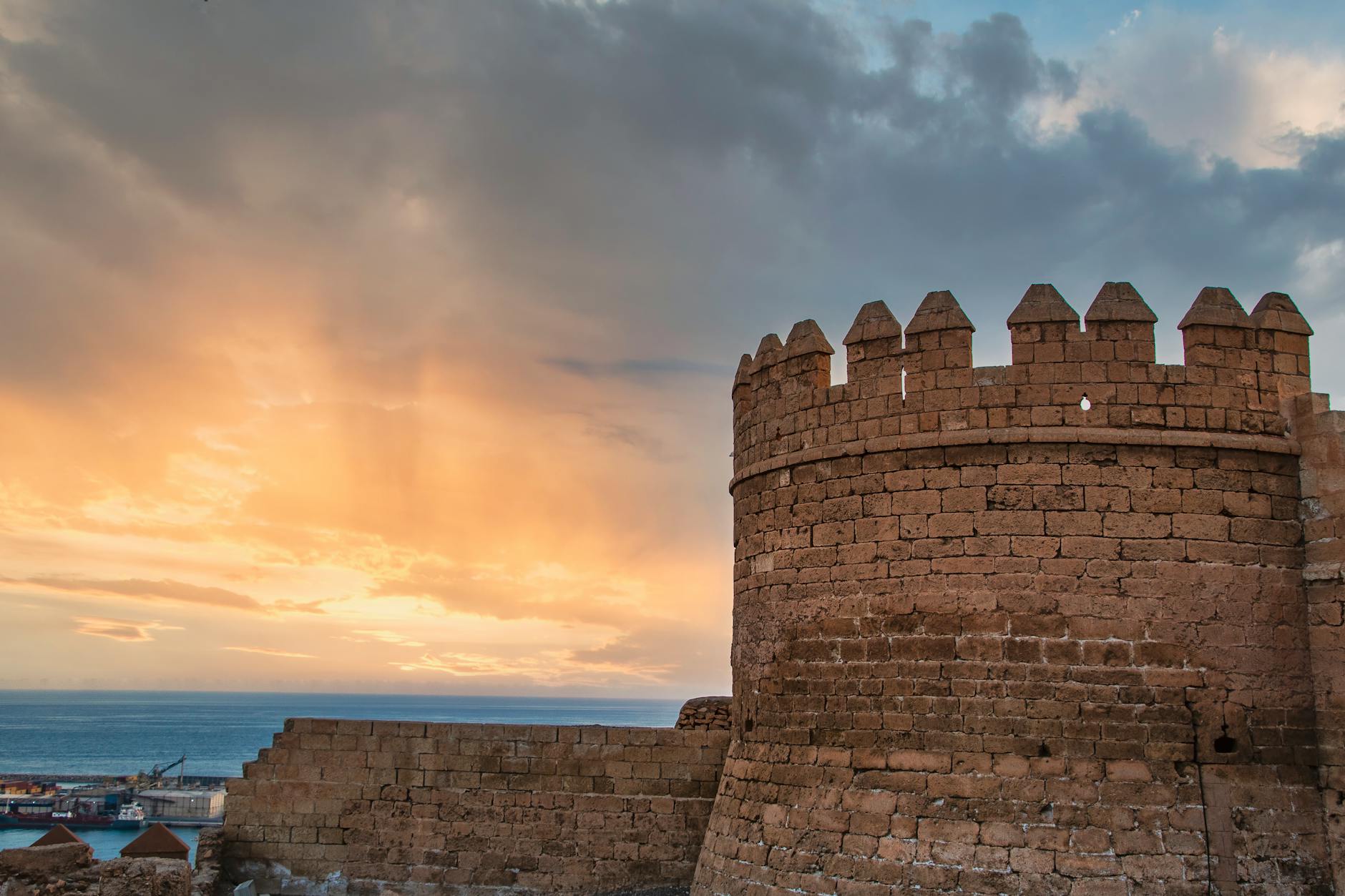
Photo by Enrique on Pexels.com

American Idols

Sabbath Day Thoughts — “American Idols” Exodus 20:1-4, 7-9, 12-20

For more than twenty years, folks have been tuning in to “American Idol.” We’re glued to ABC on Sunday and Monday nights as gifted vocalists vie for the votes of a select panel of judges and the American public. At stake are a grand prize of $250,000 and a recording contract with Hollywood Records, not to mention plenty of publicity and a national platform to share your talent.

Some “American Idol” winners go on to become superstars, like Kelly Clarkson and Carrie Underwood. Perhaps the most talented American Idol finalist didn’t win. Jennifer Hudson is the youngest woman ever to receive all four major American entertainment awards. Jennifer won an Emmy for producing the animated short film “Baby Yaga.” She has received multiple Grammies, including best R&B recording for her first album. She earned an Oscar for her film debut in “Dream Girls” and a Tony award for producing the Broadway musical “A Strange Loop.” As if that weren’t impressive enough, Jennifer has a top-rated daytime talk show, and she shed eighty pounds while serving as a spokesperson for Weight Watchers.

Our reading from the Book of Exodus features a warning about the danger of idols. The Israelites had escaped slavery in Egypt and were camped at the foot of Mt. Sinai when Moses returned from the mountain top with some special instructions from God. Engraved on two tablets of stone were ten commands intended to guide the lives of the Hebrew people. These ten commandments are the very heart of the moral law of the Judeo-Christian tradition. The first four are all about our relationship with God, and the following six govern our relationship with neighbors. You might even say that living in right relationship within our community grows out of our foundational relationship with God almighty, whom alone we are to worship and serve.

The instructions to worship God alone and to refrain from making any images of God would have been a shock to the people of Israel. They lived in an Ancient Near East world where people worshipped many gods. In Egypt, where they had labored, there were more than 2,000 gods, from Isis, Osiris, and Horus to the latest Pharaoh. In Canaan, where the Israelites were bound, there were 25 deities in the pantheon of gods and spirits. Best known were the storm god of war Baal and the fertility goddess Asherah.

To worship the gods in Egyptian or Canaanite culture, you needed an image. Every cult had a life-sized statue to represent the deity, with a wooden core overlaid by precious metals and gems. Baal was portrayed with human form, a bull’s head, and a cluster of thunderbolts clenched in an upraised fist. Egyptian idols were kept in niches within temples. Each day, priests opened the shrine, cleansed and perfumed the idol with incense, place a crown upon its head, anointed it with oil, and beautified it with cosmetics. In addition to these life-sized cultic idols, families had household idols, small clay, stone or wooden images that represented the gods. These were believed to bring good luck, increase fertility, and ward off evil. With idols in temples and idols at home, the Israelites were steeped in a culture of idolatry.

To worship only one God and to refrain from making any images, that would have been deeply unsettling to the Israelites. Indeed, much of the Old Testament seems to be devoted to their struggle to worship Yahweh alone. Moses spent a little too much tome on the mountain with God and the Israelites forged a golden calf to worship. Solomon formed alliances by marrying foreign brides and permitted them to build temples to foreign gods outside of Jerusalem. Ahab and Jezebel crowned every hilltop with shrines to Baal and Asherah. It would take thousands of years, repeated foreign invasions, and the warnings of countless prophets to convince the Hebrew people that they were meant to have only one God, Yahweh.

To make sense of those first two commandments, it helps to read what our Reformation ancestor John Calvin had to say about them. Calvin pointed out that the Israelites were tempted to make idols and worship other gods because they didn’t trust that God Almighty was with them. The Egyptians and the Canaanites, when they went out to war, they carried life-sized images of their deities with them into battle. They needed to rest their eyes on their idols as physical symbols of the divine presence. How could the Israelites trust that God was with them if they didn’t have a graven image? Those first two commandments: to have no other gods and to refrain from making idols, are all about trust, about knowing that God alone is God and God is always with us. It gets easier to apply those first two commandments to our own lives when we frame them as Calvin did, when we ask ourselves what we are placing our trust in instead of God. What do we rely upon when we should be relying upon God?

In his book American Idols: The Worshipping of the American Dream, author, editor, pastor, and speaker Bob Hostetler suggests that modern day idolatry centers around six core things that Americans put their trust in, instead of God. We place our trust in how we look, prizing physical beauty, fame, athleticism, and public opinion. We place our trust in what we have, valuing our possessions or our accumulated wealth as the remedy for all of life’s challenge. We make an idol of personal comfort, taking the easy way instead of the hard or righteous way. We prize instant gratification, getting what we want when we want it without thought for consequences or costs. We prize choice—we love our liberty, so don’t tell us “No” or suggest that our options are limited.  We trust in financial success, believing that our big job and our impressive paycheck can safeguard our future. According to Hostetler, these hallmarks of the American Dream are actually American idols. What are the idols that we see at work in our lives and in our culture? What do we place our trust in when we should be trusting in God?

I’m not saying—and I don’t think Bob Hostetler is saying—that how we look, what we have, our comfort, gratification, liberty, or financial success are bad things. The problem comes when we trust in these when we should be trusting in God, when they preoccupy our time and attention, when they impinge upon our relationships with our neighbors. I tell the confirmation students that the most important relationship that they will ever have is their relationship with God. That’s where we come from. That’s where we will one day return. Everything that comes in between the cradle and the grave is God’s gracious gift to us. Life is best lived when it is built around the Holy One who blesses us beyond measure, who is always with us, even when we do not have eyes to see and ears to hear that holy presence.

No one knows the power of God alone to sustain us better than “American Idol” finalist Jennifer Hudson. JHUD, as she is called, began singing with her church choir at the age of seven. When asked, Jennifer says that her faith is the biggest part of her. She sees her creative abilities as a God-given gift, meant to give glory to God and serve others. She is refreshingly open about her beliefs. Her Twitter feed has featured photos of Jennifer praying with her team. She says, “We like to give the credit where the credit is due.” In a powerful interview with Oprah Winfrey, Hudson opened up about the importance of her faith, saying, “I always say the greatest git our mother gave us was introducing us to Christ and bringing us up in church. I feel like that’s the base. That’s the foundation, and that’s what keeps me grounded, and I think of it every day.” I think JHUD schooled Oprah in those first two commandments.

In 2008, when Jennifer Hudson ‘s family suffered a terrible tragedy, it was her faith that brought her through. Her brother-in-law William Balfour, angered by his crumbling marriage to Jennifer’s sister, shot and killed her mother, brother, and seven-year-old nephew. It was a senseless, brutal, triple homicide for which Balfour showed no remorse. Shortly after Balfour was sentenced to life in prison without parole, Jennifer and her sister released a statement, “We want to extend a prayer from the Hudson family to the Balfour family. We have all suffered a terrible loss in this tragedy . . . it is our prayer that the Lord will forgive Mr. Balfour of these heinous acts and bring his heart to repentance.” When asked how she could find forgiveness for the man who murdered her family, JHUD points to Jesus on the cross who forgave even those who mocked and murdered him. It’s a humbling reminder that a life lived in accord with those first two commandments, a life built around God, can sustain us, whether we are Israelites in the wilderness or survivors of personal tragedy.

It all begins with those first two commandments. “You shall have no other gods before Yahweh. You shall not make for yourself an idol, whether in the form of anything that is in heaven above or that is on the earth beneath or that is in the water under the earth.” May we go forth to trust in God alone. Amen.

Resources:

Nancy deClaisse-Walford. “Commentary on Exodus 20:1-4, 7-9, 12-20” in Preaching This Week, Oct. 5, 2008. Accessed online at workingpreacher.org.

Anathea Portier-Young. “Commentary on Exodus 20:1-4, 7-9, 12-20” in Preaching This Week, Oct. 8, 2017. Accessed online at workingpreacher.org.

Edward, M. Curtis. “Idol, Idolatry” in The Anchor Bible Dictionary, vol. 3 H-J. New York: Doubleday, 1992, 376-381.

John Calvin. Institutes of the Christian Religion.

Bob Hostetler. American Idols: The Worship of the American Dream. New York: B&H Books, 2006.

Sam Hailes. “Jennifer Hudson: ‘My Christian Faith Couldn’t Be Any Stronger’ in Premier Christianity, August 24, 2021. Accessed online at premierchristianity.com.


Exodus 20:1-4, 7-9, 12-20

20Then God spoke all these words: 2I am the Lord your God, who brought you out of the land of Egypt, out of the house of slavery; 3you shall have no other gods before me. 4You shall not make for yourself an idol, whether in the form of anything that is in heaven above, or that is on the earth beneath, or that is in the water under the earth. 7You shall not make wrongful use of the name of the Lord your God, for the Lord will not acquit anyone who misuses his name. 8Remember the sabbath day, and keep it holy. 9Six days you shall labor and do all your work.

12Honor your father and your mother, so that your days may be long in the land that the Lord your God is giving you. 13You shall not murder. 14You shall not commit adultery. 15You shall not steal. 16You shall not bear false witness against your neighbor. 17You shall not covet your neighbor’s house; you shall not covet your neighbor’s wife, or male or female slave, or ox, or donkey, or anything that belongs to your neighbor.

18When all the people witnessed the thunder and lightning, the sound of the trumpet, and the mountain smoking, they were afraid and trembled and stood at a distance, 19and said to Moses, “You speak to us, and we will listen; but do not let God speak to us, or we will die.” 20Moses said to the people, “Do not be afraid; for God has come only to test you and to put the fear of him upon you so that you do not sin.”


Photo by ISKCON TV Dhaka on Pexels.com

Water in the Desert

Sabbath Day Thoughts — “Water in the Desert” Exodus 17:1-7

We all complain from time to time.  I know I complained about all the rain we got this summer. It turned the community garden into a swamp, made some of my favorite trails mud bowls, and had me living in my raincoat. I felt like webbing would soon be sprouting between my toes, and I was weary of drying the tummy of our very short puppy. Perhaps you gripe about your spouse forgetting to take the garbage out, or the kids putting the juice carton back in the fridge with barely a sip in it, or your boss never being on time for anything.  Researchers have found that we typically complain twenty to thirty times every day.

Complaint can be useful.  Behaviorists say that instrumental complaint is goal oriented and change seeking. Think about those brave parents who lost children to gun violence at the Sandy Hook Elementary School. They have gone on to become effective spokespeople and lobbyists for tougher gun laws. Think about Greta Thunberg and other youthful climate activists, who are heightening global awareness of climate change. These practitioners of instrumental complaint speak out about painful realities in ways that bring change.

But for some people complaint can become a deeply ingrained habit that fails to see the good in anything. Behaviorists call this mode of chronic grumbling expressive complaint.  These are complaints that aren’t in search of a solution; instead, they are a bid for attention, affirmation, or sympathy. We all have encountered people who are chronic complainers, dissatisfied with their experience and eager to tell us all about it. 

If you are a longtime Saturday Night Live fan, you may remember Doug and Wendy Whiner, who always had something to complain about. In one Whiner skit, Doug and Wendy won a tour of NYC.  First, they complained because they really wanted to visit Toledo and they hated New York. Next, they griped at the top of the Empire State Building, “Wendy, there are too many buildings! Ooo, Doug, this height makes me feel sick!” Then, they qvetch about an al fresco meal at a street vendor, “We have to wait in line. There’s no menu. Hotdogs inflame our diverticulitis.” The litany of complaint continues until, in response to all that complaint, the tour hosts arrange for the ultimate NYC experience for the Whiners: a mugging.

A study conducted by the Department of Biology and Clinical Psychology of Friedrich Schiller University found that hearing others complain raises our blood pressure and pumps the stress hormone cortisol into our bloodstream.  Another study indicates that listening to thirty minutes of negativity, whether it is in person or on the television, can actually damage the neurons in our hippocampus.  That’s the part of our brain that we rely on for problem solving. Professor Robin Kowalski at Clemson University has demonstrated that complaint is contagious.  When we complain to someone, they are likely to follow suit, complaining to others.  Kowalski says that chronic expressive complaint increases our dissatisfaction while decreasing our joy, sociability, productivity, creativity, and initiative. Maybe, just by talking about the effects of complaint, I’ve got your blood pressure and cortisol levels rising.

In our reading from Exodus, the Israelites were complaining. In fairness, they had faced hardship that might make any of us grumble.  Finally free from slavery in Egypt, our Hebrew ancestors anticipated a better life in the wilderness.  But at Marah, the water was bitter and undrinkable, and they complained against Moses, “What shall we drink?”  Later, the Israelites grew weary of their limited diet, “If only we had died by the hand of the Lord in the land of Egypt, when we sat by the stewpots and ate our fill of bread; for you have brought us out into this wilderness to kill the whole assembly with hunger.” In response to both crises, God provided what was needed.  At Marah, the Lord showed Moses how to turn the bitter water sweet.  Then, to meet their hunger, God had sent bread from heaven (manna) every morning, and in the evening, quails came up to cover the camp.

With all God’s generous providence, freely shared in response to every crisis, we expect the Israelites to trust more and complain less.  But in today’s reading, as the water ran low, the complaining began. I imagine it started with some family grumbling, “I don’t like how little water is left in our skin.” It escalated to a community gripe, “You’d think that Moses would have better planned this trip.  Where’s the spring?”  As the days grew long and fresh water was nowhere to be seen, images of parched children and foundering livestock lurched across their imaginations. So, the Israelites unloaded on Moses, “Why did you bring us out of Egypt to kill us with thirst?”

In tough times, our concerns can get the best of us. Our anxiety and fear may even explode into a cascade of complaints. We imagine that the worst is right around the corner, we face it alone, and we don’t have what it takes to survive.  We think our difficult diagnosis is a harbinger of future suffering and a terrible death. We’re sure our money troubles will lead to bankruptcy and homelessness.  One more school shooting and we’re looking to move the family to Canada.  One more act of terror and we want to close the borders.  When we put our individual worries together and indulge in collective complaint, our families and communities can become highly anxious and filled with fear.

Given the ungracious tone of the Israelite’s complaint, we might expect God to say, “You want to go back to Egypt?  Be my guest!”  But God responds with compassion and providence.  Like a concerned parent who picks up their fussing child, God loves us even when we are at our whiniest, even when we forget that God is generous and present and deeply aware of our needs. God sent Moses and the elders out ahead of the people, and God worked another miracle.  The beleaguered Moses took his staff and struck the rock at Horeb.  Suddenly, all the grumbling and grousing, griping and complaining, transformed to shouts of “Alleluia!” as fresh, clear water spilled forth to meet the people’s thirst.

There will always be something to complain about. Life can feel a bit like the wilderness. There will always be health issues and money concerns, natural disasters, senseless violence, and acts of terror. Occasionally, a little full-blown lamentation is in order. Yet when our complaint escalates into chronic expressive complaint and catastrophic thinking, we forget that there is water in the desert, and we indulge in a dark spirituality of anxiety that denies the goodness, compassion, and presence of God.

Those same researchers who have explored the nature of complaint have also determined that some simple everyday practices can be invaluable in shifting our focus from the negative to the positive. We begin by taking time to be present in the moment and notice what is good, here and now.  Take time to simply use your senses. Attend to the beauty of changing leaves setting the mountainside on fire, the piping song of the cedar waxwings as they gorge on berries, the gift of love and intimacy, the breath of our child as we bend down to kiss them goodnight, the thump of the dog’s tail when we give him a good scratch. Our lives are filled with blessing.  Research has proven that people who cultivate a practice of noticing those everyday blessings are happier than the rest of us and much less likely to engage in destructive expressive complaint. 

Researchers also say that we can cultivate an enhanced sense of gratitude for our blessings by naming them. My Facebook feed this week has been reminding me that nine years ago I was in the midst of “The Gratitude Challenge,” posting three things for which I was grateful, every day for a week.  Nine years ago yesterday, I was grateful for all the carrots I grew in my garden; the taste of homemade tabouleh with fresh parsley, lemon juice, and mint; and the practice of journaling, which I have done for more than 30 years. Whether we are on Facebook or not, we could take time daily to not only notice the good in our lives but to name it.  Post it on-line. Write it in your journal. Share it with your family as you sit down to dinner.  I suspect that as we share with one another those simple celebrations, we’ll feel happier and better equipped to manage the moments that make us want to complain.

Perhaps our faith can be our greatest resource in facing all that makes us want to grumble and gripe. Just as God worked to deliver Israel from slavery, hunger, and thirst, we can remember that God has been at work in our past, too.  God has healed our hurting bodies.  God has sheltered our children through those tough years. God has sustained us in work places that have felt a lot like the wilderness.  God has held our marriages together through tough times. We can trust that God, who has worked in the past, is working even now – and will work in the future.  God is faithful, active, and trustworthy. Alleluia!

Well, my friends, there will always be something to complain about. But there is water in the desert. God is at work. Attend to your blessings. Share them with others. Hold fast to the faith that is in you.

Resources:

Matthew Schlimm. “Commentary on Exodus 17:1-7” in Preaching This Week, Oct. 1, 2023. Accessed online at workingpreacher.org.

Terence Fretheim. “Commentary on Exodus 17:1-7” in Preaching This Week, March 15, 2020. Accessed online at workingpreacher.org.

Anathea Portier-Young. “Commentary on Exodus 17:1-7” in Preaching This Week, Oct. 1, 2017. Accessed online at workingpreacher.org.

Walker Meade. “Chronic Complaining” in The Herald Tribune (Sarasota), August 10, 2010. Accessed on-line at heraldtribune.com.

Dennis Prager. “Why Complaining Is Bad for Your Health” in Buzzle, September 26, 2013. Accessed on-line at Buzzle.com

Minda Zetlin. “Listening to Complainers Is Bad for Your Brain” in The Huffington Post, September 12, 2012.  Accessed on-line at huffpost.com.


Exodus 17:1-7

From the wilderness of Sin the whole congregation of the Israelites journeyed by stages, as the Lord commanded. They camped at Rephidim, but there was no water for the people to drink. 2The people quarreled with Moses, and said, “Give us water to drink.” Moses said to them, “Why do you quarrel with me? Why do you test the Lord?” 3But the people thirsted there for water; and the people complained against Moses and said, “Why did you bring us out of Egypt, to kill us and our children and livestock with thirst?” 4So Moses cried out to the Lord, “What shall I do with this people? They are almost ready to stone me.” 5The Lord said to Moses, “Go on ahead of the people, and take some of the elders of Israel with you; take in your hand the staff with which you struck the Nile, and go. 6I will be standing there in front of you on the rock at Horeb. Strike the rock, and water will come out of it, so that the people may drink.” Moses did so, in the sight of the elders of Israel. 7He called the place Massah and Meribah, because the Israelites quarreled and tested the Lord, saying, “Is the Lord among us or not?”


Photo by Yousef salah on Pexels.com

“Birds, Lilies, and the Kingdom”

Sabbath Day Thoughts — Matthew 6:25-34

Are you worried?  If you are, you’re not alone.  Let’s face it.  These are worrisome times.

We are feeling worried about COVID-19.  The Franklin County Health Department says that we have thirty-nine cases of COVID in Harrietstown this morning and fifty-six in Tupper Lake.  Those are our highest numbers of the pandemic.  While most of us are fully vaccinated and not at risk for severe illness, we worry about our senior seniors and friends with immune system compromises who face greater risk.  We have concern for our kids who are still getting shots in arms.  We think how tough this must be for our healthcare professionals—the hospital staff, nurses, and doctors who have spent the past twenty months on the front lines.

We’re also feeling a worried resignation that we’ll be dealing with the new coronavirus for a long time.  Worldwide in the past week, cases have increased in 72 countries, with twice as many new cases reported here in the states in the past 28 days.  In fact, the only two countries in the world that did not report new cases last week were the Vatican and Oceania—that’s a small cluster of south Pacific Islands.  We don’t like what the experts have to say.  Dr. Amesh Adalja, senior scholar at the Johns Hopkins Center for Health Security, warns that COVID-19 won’t go away.  It will simply become one of many viruses that cause infections, and there will always be a baseline number of cases, hospitalizations, and even deaths.

Related to the pandemic, we are feeling stressed about economics.  The US consumer price index has surged 6.2 percent from a year ago in October.  That’s the highest rise in thirty-one years.  US Treasury Secretary Janet Yellen said last Sunday that quashing COVID-19 is key to lowering inflation.  If we can get a handle on this acute phase of the epidemic, then the surge in the price of commodities, like crude oil, should abate in the second half of 2022.  But in the meantime, we are feeling the spike in prices at the grocery store and the gas pump.  We may have also noticed a phenomenon that has been named “skimpflation.”  Businesses can’t keep enough employees to deliver the experiences and customer service that we previously enjoyed, and so we are paying more for less.  Service is slower at restaurants.  Airline flights are being cancelled.  Businesses have cut hours.  To complicate matters, COVID has created supply chain issues.  Santa might give us a raincheck this year as imported goods don’t make it to store shelves or we balk at the exorbitant price of the latest gift fads.  Am I making you feel worried in writing about this?

As Jesus shared today’s words from the Sermon on the Mount, his friends and followers had worries of their own.  Many people in the Galilee were subsistence farmers, always one crop failure or drought away from hunger.  Some of Jesus’ friends were fishermen.  The fish in the Sea of Galilee belonged to Caesar, but you could pay a pretty shekel for a license to cast your nets and earn your living.  That licensing fee was substantial—the cost of about a third of your catch.  A night when your nets were empty wasn’t just a waste of time, it was a threat to your livelihood.   First century financial failure didn’t land you in bankruptcy court.  It led to debt slavery, consigning yourself or your family to a period of conscripted labor.  That sounds worrisome to me.

Jesus and his friends also contended with the constant anxiety of foreign occupation.  Client kings, like Herod, were appointed to rule locally in the emperor’s stead, and they typically did so by living large at the expense of the people.  Every major city in the land garrisoned Roman soldiers.  The Pax Romana (Peace of Roma) was secured with an iron fist, and the law was swift and harsh in responding to civil disobedience.  Jesus and his followers lived with the terror of crucifixion and public execution.

Beyond the poverty and the politics, there were religious problems.  Even the Chief Priest in the Jerusalem Temple was a Roman appointee.  Factions like the Pharisees and Sadducees divided communities with competing understandings of the Torah.  It doesn’t take a Bible scholar to see that these factions were lining up in opposition to Jesus.  Already, his cousin John had been arrested in an effort to silence his prophetic voice.  Already Jesus was anticipating his journey to Jerusalem and the rejection that would await him there.  They may not have faced COVID-19, but Jesus and his friends had plenty to worry about.

Jesus’ words in our reading from Matthew 6 are a response to those worries.  “Therefore, I tell you, do not worry about your life, what you will eat or drink; or about your body, what you will wear. Is not life more than food, and the body more than clothes?”  Jesus called his listeners attention away from their worries.  He invited them to instead attend to the present moment: the birds of the air and the flowers of the field.  He pointed to pelicans skimming above the surface of the sea and to storks spirally slowly up from nests in the marshes.  Jesus gestured to fields of anemones, bright blooms bobbing in the breeze that swept across the hills.

In the gift of the moment, Jesus called his listeners to remember their place in God’s good creation.  The empire might be Caesar’s, but the world and all that is in it belonged to God.  God, who brought the world into being, continued to care and provide for the birds of the air, the flowers of the field, and those worried first-century Israelites.  Jesus reminded his friends that beyond Caesar’s empire there was a holy Kingdom all around them, like a treasure hidden in a field or a pearl of great price.  Long after Caesar’s empire would crumble, God’s Kingdom would prevail.  It was to this eternal and unstoppable Kingdom that they belonged.

I like to imagine that as the crowd that followed Jesus listened to his words and attended to the birds of the air and the lilies of the field, they felt better.  Those worried furrows in their brows lost their crease.  They took some nice deep breaths.  Their hearts began to beat a little slower and their blood pressure fell.  As they saw God at work in creation with beauty and power, something shifted within them.  They remembered the eternal Kingdom that they served and the Holy One, who had brought them into being and would one day welcome them home.  Heads nodded in agreement.  An occasional “Amen” broke forth from grateful lips.  Everyone went home that day feeling a little less worried and lot more thankful.

We, too, might feel less worried and more thankful if we took Jesus’ words to heart.  I’d like to help us do just that. 

First, we can make some time in the coming days to attend to the birds of the air, the flowers of the field, and the goodness of God’s creation.  Stretch your legs with a favorite neighborhood stroll.  Take to the trail.  Park your car at Lake Colby and watch the sun set.  Watch the rolling flight of the pileated woodpecker.  Let the Grey Jays on the Bloomingdale Bog eat from your hand.  Ponder the blooms on your Thanksgiving cactus.  As we attend to God’s presence and providence at work everywhere all the time, we can trust that God is at work in and for us.  We can know that God is with us, even in the dark valley of pandemic.  God’s Kingdom always prevails.

Next, we can spend some intentional time with the Lord this week.  Carve out ten minutes to sit with God in silence.  You can begin by reading today’s gospel reading.  Then, do some holy listening.  In the quiet of the moment, you can count on your worries to rise up and greet you, as they often do when we actually sit still.  Instead of allowing your cares to hijack your quiet time, hand them off to God.  Use your imagination to put them in Jesus’ hands.  He promises to take our burdens and give us rest.  Take some deep breaths in that quiet space, and remember that God, who has worked in the past, will work again in your future.

Finally, once we are reoriented and centered in God, it’s time to get busy in service to that holy Kingdom that calls for our ultimate allegiance.  Lace up your sneakers and run to raise money for neighbors in need with the Saranac Lake Turkey Trot.  Find a nice, sturdy cardboard box for your Reverse Advent Calendar, adding a canned or dry good daily in December to benefit the Food Pantry.  Serve the church in this Advent season by sharing your dramatic or musical talents to help me with a pre-recorded Christmas Program for the children and those feeling a little childlike.

I suspect that as folks travel for the Thanksgiving and Christmas holidays, our COVID numbers won’t improve.  We’ll still be wearing masks and minding our social distance.  We’ll pay more than we should for that Christmas gift for someone special.  When we get a gander at the price, we’ll trade our Christmas roast beef and Yorkshire pudding for ham or turkey.  And yet, I have hope that in the coming weeks we may also feel less worried.  We’ll consider the birds of the air, the balsam in the forest, and the billion stars in the Adirondack night sky.  We’ll remember who we are and Whom we belong to.  Thanks be to God. 


Resources

Steven P. Eason. “Pastoral Perspective on Matthew 6:24-34” in Feasting on the Word, Year A, vol. 3. Louisville: Westminster John Knox Press, 2011.

Richard Beaton. “Commentary on Matthew 6:24-34” in Preaching This Week, May 25, 2008.  Accessed online at https://www.workingpreacher.org/commentaries/revised-common-lectionary/eighth-sunday-after-epiphany/commentary-on-matthew-624-34-2

Emerson Powery. “Commentary on Matthew 6:24-34” in Preaching This Week, Feb. 27, 2011.  Accessed online at https://www.workingpreacher.org/commentaries/revised-common-lectionary/eighth-sunday-after-epiphany/commentary-on-matthew-624-34

Data Team, Lisa Charlotte Muth. “The coronavirus pandemic is far from over” in Deutsche Welle: Science, Nov. 19, 2021.  Accessed online at The coronavirus pandemic is far from over | Science | In-depth reporting on science and technology | DW | 19.11.2021

Christine D’Antonio. “Pittsburgh doctor on pandemic: ‘We will be living with this virus, there is no covid zero’” in WPXI-TV News, November 14, 2021.  Accessed online at Pittsburgh doctor on pandemic: ‘We will be living with this virus, there is no covid zero’ – WPXI

Shep Hyken. “The Great Resignation Leads to Skimpflation” in Forbes Magazine, Nov 14, 2021.  Accessed online at https://www.forbes.com/sites/shephyken/2021/11/14/the-great-resignation-leads-to-skimpflation/?sh=6d93bf5d6c2b


Photo by Pixabay on Pexels.com