The Binding

Sabbath Day Thoughts — “The Binding” Genesis 22:1-14

There were 532,228 documented cases of child abuse and neglect in the U.S. in 2024, the most recent year for which there is national data. Certainly, many more cases went undocumented. Child abuse encompasses physical, sexual, or emotional abuse, and neglect. Hitting, shaking, or other forms of force; sexual exploitation by a caregiver or trusted adult; shaming, rejecting, or withholding affection; failure to meet a child’s basic needs for food, shelter, medical care, education, and emotional support, all are acts of abuse. Although children who live in poverty face greater risk of abuse than higher-income families, abuse occurs across all demographics, affecting children of every gender, race, ethnicity, and community.

Child abuse has long-lasting effects. In addition to physical injuries that need immediate care, victims of abuse are likely to develop chronic health problems, mental illness, and post-traumatic stress. Abuse compromises the lifelong ability of children to trust and form successful relationships. Abused children may struggle to retain information, recall previously learned material, and sustain focus in school, resulting in lower grades and diminished standardized test scores. Abuse can be passed from generation to generation. Thirty percent of children whose mothers experienced mistreatment as children also experienced abuse or neglect by age twelve.

Disturbingly, religion can be used to justify or perpetrate the mistreatment of children. Scripture like, “Spare the rod and spoil the child,” may be used to support corporal punishment. Some sects may withhold lifesaving medical treatment for religious reasons. Denominations have paid out big settlements to victims of child sexual abuse by predator priests. Corporal punishment may even be justified for purging evil in children. In October 2015, 19-year-old Lucas Leonard died from injuries sustained during repeated and severe beatings at the Word of Life Christian Church in Chadwicks, New York. The beatings were part of “spiritual counseling” for Lucas and his 17-year-old brother Christopher, who wished to leave the church.

Rev. Dr. Donald Capps who taught pastoral care for many years at Princeton Seminary, wrote in A Child’s Song, “This is not a pleasant subject, especially for those of us who have deep personal attachments to the Christian faith. But we dare not avoid the subject, for the abuse of children in the name of religion may well be the most significant reason for why they leave the faith when they are old enough to do so. We must ask ourselves: Who can blame them?”

Let’s be honest. Today’s reading from Genesis describes parental behavior that is undeniably abusive. Last week, we considered a similarly disturbing story from Genesis as Abraham sent his older son Ishmael and lesser wife Hagar off into the wilderness. This week, Abraham heard a holy voice asking the unthinkable. “Abraham, Abraham, take your son, your only son Isaac, whom you love, and go to the land of Moriah, and offer him there as a burnt offering.”

Contemporary people of faith have a hard time understanding why Abraham would pack his bags, sharpen his knife, load up his son with firewood, and set off on a three-day journey to a place of sacrifice. But such sacrifices were common in the Ancient Near East. In Abraham and Sarah’s first home, the Mesopotamian city of Ur, kings killed their sons to petition the gods for long life. In the land of the Phoenicians, the goddess Ashtart cried out to the people, “Give me the burnt offering of your child, and I will favor you.” In Canaan, Ba’al promised worshipers, “Sacrifice your children and I will keep you safe from all evil.” In Moab, the god Chemosh delivered victory in battle for the burnt offering of the king’s son. Even in the later history of Israel, child sacrifice was sometimes practiced. Scripture tells us that Kings Ahaz and Manasseh of Judah sacrificed sons as burnt offerings (2Kings 16:3, 21:6). We may be shocked to consider the request of child sacrifice that God made of Abraham, but for the patriarch, it would simply have been what the gods required of you.

Our Jewish brothers and sisters call this story The Binding. Abraham “bound his son Isaac, and laid him on the altar, on top of the wood.” The Hebrew word for “bind”—akedah—is used only this one time in the Bible. Elsewhere in Midrash and rabbinic literature it is used to describe the ritual binding of an animal for sacrifice. As Abraham wound around Isaac the cords of an oppressive Near Eastern world that demanded the sacrifice of a beloved son, parent and child were bound in a seemingly inescapable cycle of violence and abuse, passed from generation to generation.

As Abraham’s hand reached out to strike with the knife, something unprecedented happened. God said, “No. Abraham, Abraham! Do not lay your hand on the boy or do anything to him.” God would not give the precious gift of a child, and later demand that sacrifice. God’s expectation was that Isaac would grow, find someone to love, and have children to richly bless the world. Abraham unbound Isaac, breaking the cycle of abuse. We can imagine that on the mountaintop there were tears and hugs. The frightened and traumatized Isaac was cradled in the arms of the relieved and grateful Abraham as the patriarch rejoiced, “God does not require this sacrifice.”

In twenty-six years of parish ministry, I have heard many stories of abuse: adults mistreated as children by those who were meant to love and protect them; spouses traumatized by the wounds of physical and emotional abuse; even people who experienced sexual misconduct at the hands of the clergy, scout leaders, and coaches charged with tending the flock. The one thing I always tell them is that God doesn’t want anyone to be abused. It’s right there in scripture. God said, “No,” to the sacrifice of Isaac. Jesus blessed and welcomed children in a time when a high-status rabbi like him would have had nothing to do with kids. Indeed, God sent God’s only son into the world to seek and save us when we are lost—and we nailed him to a cross. God responded to the death of his only son not with violence and abuse, but with love, breaking the cycle of violence, overcoming death, and reaching out with forgiveness. God says a bold and unequivocal, “No,” to the harming of bodies and the wounding of spirits. God says, No.”

As difficult as Genesis 22 is to ponder, it has something important to say to people here and now. It is a bold and corrective word to those who have perpetrated abuse, whether they are parents, teachers, coaches, neighbors, or pastors. Violent tantrums, physical assault, destruction of personal property, name calling, insults, shaming, harassment, sarcasm, and the silent treatment are never justified or acceptable. God says, “No.”

The story of Isaac also speaks a word of comfort to those who have been mistreated and terrified by the people who have been entrusted with their care. Like Isaac, all children are a gift from God, a blessing to their families, communities, and to all generations. God would never demand the sacrifice of a child to violence within the home.  God would never demand the sacrifice of a child to bullying and abuse at school. God would never demand the sacrifice of a child to exploitation and victimization in church. God sees and stands with victims. God longs to stay the hand of abusers.

The Binding of Isaac isn’t just a story for abusers and those who have experienced abuse. It is a story for all of us. Friends, family, and other trusted adults can help end cycles of abuse by developing nurturing, supportive relationships with the children in our lives. Volunteering as a Sunday School teacher or Youth Group helper, mentoring a confirmation student, tutoring a kid who needs homework help, working for the school system on playground duty, or helping out at the Saranac Lake Youth Center, these are all ways to forge nurturing, supportive relationships with the children in our lives and provide safe space where children feel secure and emotionally supported.

We can also come alongside parents who are at-risk for abusive behavior. Be a caring and supportive friend. Consider helping with childcare or household tasks when you see that someone is overwhelmed, stressed out, and needs a break. Employers can embrace workplace policies that help families, such as livable wages, paid leave, and flexible, consistent schedules. We know that families who can meet their basic needs for food, clothing, housing, and transportation, and who can access essential services like childcare, healthcare, and mental health services, are better able to ensure their children’s safety and well-being. That’s why we need to advocate for helping organizations like the food pantry and the Youth Center. That’s why we need to ensure that schools are well-funded and well-staffed and programs like Head Start are available in our community. That’s why we must insist that affordable healthcare is possible for all families.

God, long ago, said, “No!” to child abuse. This morning, we are called to join our, “No!” to God’s, “No!” Ensuring the well-being of children is a holy responsibility. May we go forth to forge a community where all children are seen as a blessing and every home is free from violence and abuse.

Resources

Amanda Benckhuysen. “Commentary on Genesis 22:1-14” in Preaching This Week, June 28, 2020. Accessed online at

Jon Douglas Levensen. The Death and Resurrection of the Beloved Son: the Transformation of Child Sacrifice in Judaism and Christianity.  Binghamton, NY:Vail-Ballou Press, 1993.

Christopher Bergland. “Breaking the Cycle of Childhood Abuse” in Psychology Today, May 1, 2021. Accessed online at https://www.psychologytoday.com/us/blog/the-athletes-way/202105/breaking-the-cycle-of-childhood-abuse

The National Children’s Alliance. “National Statistics on Child Abuse” https://www.nationalchildrensalliance.org/media-room/national-statistics-on-child-abuse/

Janet Heimlich. “What is religious child maltreatment?” Child-Friendly Faith Project. https://childfriendlyfaith.org/what-is-religious-child-maltreatment/

Laila Kearney. “New York Teen Dies after Hours-long Beating at church” in Reuters, October 14, 2015. https://www.reuters.com/article/world/uk/new-york-teen-dies-after-hours-long-beating-at-church-idUSKCN0S82N9/

CDC. “Preventing Child Abuse and Neglect,” May 16, 2024. https://www.cdc.gov/child-abuse-neglect/prevention/index.html


Genesis 22:1-14

22 After these things God tested Abraham. He said to him, “Abraham!” And he said, “Here I am.” 2 He said, “Take your son, your only son Isaac, whom you love, and go to the land of Moriah and offer him there as a burnt offering on one of the mountains that I shall show you.” 3 So Abraham rose early in the morning, saddled his donkey, and took two of his young men with him and his son Isaac; he cut the wood for the burnt offering and set out and went to the place in the distance that God had shown him. 4 On the third day Abraham looked up and saw the place far away. 5 Then Abraham said to his young men, “Stay here with the donkey; the boy and I will go over there; we will worship, and then we will come back to you.” 6 Abraham took the wood of the burnt offering and laid it on his son Isaac, and he himself carried the fire and the knife. And the two of them walked on together. 7 Isaac said to his father Abraham, “Father!” And he said, “Here I am, my son.” He said, “The fire and the wood are here, but where is the lamb for a burnt offering?” 8 Abraham said, “God himself will provide the lamb for a burnt offering, my son.” And the two of them walked on together.

9 When they came to the place that God had shown him, Abraham built an altar there and laid the wood in order. He bound his son Isaac and laid him on the altar on top of the wood. 10 Then Abraham reached out his hand and took the knife to kill his son. 11 But the angel of the Lord called to him from heaven and said, “Abraham, Abraham!” And he said, “Here I am.” 12 He said, “Do not lay your hand on the boy or do anything to him, for now I know that you fear God, since you have not withheld your son, your only son, from me.” 13 And Abraham looked up and saw a ram, caught in a thicket by its horns. Abraham went and took the ram and offered it up as a burnt offering instead of his son. 14 So Abraham called that place “The Lord will provide,” as it is said to this day, “On the mount of the Lord it shall be provided.
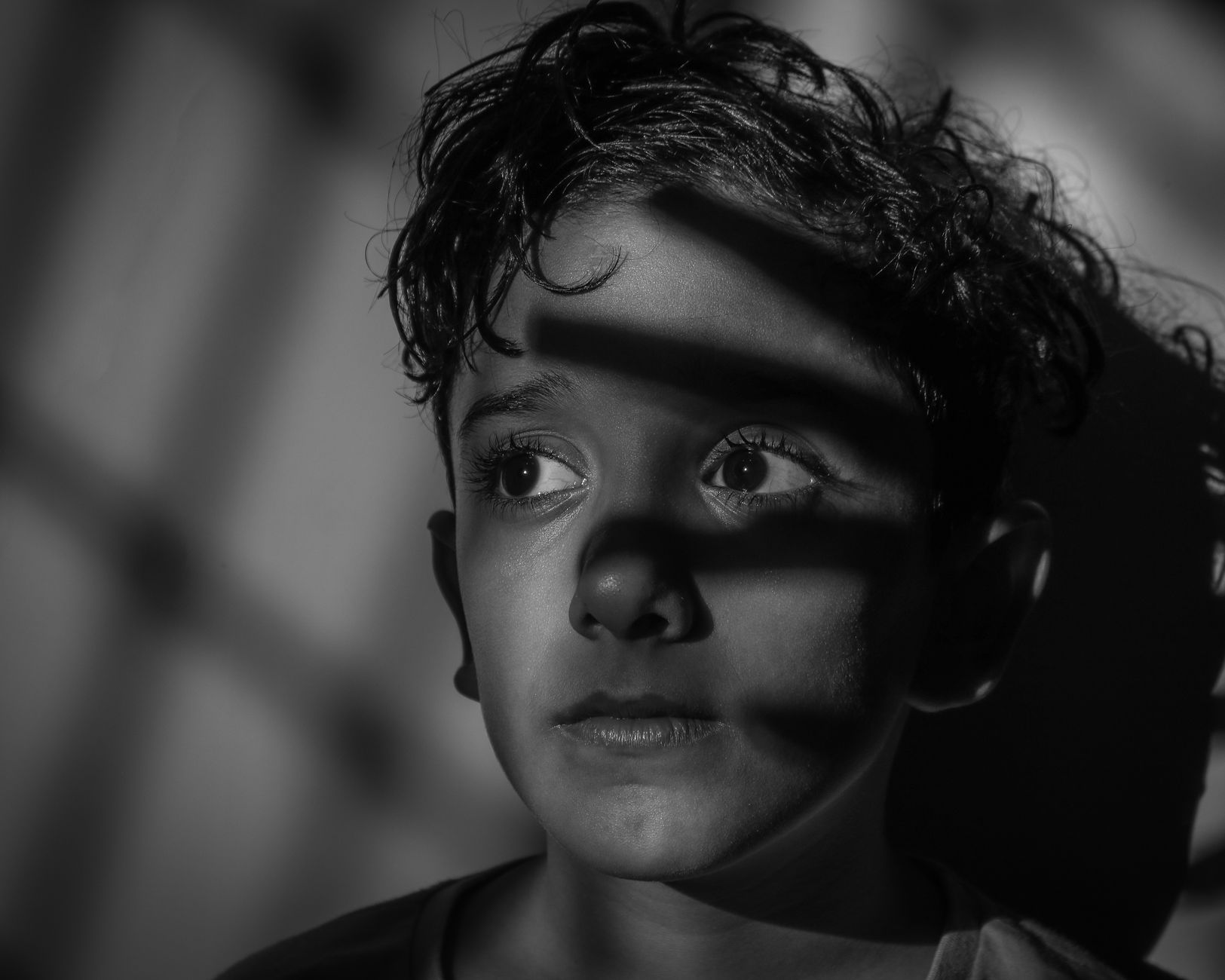


Photo by Nezar Alareqe on Pexels.com

God Who Hears

Sabbath Day Thoughts — “God Who Hears” Genesis 21:8-21

Children are crying.

Children are crying in Malawi this morning. One of the least developed nations in the world, more than 70% of Malawi’s people live in poverty. 69% of Malawians have access to clean water, thanks to initiatives like the shallow well program, but the country lags woefully behind in sanitation. Only 26% of Malawians have access to essential sanitation, like toilets and sewers. Only 9% have access to resources for basic hygiene, like running water, showers, or baths.

For many children, food scarcity means chronic hunger. 37% of Malawi’s children experience stunting—they don’t receive sufficient nutrition for the development of their bodies and brains. Malnutrition affects health. 40,000 of Malawi’s children under five die each year from preventable and treatable diseases. 39% of Malawi’s children, some as young as 5-years-old, work to help provide for their families. Economic pressure means that children are pushed into early marriages. About half of all girls are married before their 18th birthday. That may explain why Malawi’s premature births and maternal deaths are among the highest in the world.

Children are crying.

Children are crying in our nation this morning. 10.35 million of America’s children live in poverty—that’s 14.3% of our children. Even more children—14.1 million—live in families that contend with food insecurity—not enough monthly income to ensure that nutritious food is consistently on the table. They depend on local food pantries and school lunch programs. Those numbers are worse here in the North Country. 20.1% of Franklin County’s children—that’s one in five kids—live in poverty.

Poverty detrimentally shapes the future of our children. They do not receive adequate medical care and have poorer health outcomes that will affect their well-being for a lifetime. 70% of fourth graders who live in poverty are unable to read at their grade level. 73% of eighth graders who live in poverty are not proficient in math. They are significantly less likely to graduate from high school. As adults, they will earn less money than their prosperous peers, perpetuating a cycle of generational poverty.

Mothers living in poverty in America often describe their struggle as a constant, invisible battle that shapes their children’s lives. In the documentary Born Poor, one mother told her 10-year-old daughter, “When we can’t afford to pay our bills, like, our house bills and stuff, I’m afraid, like, we’ll get homeless… You never know what’ll happen in your life.” Children living in poverty often know exactly when bills are due or when food is scarce. They describe “always worrying” about whether the electricity will get cut off or if there will be enough dinner. They feel embarrassed and hide their living situation from peers. They miss out on typical childhood experiences—sports, camps, and family vacations.

Ishmael was crying.

In our reading from Genesis 21, God heard the cry of young Ishmael. Just the day before, the child was celebrating the weaning of his little brother Isaac. As the firstborn son by Abraham’s lesser wife Hagar, Ishmael was his father’s heir, destined to inherit a double-share of property, possessions, and blessing. But as the family rejoiced and the boys played, Sarah, Abraham’s first wife, watched Ishmael and Isaac laughing together. One boy was already strong and bold; the other boy was just taking his first steps toward independence. As Sarah watched, jealousy like a dark beast rose within her heart. God’s promise didn’t seem big enough for both children. Why should her child Isaac, the child long-promised by God, share with the child of her maidservant Hagar? Sarah asserted her authority as first wife. Hagar and Ishmael had to go.

Scripture tells us that Abraham found the matter—this banishment and disowning of Ishmael and Hagar—“very distressing” (v. 11). A closer reading of the Hebrew here suggests that Abraham found Sarah’s ultimatum “very bad” or “morally wrong” in his eyes. Abraham knew that what Sarah asked him to do was not right, yet he did it anyway. He sent Hagar and Ishmael into the Wilderness of Beer-sheba. When the food was gone and the water ran out, Hagar despaired and Ishmael cried.

In a world where Sarah wished to claim God’s blessing for Isaac alone, we learn that God hears the cries of people like Ishmael, like Hagar, people who have been pushed out of the blessing and sent forth to live at the margins. Prof. Carolyn Helsel, who teaches at Austin Presbyterian Seminary, points out that the Hebrew verb used for “hear”—shema—describes a listening that leads to action. God heard Ishmael’s cries and took action in response, making of him a great nation. God hears, God acts, God blesses.

Children are crying.

Do we hear the children crying, my friends? It’s “very distressing,” the cries of Malawi’s children. It’s “very distressing,” the day-to-day circumstances of a country where 70% of people live in poverty, children are stunted, and basic sanitation is a luxury unknown to most households. Tyler Holm and Rochelle Holm have lived in Malawi for 14 years. They first began serving there through short-term mission trips in 2008, but they fell in love with the land and the people. They moved to Malawi permanently at the end of 2012 as Presbyterian Mission Co-workers, serving at Mzuzu University and the Church of Central Africa Presbyterian (CCAP). The next year, they adopted their daughter Mphatso, one of Malawi’s orphans. Tyler teaches at the University of Livingstonia and Rochelle manages the Centre of Excellence in Water and Sanitation at Mzuzu University. The Holms are deeply committed to making a helping and healing difference in Malawi through education and improved sanitation. They hear the cries of Malawi’s children and believe that God provides enough blessing for all people, even the vulnerable children of Malawi. Our Father’s Day offering today will support their life-changing work.

Children are crying.

It’s “very distressing,” you might say morally wrong, that in this nation of amazing bounty more than ten million of our children live in poverty. It’s “very distressing” that right here in Franklin County 20% of our kids face the everyday worry, fear, and shame that come from growing up in homes with more month than money. If we are feeling the pinch at the gas pump and the grocery checkout, imagine how families that were already struggling feel. Our friends in the Community Schools program report that the number of Petrova kids who participate in the weekly backpack program (taking home food to help on the weekends when they don’t have school lunches) has soared this school year from 49 households in the fall to 89 as the school year ends.

Can we hear the children crying? Can we believe that in this land of goodness, God’s blessing is for all children, even the Ishmael’s, even our neighbors who live in poverty? Or will we insist that there isn’t enough blessing to go around and some are meant to wander in the wilderness?

I know we believe that God’s blessing is for all. That’s why we set aside two-cents-a-meal for the Food Pantry, and we have made a beautiful home for the pantry, right here at church. That’s why we grow those healthy, organic vegetables at the Jubilee Garden and host a free farm stand in the churchyard. That’s why Coral keeps the little food pantry in Bloomingdale well-stocked. That’s why we cook for the Community lunchbox, play music at the Wednesday supper, and deliver meals for Meals on Wheels.

One of the surprising learnings of the pandemic is that we can end childhood poverty in this country—if we want to. The expansion of the Child Tax Credit in 2021 dropped the national childhood poverty rate to 5.2% and lifted millions of children out of poverty. When the credit expired, childhood poverty returned to pre-pandemic levels with growing food insecurity, housing instability, and limited healthcare. We have the wherewithal to level the playing field and change the experience of our impoverished children, but we do not have the national will.

Children are crying.

Jesus who welcomes and blesses the children, God who hears the cries of Ishmael, the Lord who continues to listen and act on behalf of those who are cast out might tell us that our complacency with child poverty is “greatly distressing.” God might even say it is morally wrong. God still listens for the voices of children who bear the burden of want and need, and God calls us to stand with them. There is plenty of love and blessing to go around, my friends. Will we hear, will we act, will we bless?

Resources

American Psychological Association. “Mental health effects of poverty, hunger, and homelessness on children and teens,” May 2024. Accessed online at https://www.apa.org/topics/socioeconomic-status/poverty-hunger-homelessness-children

“Child Poverty Statistics in US 2026 | Rates, States & Facts,” The World Data, April 28, 2026. Accessed online at https://theworlddata.com/child-poverty-statistics-in-us/

US Census Bureau. Small Area Income and Poverty Estimates, Accessed online at https://fred.stlouisfed.org/series/PPU18NY36033A156NCEN

Unicef. “The situation of children and women in Malawi.” Accessed online at  https://www.unicef.org/malawi/situation-children-and-women-malawi

Amanda Benckhuysen. “Commentary on Genesis 21:8-21” in Preaching This Week, June 21, 2020. Accessed online at https://www.workingpreacher.org/commentaries/revised-common-lectionary/ordinary-12/commentary-on-genesis-218-21

Carolyn B. Helsel. “Commentary on Genesis 21:8-21” in Preaching This Week, June 25, 2023. Accessed online at https://www.workingpreacher.org/commentaries/revised-common-lectionary/ordinary-12/commentary-on-genesis-218-21-5

Vanessa Lovelace, “Commentary on Genesis 21:8-21” in Preaching This Week, June 21, 2026. Accessed online at https://www.workingpreacher.org/commentaries/revised-common-lectionary/ordinary-12/commentary-on-genesis-218-21-6


Genesis 21:8-21

The child grew and was weaned, and Abraham made a great feast on the day that Isaac was weaned. But Sarah saw the son of Hagar the Egyptian, whom she had borne to Abraham, playing with her son Isaac. 10 So she said to Abraham, “Cast out this slave woman with her son, for the son of this slave woman shall not inherit along with my son Isaac.” 11 The matter was very distressing to Abraham on account of his son. 12 But God said to Abraham, “Do not be distressed because of the boy and because of your slave woman; whatever Sarah says to you, do as she tells you, for it is through Isaac that offspring shall be named for you. 13 As for the son of the slave woman, I will make a nation of him also, because he is your offspring.” 14 So Abraham rose early in the morning and took bread and a skin of water and gave it to Hagar, putting it on her shoulder, along with the child, and sent her away. And she departed and wandered about in the wilderness of Beer-sheba.

15 When the water in the skin was gone, she cast the child under one of the bushes. 16 Then she went and sat down opposite him a good way off, about the distance of a bowshot, for she said, “Do not let me look on the death of the child.” And as she sat opposite him, she lifted up her voice and wept. 17 And God heard the voice of the boy, and the angel of God called to Hagar from heaven and said to her, “What troubles you, Hagar? Do not be afraid, for God has heard the voice of the boy where he is. 18 Come, lift up the boy and hold him fast with your hand, for I will make a great nation of him.” 19 Then God opened her eyes, and she saw a well of water. She went and filled the skin with water and gave the boy a drink.

20 God was with the boy, and he grew up; he lived in the wilderness and became an expert with the bow. 21 He lived in the wilderness of Paran, and his mother got a wife for him from the land of Egypt.

Photo by Safari Consoler on Pexels.com

Scandalous Company

Sabbath Day Thoughts — “Scandalous Company” Matthew 9:9-13, 18-26

He was scandalous, that miserable Matthew. All day long, he sat in his roadside tent outside Capernaum along the busy highway, the Way of the Sea, the great Roman road that stretched from Egypt to Damascus. For good reason, Matthew was little loved by his neighbors. He paid a pretty price to the Romans for the right to collect taxes, to charge a toll for the use of the highway. Matthew prospered, not just by collecting the taxes due to the Romans, but also from adding a tidy surcharge for his personal benefit. To his neighbors, Matthew was everything that had gone wrong with Israel: a filthy Roman collaborator, grown rich from fleecing his own people, rendered unclean and undesirable as a result of his unethical business practice and his constant contact with Gentiles. 

They were scandalous, not at all the sort of company that any respectable rabbi would keep. You know the sort I’m talking about, sinners and outcasts, folks known far and wide for their moral and ethical failure. It wasn’t just the tax collector. Oh no. It was the merchant who liked to keep his thumb on the scale, the farmer who maximized his profits by oppressing his workers, the older husband who kept a sweet young thing on the side, the son who neglected his aging parents, the drinker who never made it to sabbath services. They weren’t the “right” kind of people. Indeed, sharing a meal with that crowd was a surefire way for any rabbi to be labeled a glutton, a drunkard, and fellow sinner.

She was scandalous. There are no real secrets in a village, and when she first began to suffer from her problem down there, folks shook their heads and clucked their tongues. After all, a malady like that, going on and on and on, month after month, could only be an affliction sent by the Lord. They didn’t know what she had done to bring it on herself, but it must have been pretty salacious. For 12 years she was afflicted, suffering from the pain and debilitation of her illness. Everyone knew that Leviticus 15 told women like her to stay home, avoiding contact with neighbors and even family, but there she was elbowing her way through the crowd, rendering everyone she touched unclean.

We are scandalous. Like Matthew, we have valued a buck more than our neighbors. We have pursued the politics of expedience. We held our noses and forged alliances that feathered our nests or suited our ends, even when we knew it was wrong. We love the almighty dollar. Don’t mess with our 401-k. We want to know what is in it for us.

We are scandalous. Like those sinners and outcasts, we pick and choose the commandments that we wish to keep. We think that our drinking or drugging or infidelity isn’t a problem if we can keep it on the down low. We’ll fulfil those obligations to family next week—or maybe the week after. If our minimum wage workers really wanted to make more money, they’d do something about it—get more school, pull up the old bootstraps, get up the gumption to leave. We justify the ethical corners that we cut.

We are scandalous. Like the hemorrhaging woman, we have allowed ourselves to be blamed for things far beyond our control. We bear the sins of our fathers and mothers like a coat of shame. We allow people to tell us that our cancer can be cured if only we will eat a cleaner diet, or we wouldn’t have diabetes if we hadn’t gotten so darned fat. We have allowed others to define us with mean-spirited gossip and outdated perceptions, to ostracize us and turn us into outsiders. We have refused to stand up for ourselves.

If Jesus were a prudent rabbi, he would have sent one of his disciples into Matthew’s tent and avoided the man entirely. But Jesus didn’t do that. Instead, as Jesus waited his turn to pay his tax and watched Matthew assess fees and count coins, he didn’t see a tax collector, he saw a disciple. So, Jesus extended an invitation, “Matthew, won’t you leave your tax table and follow me?” And for Matthew, it was perhaps as if a shaft of light pierced the veil that shrouded his heart. Matthew knew that God loved him. God longed to be reconciled with him and put him to work. Matthew left the coins on the table, turned his back to the tollbooth, and walked away to a life of discipleship.

If Jesus were a prudent rabbi, he never would have accepted those dinner invitations, but he did. There he was, reclining next to sinners, dipping his hand into the same bowl with them, and you know what they say, “Birds of a feather.” But when Jesus looked at sinners and outsiders, he saw neighbors, who for years had hovered at the margins of Israel, somewhere above Gentile dogs and below observant Jews. He saw sheep in need of a shepherd, in need of second and third chances. And so, he broke the bread, lifted the cup, welcomed the lost, and there was great rejoicing.

If Jesus were a prudent rabbi, he would have ignored the hemorrhaging woman and kept on walking. But as her fingers reached out to touch the fringe of his robe, he stopped. He turned. He knew her affliction. He knew the desperation it had taken to wrap herself in a shawl, leave her home, and walk among her neighbors with the hope of stealing a little healing. Her neighbors said she was unclean, but when Jesus looked at this frightened and suffering woman, he saw a daughter, a sister, a woman of bold faith and brave courage. She returned home with a light and joyous step, healed, whole, and free from suffering.

We are scandalous. We’ve gotten things so wrong, we wonder if they can ever be made right. We long for a God who can look beyond our sin and suffering to see us for who we truly are. We need a savior who believes that that we can be good and honorable and pleasing to God. Jesus knew that God’s love is always surprising and challenging, always greater than we can ever possibly imagine.

Jesus sees us this morning. He calls us disciple, neighbor, daughter, son. We are a scandalous company, my friends, but that is just the sort of company that Jesus chose to keep. Thanks be to God.

Resources:

Cleophus LaRue. “Commentary on Matthew 9:9-13, 18-26” in Preaching This Week, June 11, 2023. Accessed online at https://www.workingpreacher.org/commentaries/revised-common-lectionary/ordinary-10/commentary-on-matthew-99-13-18-26-2

Danny Zacharias. “Commentary on Matthew 9:9-13, 18-26” in Preaching This Week, June 7, 2026. Accessed online at https://www.workingpreacher.org/commentaries/revised-common-lectionary/ordinary-10/commentary-on-matthew-99-13-18-26-3

Greg Carey. “Commentary on Matthew 9:9-13, 18-26” in Preaching This Week, June 8, 2008. Accessed online at https://www.workingpreacher.org/commentaries/revised-common-lectionary/ordinary-10/commentary-on-matthew-99-13-18-26


Matthew 9:9-13, 18-26

As Jesus was walking along, he saw a man called Matthew sitting at the tax-collection station, and he said to him, “Follow me.” And he got up and followed him.

10 And as he sat at dinner in the house, many tax collectors and sinners came and were sitting with Jesus and his disciples. 11 When the Pharisees saw this, they said to his disciples, “Why does your teacher eat with tax collectors and sinners?” 12 But when he heard this, he said, “Those who are well have no need of a physician, but those who are sick. 13 Go and learn what this means, ‘I desire mercy, not sacrifice.’ For I have not come to call the righteous but sinners.”

18 While he was saying these things to them, suddenly a leader came in and knelt before him, saying, “My daughter has just died, but come and lay your hand on her, and she will live.” 19 And Jesus got up and followed him, with his disciples. 20 Then suddenly a woman who had been suffering from a flow of blood for twelve years came up behind him and touched the fringe of his cloak, 21 for she was saying to herself, “If I only touch his cloak, I will be made well.” 22 Jesus turned, and seeing her he said, “Take heart, daughter; your faith has made you well.” And the woman was made well from that moment. 23 When Jesus came to the leader’s house and saw the flute players and the crowd making a commotion, 24 he said, “Go away, for the girl is not dead but sleeping.” And they laughed at him. 25 But when the crowd had been put outside, he went in and took her by the hand, and the girl got up. 26 And the report of this spread through all of that district.


Photo by Kampus Production on Pexels.com