You Are Welcome

Sabbath Day Thoughts — “You Are Welcome” Acts 8:26-38

Not everyone feels welcome in church.

Visitors or newcomers to churches can feel uncomfortable. On Sunday mornings as the church fills and old friends turn to one another in the pews to chat and catch up on the latest news, visitors may feel like socially awkward outsiders who have crashed a private party. A national survey found that over 70% of newcomers say that being singled out as a visitor in a church service is deeply uncomfortable. Asked to stand and introduce themselves or to turn and greet their neighbors with the peace of Christ, they feel the painful discomfort of public scrutiny as every eye checks them out or complete strangers want to shake their hands—or worse—hug them.

Lord, forbid that someone new sits in our pew. One Sunday a number of years ago, I spotted those golden girls Dot Shene and Norma Neese, sitting in a different place in the sanctuary. During the passing of the peace, I congratulated them on trying a seat near the front. Dot, clearly irritated, said, “We had to.” Then, Norma turned and pointed to a couple of guests, seated in their beloved back pew. “They took our seats!” she lamented loudly.

I thought that was pretty bad until I had a Sunday off and went to worship at the Tupper Lake church, where I have served as the moderator for many years. I arrived a little early and chose a seat. Then during the opening hymn, two late arrivers came and stood next to my pew. I smiled at them. “You’re in our seat,” I was told. Although I offered to move over or let them by, they weren’t happy until I had moved to a different pew.

It’s not unusual for church signs out front to bear the words, “All are welcome,” but are they really?

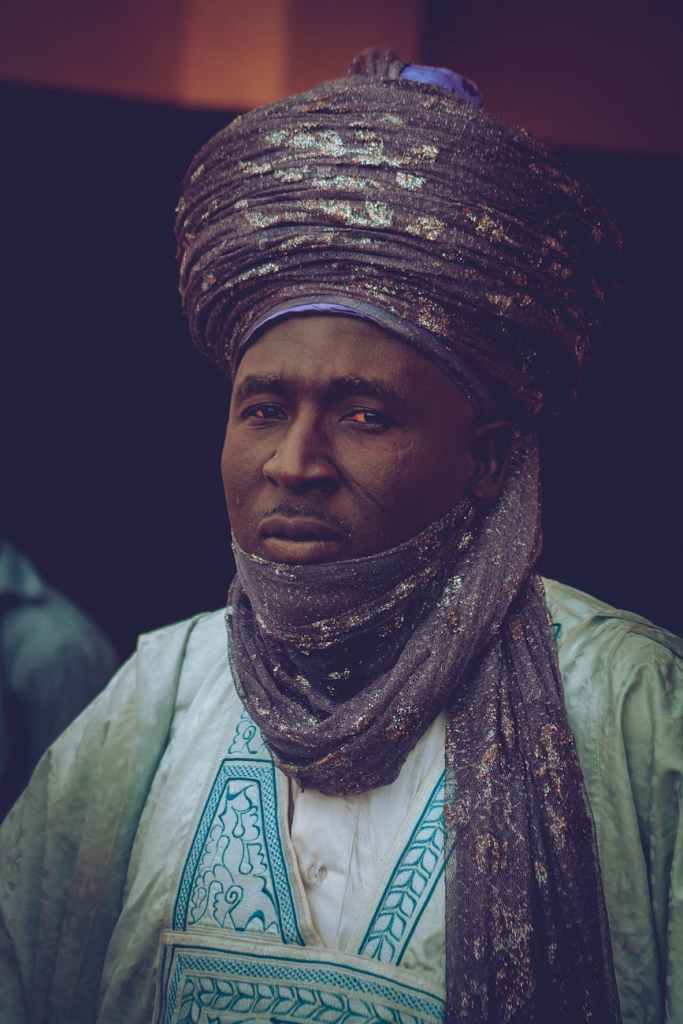
The Ethiopian Eunuch knew how it feels to be unwelcome in church. He was a man of status and power. In an ancient world that prized the beauty of black skin above all else, he was gorgeous. He served in the royal court of his homeland, managing the great wealth of his queen, the Candace. In a world where few people were literate, he was cultured, fluent in Greek, and a student of the Torah. He had spent a small fortune on the scroll of the Prophet Isaiah. He had come to Jerusalem on a great pilgrimage of many miles with a retinue of servants to worship and pray.

The Bible scholars point out that when the eunuch arrived at the Jerusalem Temple, he would have been denied entry. We don’t know how he came to be a eunuch, whether he was born that way, was injured in some horrible accident, or had to say goodbye to his “manhood” before he could become the Treasury Secretary, but it was who he was. He couldn’t do anything about it. He probably heard some less than welcoming scripture quoted to him in Jerusalem, like Deuteronomy 23 and Leviticus 21, which say that anyone with his “problem” cannot be admitted to the assembly or approach God with an offering because it would profane the sanctuary. 

I wonder if we can imagine what it would feel like to be the Ethiopian eunuch, to love God and fear that God did not love him, would never love him, no matter how many pilgrimages he made or prayers he said. As the Ethiopian Eunuch rattled home in his chariot, he read the words of Isaiah 53, which tell of God’s servant who silently suffers in humiliation. Those words must have tugged at his heartstrings, as if they were written about him.

Of course, we don’t have to be a church visitor sitting in the “wrong” pew or the Ethiopian eunuch to wonder if God loves us. Our feelings of welcome and acceptance are also shaped by who we are. The church universal has historically been less than hospitable to some people more than others. Many have had bad church experiences in which they feel judged and condemned. Those who have been divorced may not feel welcome. Those who choose to live together outside of marriage may not feel welcome. Those who are single parents may not feel welcome. My LGBTQ friends and family all have painful stories to share of leaving churches where they were not accepted unless they stayed in the closet. Young people with blue hair, plenty of piercings, or an abundance of tattoos describe the shocked stares and alienating whispers of people in the pews. Even when we look like everyone else, we may harbor secret hurts or shame or bad experiences that make us wonder along with the Ethiopian eunuch, “Is God’s love for me? Is God’s love for us?”

The Ethiopian Eunuch might have stayed an outsider if the Holy Spirit hadn’t stepped in and taken some bold action. The Spirit found the right man for the job, Philip. He wasn’t afraid of those who had been labeled outsiders. In fact, Philip got his start as an evangelist by taking the gospel to the Samaritans, traditional enemies of Israel. So, when the Holy Spirit sent him running down the Gaza Road, Philip was ready. He climbed into the Ethiopian man’s chariot, caught his breath, and began to tell his new friend about Jesus of Nazareth, the fulfillment of Isaiah’s prophecy about a holy servant who was rejected by those he was sent to redeem and suffered for the world’s sins.

As Philip told the good news of Jesus’ ministry, of how Jesus welcomed the outsider, healed the sick, blessed the children, and counted women among his disciples, his Ethiopian neighbor began to get excited.  Really excited. He imagined the possibility that if Jesus had anything to say about it, God might just welcome him, might welcome a person who looked and felt like he did. If the eunuch or Philip questioned what the Holy Spirit intended for them, those questions disappeared as a strange sight shimmered on the desert horizon: a pool of water, sparkling in the midday sun. It was unthinkable, impossible even, but there it was, a big baptismal pool in the middle of that dry and dusty landscape.

Finally, the Ethiopian Eunuch could contain himself no longer, this man who had been excluded from the Temple and made to feel unwelcome in God’s House dared to imagine that he, too, was loved. “Look, here is water!  What is to prevent me from being baptized?” And in response, Philip did not quote Deuteronomy 23 or Leviticus 21. Instead, by the power of the Holy Spirit that had sent him running down the Gaza Road, Philip knew that no one is ever beyond the limits of God’s unfathomably big love.  All were welcomed. All might be claimed in the waters of baptism as God’s beloved children. The driver reined in the horses. The chariot came to a halt. And Philip with his new Ethiopian friend waded into the waters of a love that would not let them go.

It’s a wild and scandalous story that tugs at our heartstrings. It tells the simple truth that God welcomes us when the world—or the church—will not. All are welcome to these waters and claimed as sons and daughters of a holy parent who has a place for us at the table and a home for us in the kingdom. It’s a story that invites us to know our belovedness. It’s a story that dares us to be a more loving people. The Holy Spirit calls to us, as the Spirit did to Philip, setting our feet on the path to welcome and inclusion, to meet people where they are at, to open our eyes and hearts to those who are new. The Spirit calls us to judge less and welcome more. Perhaps we’ll even loosen our death grip on that favorite pew. Perhaps one day all churches will be as welcoming as Jesus.

The freshly baptized Ethiopian Eunuch rode off down the Gaza Road, full of joy and alleluias.  They say that he became the great evangelist of Africa, telling the Candace—and anyone who would listen—all about a God who loves limitlessly, who became flesh, lived and taught, healed and suffered, died and rose again to make that limitless holy love known to all people—a God who is still trying to get that message out even now.

Resources

Matt Skinner. “Commentary on Acts 8:26-40” in Preaching This Week, May 2, 2021. Accessed online at https://www.workingpreacher.org/commentaries/revised-common-lectionary/fifth-sunday-of-easter-2/commentary-on-acts-826-40

Mitzi Smith. “Commentary on Acts 8:26-40” in Preaching This Week, May 6, 2012. Accessed online at https://www.workingpreacher.org/commentaries/revised-common-lectionary/fifth-sunday-of-easter-2/commentary-on-acts-826-40-2

Richard Jensen. “Commentary on Acts 8:26-40” in Preaching This Week, May 10, 2009. Accessed online at https://www.workingpreacher.org/commentaries/revised-common-lectionary/fifth-sunday-of-easter-2/commentary-on-acts-826-40-3

F. Scott Spencer. “Commentary on Acts 8:26-40” in Preaching This Week, April 28, 2024. Accessed online at https://www.workingpreacher.org/commentaries/revised-common-lectionary/fifth-sunday-of-easter-2/commentary-on-acts-826-40-5


Acts 8:26-38

26 Then an angel of the Lord said to Philip, “Get up and go toward the south to the road that goes down from Jerusalem to Gaza.” (This is a wilderness road.) 27 So he got up and went. Now there was an Ethiopian eunuch, a court official of the Candace, the queen of the Ethiopians, in charge of her entire treasury. He had come to Jerusalem to worship 28 and was returning home; seated in his chariot, he was reading the prophet Isaiah. 29 Then the Spirit said to Philip, “Go over to this chariot and join it.” 30 So Philip ran up to it and heard him reading the prophet Isaiah. He asked, “Do you understand what you are reading?” 31 He replied, “How can I, unless someone guides me?” And he invited Philip to get in and sit beside him. 32 Now the passage of the scripture that he was reading was this:

“Like a sheep he was led to the slaughter,
    and like a lamb silent before its shearer,
        so he does not open his mouth.
33 In his humiliation justice was denied him.
    Who can describe his generation?
        For his life is taken away from the earth.”

34 The eunuch asked Philip, “About whom, may I ask you, does the prophet say this, about himself or about someone else?” 35 Then Philip began to speak, and starting with this scripture he proclaimed to him the good news about Jesus. 36 As they were going along the road, they came to some water, and the eunuch said, “Look, here is water! What is to prevent me from being baptized?” 38 He commanded the chariot to stop, and both of them, Philip and the eunuch, went down into the water, and Philip baptized him.


A Wider Welcome

Sabbath Day Thoughts — “A Wider Welcome” Acts 10:44-48

Judy Woodruff is a seasoned journalist with five decades of experience, reporting for NBC, CNN, and PBS. In the early days of her career during the Carter administration, Judy recalls dinner parties in Washington, with elected officials from both parties in attendance. There would be lively debate over policy and platforms, but there were also deep friendships and mutual concern that bridged divides, with conversations about school-aged kids, family traditions, beloved sports teams, and great books.

Woodruff says that spirit of respectful disagreement and abiding friendship has practically vanished in the nation’s capital. We might agree that the same is true for us. Nowadays, it feels like our nation and our communities are divided on almost every front, with bitter disagreement ready to explode at any moment, whether we are speaking of guns, the southern border, the books our children read, the state of our economy, or the war in Gaza. We don’t dare to have thoughtful, adult conversations about tough topics for fear that we will be attacked, shunned, or maligned. We don’t like it. In fact, 93% of us feel that our national divisions are a major problem, and we aren’t very optimistic about our ability to bridge those barriers.

Today’s reading from the Acts of the Apostles tells a story about the power of the Holy Spirit to overcome divisions and forge a new community. It begins with two dreams.

In his duty as a centurion of the Roman Empire, Cornelius had been deployed to Israel, an often-fractious outpost where the Jewish locals resented and sometimes rebelled against occupation. With the one-hundred-man cohort under his command, Cornelius had sailed across the Mediterranean to Caesarea Maritime, the Roman capital of Israel. They settled into imperial housing. They trained, drilled, and were sent out, from time to time, to put down civil unrest, like in Jerusalem at the Passover when Jewish dreams of freedom ran high. Cornelius had not only moved his men across the sea, he had also uprooted his whole family with their servants, slaves, and dependents. All now lived as strangers in a strange land.

But Cornelius, who was raised as a pagan, had fallen in love with the God of Israel. He studied the Torah and offered his prayers to God Almighty. He got to know local Jewish leaders and shared many acts of kindness and charity with the community. Then one day, as he was praying, Cornelius had a vision. An angel appeared to Cornelius, saying that God had heard his prayers and seen his good works. Cornelius must send immediately for the Apostle Peter, who had a message that needed to be heard.

We have all had times when we have been Cornelius. Work or school takes us to a new community. Uprooted in a place that does not feel like home, we make the best of it. We do our job or attend to our studies. We settle ourselves and our family. We try to make connections in the community. But underneath it all, we may feel like strangers in a strange land, unsure and a little homesick.

Meanwhile, Peter had his own dream. Resting and praying in the heat of the day at the home of his friend Simon the Tanner, Peter had also seen a vision, not once but three times. Something like a sheet was lowered by its four corners from the heavens. When Peter peeped inside, he was shocked to see unclean things: scuttling crabs and snapping lobsters, squealing pigs and hopping hares, awkward ostriches and clacking oysters. What really horrified Peter, though, was what God said next, “Get up Peter, kill and eat. What I have made clean, you must not call profane.” Eat all those disgusting, unclean foods that were forbidden by the Torah? Peter was still puzzling over his repeated vision when there was a knock on the door, the delegation from Cornelius arrived to take the apostle to meet the Roman centurion.

Peter began to wonder if his triple vision was really about food, or if God had something else in mind. Peter was not excited about the invitation to meet with the household of Cornelius; those foreign occupiers were about as appealing to Peter as Oysters Rockefeller. Peter’s travel to Caesarea must have been filled with big worries and huge doubts. He struggled with questions, “Didn’t the Torah and the tradition of the elders say that contact with Gentiles was unclean and undesirable? Was he really going to meet with the very worst kind of Gentile – a Roman occupier, the very people who had hung Jesus on a cross?”

We have all been like Peter. We feel pretty clear about what God expects of us. We don’t share Peter’s bias about kosher foods, but we do have opinions about the company we keep. We swing the door of welcome wide for family, friends, and those who seem like us. We’re not so sure about the town drunk or the mentally ill man who is waiting for the alien invasion. We’re not so sure about the colleague who tells racist jokes in the break room or the neighbor whose yard is posted with partisan placards. We might not want to open the door at all to the skinhead or the zealot.

When Peter finally arrived at the home of Cornelius, his apprehension soon vanished. The powerful Roman military officer fell to his knees, humbled that God had brought a human messenger to satisfy his spiritual hunger. As Peter helped his host to his feet and the two men shared their strange and unexpected dreams, Peter came to a new realization. Looking at Cornelius and the eager assembly of Gentile family and friends who had gathered to hear his message, Peter said, “I finally get it. God has shown me that I must not call any person profane or unclean.”

What happened next, was a little like God’s big stamp of approval for the whole barrier breaking encounter. As Peter shared the story of Jesus, his helping, healing ministry, his unselfish suffering on the cross, and his resurrection that broke the earthly powers of sin and death, something remarkable happened. Before Peter had even finished his sermon, the Holy Spirit arrived, falling on those uncircumcised Gentile outsiders. The house erupted with songs of praise and gifts or prayer, with the sound of ecstatic language and words of prophecy. It was a Gentile Pentecost that tore down every barrier that the Roman Empire, the people of Israel, or the Apostle Peter might want to build up.

It began with two dreams. But I wonder if we could add a third dream, one of our own. We won’t have a knock on the door this week, summoning us to Caesarea Maritime. Yet I trust that we will have moments of uncomfortable encounter, moments when we will find ourselves dealing with other people who stir our natural biases and preferences. It will be tempting, perhaps even second nature in this time of deep divisions, to set them straight, write them off, or turn our backs entirely. But what if those moments of aggravation and irritation that punctuate our days are actually moments of grace? Could we even imagine that those encounters are divinely appointed moments in which the Spirit can work to overcome differences and bridge divides?

Judy Woodruff, the seasoned journalist whom I mentioned at the start of my message, is in the middle of a two-year project that she calls “America at the Crossroads.” Her goal is to meet with and listen to as many Americans as she can, to try to understand why we’re so divided. In the first eleven months of her reporting, she visited fourteen states and put together twenty-one reports. She’s still dismayed about our divides, but she sees signs of hope where community members overcome their differences to work together to address local needs.

It reminds me of our local ecumenical council. As congregations, we have some big differences. We can’t agree on whether to take the Bible literally or to read it through the lens of scholarship and social historic research. We can’t agree on the sort of music we should play on Sunday mornings—pipe organ or praise band? We can’t agree on how we pray—liturgy, the words of the pastor, or the ecstatic sound of tongues? We can’t even agree on whether or not women can actually be pastors. But if you present us with a community concern, like hunger or homelessness, the Spirit prompts us to set aside our differences and get busy for the common good, launching the Food Pantry and Grace Pantry, the Community Lunchbox and Samaritan House.

So, if Peter could move past his natural bias to welcome Cornelius, if local churches can overlook our differences to meet human need, then maybe there is hope for our nation yet. It can begin with us. The next time we want to turn away from those whose beliefs and practices are unlike our own, we can remember that they aren’t necessarily evil. It just might be that our discomfort stems from the stretching of our preconceived notions and natural bias. We can dare to remember that God’s welcome is always wider than we imagine. God may be calling us to try something new, to welcome someone new, to build a world where the words “us and them” are heard less, and the words “we and us” are heard more.

We may not be able to singlehandedly overcome America’s divisions, but we can trust that the Holy Spirit can. May we live into the Spirit’s leading and dare to practice a wider welcome.


Resources:

Judy Woodruff. “This is what political division looks like in the U.S. right now” in PBS News Hour, Dec. 19, 2023. Accessed online at  This is what political division looks like in the U.S. right now | PBS NewsHour

Sara Machi. Nine in ten Americans say overcoming divisiveness is now more important than ever before in IPSOS, April 27, 2021. Accessed online at Nine in ten Americans say overcoming divisiveness is now more important than ever before | Ipsos

Richard Jensen. “Commentary on Acts 10:44-48” in Preaching This Week, May 17, 2009. Accessed online at Commentary on Acts 10:44-48 – Working Preacher from Luther Seminary

Jacob Myers. “Commentary on Acts 10:44-48” in Preaching This Week, May 13, 2012. Accessed online at Commentary on Acts 10:44-48 – Working Preacher from Luther Seminary

Jerusha Matson Neal. “Commentary on Acts 10:44-48” in Preaching This Week, May 9, 2021. Accessed online at Commentary on Acts 10:44-48 – Working Preacher from Luther Seminary

F. Scott Spencer. “Commentary on Acts 10:44-48” in Preaching This Week, May 5, 2024. Accessed online at Commentary on Acts 10:44-48 – Working Preacher from Luther Seminary


Acts 10:44-48

44While Peter was still speaking, the Holy Spirit fell upon all who heard the word. 45The circumcised believers who had come with Peter were astounded that the gift of the Holy Spirit had been poured out even on the Gentiles, 46for they heard them speaking in tongues and extolling God. Then Peter said, 47“Can anyone withhold the water for baptizing these people who have received the Holy Spirit just as we have?” 48So he ordered them to be baptized in the name of Jesus Christ. Then they invited him to stay for several days.


“Baptism of Cornelius” by Francesco Trevisani, Public domain, via Wikimedia Commons