The Crossing

Sabbath Day Thoughts — “The Crossing” Joshua 3:7-17

When the Rev. Jim Erdman moved his young family to Saranac Lake in 1958 to serve as our pastor, he found a rapidly changing community. The advent of antibiotics had brought an end to the cold air cure for tuberculosis, the source of local prosperity for more than seventy years. The local population was dropping. Although the roadside sign that welcomed Jim to the village in 1958 said that our village population was 7,000, by 1960, that number had fallen to 6,000. Our sanctuary, which still had the enormous church bell hanging from a shored-up belfry, was noticeably sagging. The Christian Education building in the backyard, which was built in 1893 as a horse barn, needed a new heating system.

Money was tight here at the church. No repairs had been made to the manse, where Jim and his family would live, in seven years. Plaster was cracked, paint peeled, a rickety cure porch had to be torn off, and floor joists needed replacing. The pastor’s pay was often delayed because there wasn’t any money. The church rolls claimed 286 members, but most were inactive or had moved away. In his annual report of 1960, Jim wrote, “This year has found a relatively few members and friends vitally concerned with the work and witness of the church, both here in the community and around the world.” In 1960, the Methodist Church next door offered to buy our property with plans to tear down the building for a parking lot. It must have been a lowball offer, because the session said, “No.”

We struggled with whether or not we could continue. From 1970 to 1972 when Phil Zebley was pastor, Ann Boutilier’s late husband Bill was charged by session with chairing a committee to explore the possibility of a merger with our Methodist neighbors. We tried combined Sunday School classes, shared worship at 8:30am here and 10am there. We even considered having our Holtkamp pipe organ, which had been donated but not yet built, installed next door. Repeated surveys of the congregation showed we were ambivalent about the changes that financial prudence might demand. The exploratory committee on merging asked, “Do you want to see the shared ministry continue?” 46 voted yes, 46 voted no, and 18 people abstained. Times were tough and we were having a hard time seeing what the future might look like.

Our Israelite ancestors knew all about daunting challenges and unsure futures. Forty years of wilderness wandering had at last brought them to the Jordan River and the backdoor to Canaan. There on the far side of the river was the land of their ancestors Abraham, Isaac, and Jacob. There was the land flowing with milk and honey and the promise of descendants as many as the stars in the sky. God was bidding them to cross, but they weren’t so sure about that.

There were big obstacles. The river itself was overflowing and swift, surging with spring snowmelt from the mountains of Lebanon. How could they cross with their children and seniors, flocks and herds? Who would lead? Moses, who took on Pharaoh and won!  Moses, who split the Reed Sea! Moses, who shepherded them in the desert!  Moses, who spoke with God and gave them the law to guide their community! Moses was dead. Joshua, a brash, young, untried leader may have stepped into Moses’ sandals, but could he fill them? That land on the far side of the Jordan was hardly vacant, but occupied by Canaanites, Hittites, Hivites and more. The spies, whom Joshua sent ahead, cautioned that the people of the land were numerous and strong. The cities were fortified and well-defended. It would be easier to remain on that other side of the Jordan as a wilderness people.

Joshua and the Israelites found the courage to cross the Jordan because they knew that God would be with them. That’s what God promised the young Joshua, “I will be with you just as I was with Moses.” Still, it took a lot of courage for the people to muster on the banks of the surging river. But as they looked across to the other side, they remembered forty years earlier, when they had stood on the shores of the Reed Sea with Pharoah’s army in hot pursuit. God had made a way forward then. They decided to trust that God would make a way forward now.

As the toes of the twelve priests bearing the Ark of the Covenant touched the flood, the people left the wilderness as they had entered it, with God holding back the waters. The Israelites left the wilderness behind, knowing that God was in their midst. God called them to a future that they couldn’t quite imagine. Daunting. Uncertain. Unsure. Yet God was faithful still and would be faithful in all the years to come.

It should come as no surprise that the question of merging with the Methodists continued to trouble the waters here at the Presbyterian Church, especially as the Christian Education building (Gurley Hall) became increasingly dilapidated and in need of major capital investment. In 1984 a delegation of church members appealed to session to again approach our neighbors about the possibility of a shared ministry. Indeed, we might be worshipping next door at the Presbydist Methodterian church if a competing vision hadn’t arisen among the people, a vision for a radically different building: two stories with Christian Education classrooms downstairs and a commercial kitchen and Great Hall upstairs. We weren’t too sure about that though. In an initial vote at a congregational meeting in September 1983, 36 voted for the new addition and 25 against.

There were daunting challenges to be faced. First and foremost was money, which remained a persistent problem. We struggled to balance our budget, and the cost for the addition would ultimately reach $265,000—that’s about $869,000 in today’s money. There were questions of leadership, with three different pastors serving the church over the course of two crucial years of discernment between 1983 and 1985. Then, when the choice to build was made, there were other conundrums to face. A contractor botched the concrete foundation. Floods repeatedly soaked the basement. The builder erred by two feet in the measurement of the plans for the new wing.

Despite, the difficulties, we knew that God was calling us to a bigger and better building that would serve us and the community. We put our toes in the water, and miracle of miracles, an elaborate scheme of pledges, loans, and the sale of the manse made the money work. Miracle of miracles, Sally’s late husband Bill Plumb, caught the vision and agreed to spearhead that Fellowship Wing Committee and building efforts. Miracle of miracles, Skip Outcalt worked out a drainage system that would keep the downstairs dry—most of the time. Miracle of miracles, the contractor made good on their measuring mistake by installing distinctive cedar siding for the whole church.

We crossed over into that future that God held ready. We trusted that we could do it because the Lord would be with us, just as the Lord was with the Israelites and Joshua and Moses. When the “new” building was dedicated on November 15, 1987, it was already in use—not only by us, but also by Alcoholics Anonymous, Prime Time Nursery School, Boy Scouts, and Bobbi Damp’s dance studio. I’m told that the possibility of merging with our neighbors was permanently dropped.

On All Saints—Stewardship Commitment Sunday, God calls us to step into the future that God holds ready. We live in challenging times. The rising cost of living inclines us to tighten our belts and close our fists to generous giving. In the lead up to Tuesday’s election, the powers that be—on both sides of the aisle—tell us to see our neighbors as enemies, undeserving of our help or business or friendship. The rise of cultural secularism, which has pushed churches to the margins of society, and the surge in Christian Nationalism, which sells a distorted notion of the gospel as the American Dream, these fundamental cultural shifts have made church unappealing for many of our neighbors. It’s tempting to play it safe. It’s tempting to limit our commitment of time, talent, and treasure. It’s tempting to stay put in the wilderness.

But this morning, Joshua and his Israelite friends, this morning, our ancestors in the faith, right here at the First Presbyterian Church, bid us to consider a different kind of future. It’s a future where we truly see that God is with us. The challenges may be real. The future may feel daunting. Uncertain. Unsure. But the Lord is faithful still. The Lord our God is in our midst. The future calls, my friends. Let’s step out.

Resources

Carolyn Sharp. “Commentary on Joshua 3:7-17” in Preaching This Week, Oct. 30, 2011. Accessed online at https://www.workingpreacher.org/commentaries/revised-common-lectionary/ordinary-31/commentary-on-joshua-37-17-2

Dennis Olson. “Commentary on Joshua 3:7-17” in Preaching This Week, Nov. 5, 2017. Accessed online at https://www.workingpreacher.org/commentaries/revised-common-lectionary/ordinary-31/commentary-on-joshua-37-17-4

Bryan J. Whitfield. “Commentary on Joshua 3:7-17” in Preaching This Week, Nov. 5, 2023. Accessed online at https://www.workingpreacher.org/commentaries/revised-common-lectionary/ordinary-31/commentary-on-joshua-37-17-6

Evelyn Outcalt and Judith Kratts. A History of the First Presbyterian Church of Saranac Lake, 1890-1990. Self-published, 1990.


Joshua 3:7-17

7 The Lord said to Joshua, “This day I will begin to exalt you in the sight of all Israel, so that they may know that I will be with you as I was with Moses. 8 You are the one who shall command the priests who bear the ark of the covenant, ‘When you come to the edge of the waters of the Jordan, you shall stand still in the Jordan.’ ” 9 Joshua then said to the Israelites, “Draw near and hear the words of the Lord your God.” 10 Joshua said, “By this you shall know that among you is the living God who without fail will drive out from before you the Canaanites, Hittites, Hivites, Perizzites, Girgashites, Amorites, and Jebusites: 11 the ark of the covenant of the Lord of all the earth is going to pass before you into the Jordan. 12 So now select twelve men from the tribes of Israel, one from each tribe. 13 When the soles of the feet of the priests who bear the ark of the Lord, the Lord of all the earth, come to rest in the waters of the Jordan, the waters of the Jordan flowing from above shall be cut off; they shall stand in a single heap.”

14 When the people set out from their tents to cross over the Jordan, the priests bearing the ark of the covenant were in front of the people. 15 Now the Jordan overflows all its banks throughout the time of harvest. So when those who bore the ark had come to the Jordan and the feet of the priests bearing the ark were dipped in the edge of the water, 16 the waters flowing from above stood still, rising up in a single heap far off at Adam, the city that is beside Zarethan, while those flowing toward the sea of the Arabah, the Dead Sea,[a] were wholly cut off. Then the people crossed over opposite Jericho. 17 While all Israel were crossing over on dry ground, the priests who bore the ark of the covenant of the Lord stood firmly on dry ground in the middle of the Jordan, until the entire nation finished crossing over the Jordan.
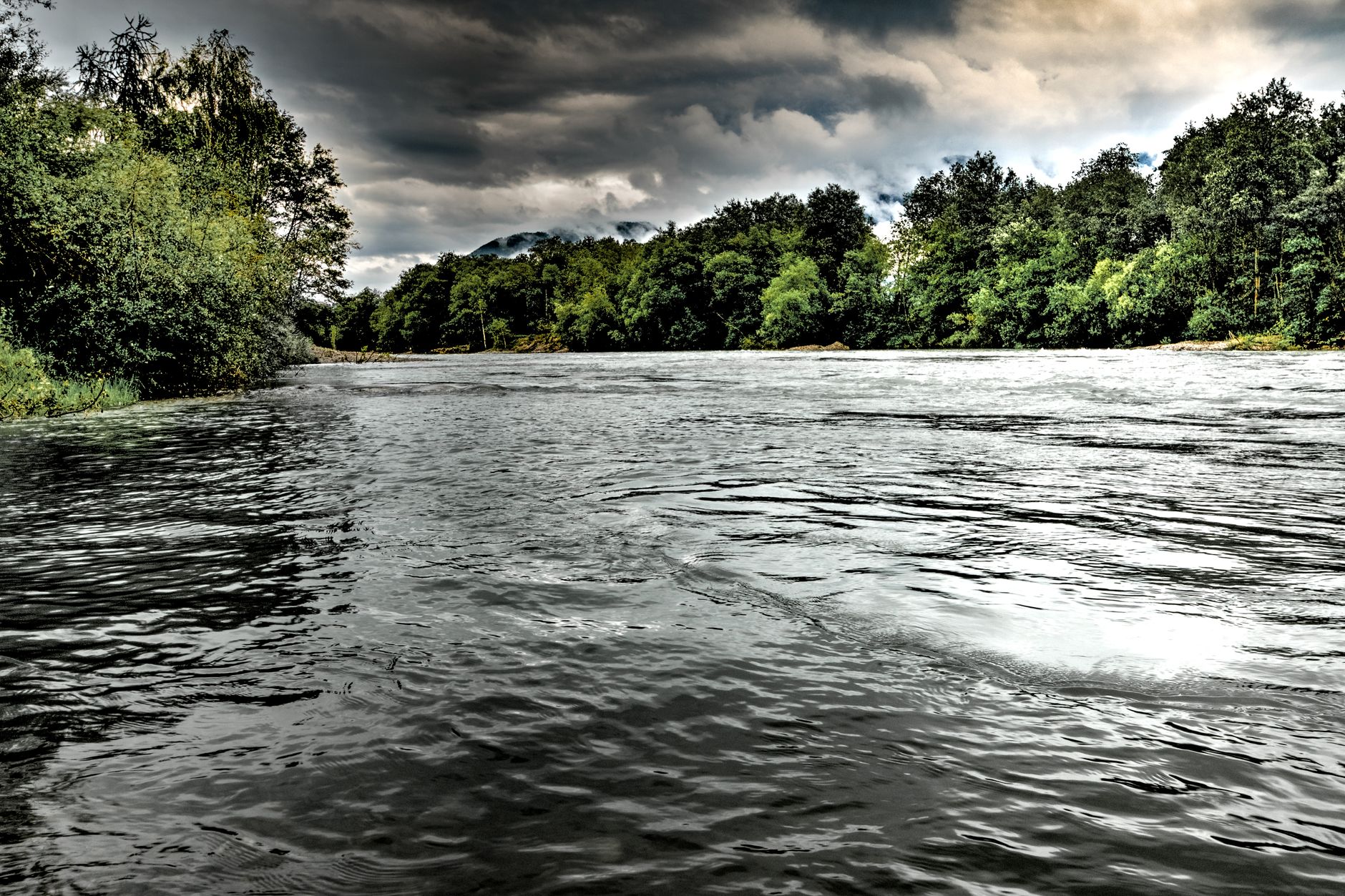

Photo by eberhard grossgasteiger on Pexels.com

Dance Like No One Is Watching

Sabbath Day Thoughts — “Dance Like No One Is Watching” 2 Sam. 6:1-5, 12b-19

In his first letter to Timothy, the Apostle Paul described God as eternal, immortal, and invisible, beyond the full understanding of us, mere mortals. Yet, we have all had moments when we have sensed that we are truly in the presence of the holy. During my first year in seminary, I often worshipped at the Rockefeller Chapel of the University of Chicago. The chapel is more cathedral than church, a cavernous stone space with soaring gothic architecture and somber-hued stained glass in shades of grey, blue, and purple. High above the chancel, though, is the “Light and Fire” window, a dazzling multi-colored stained-glass window, a gift of the class of 1928. Five tongues of flame surge forth from a swirling center of white and yellow, which seems to pulse against a sea of blues. To me, it looked like the moment that God sent creation hurtling across the multiverse with a big bang, or perhaps the burning bush that beckoned to Moses, or the light of Pentecost breaking forth upon waiting disciples. It invited me to a place of reverent awe, to a glimpse of the creator who lies both within and beyond creation.

I know some of you have similarly sensed the holy in creativity. You have been drawn into deep contemplation by Michelangelo’s Sistine Chapel ceiling where the hand of God reaches forth to the waking Adam. Or, you have heard the voice of angels while listening Bach’s St. Matthew Passion in the heart-rending aria “Lord, Have Mercy on Me,” Erbarma Dich.

For others, the nearness of God is sensed in family and human connection. We know there is a God in the wonder of love and the mystery of two made one, who somehow become so much more. We marvel at the numinous in the birth of a baby or the sweet scent of our child’s neck when they reach up to embrace us as we tuck them into bed. We feel something holy when all the generations gather at the holiday dinner table and harmony abounds.

For many of us who call the Adirondacks home, we know the Creator in the creation. As I was writing this message, I looked out the window of my home study to see birch leaves rippling in the summer breeze and a blue heron flying above, wide wings languidly moving, long legs trailing elegantly behind. Praise the Lord. We have glimpsed God on the mountaintop with the Cascade chain of lakes stretched out at our feet, or while paddling our canoes on still waters to the scold of the kingfisher, or while pulling over to watch the sunset’s ebb over Lake Colby.

We may even feel the presence of God right here, in these pews that curve like an embrace. We feel the nearness of God in the sharing of joys and concerns and the offering of prayers. We sense God’s love in the love of a church family that blesses us with compassion in grief and hot meals in times of recovery. We know the faithfulness of God in the remembrance of those who have sat in these pews long before us and in the anticipation of those who will one day follow us.

God is, indeed, eternal, immortal, and invisible, beyond the full understanding of us, mere mortals. Yet we are not strangers to the holy. We all have stories that we could tell.

For our Israelite ancestors, God was known in the Ark of the Covenant. Built in accordance with the instructions that God imparted to Moses on Mt. Sinai, the ark was an acacia wood box, overlaid with finely wrought gold, that held the stone tablets of the Ten Commandments (Ex. 37:1-9). It was topped by the mercy seat – two golden cherubim with wings outstretched to meet in the middle. There, the Israelites believed, the eternal, immortal, and invisible God was enthroned.

The ark traveled with the Hebrew people through the wilderness, led them over Jordan, and circled the walls of Jericho until they came tumbling down. The ark was carried into battle, unleashing destructive power against the enemies of Israel. So powerful was the ark that, when it was captured by the Philistines, it continued to fight—unleashing a wave of plague so merciless that the Philistines gave the ark back. As peace found Israel, the ark’s military adventures came to an end, and it rested in a tent sanctuary, all but forgotten by the people.

David had ruled the united tribes for seven years. Together, they had finally won a decisive battle against the Philistines and were acknowledged as a growing military and economic power on the stage of the ancient Near East. The crafty David had forged alliances by adding wives and concubines to his growing royal retinue. He had fathered seventeen sons, and we’ll never know how many daughters. The City of David, Jerusalem, shone as a light on a hill, a symbol of just how far those former slaves had come since leaving behind the bondage of Egypt.

Today’s reading gives us a feeling for the gratitude that David felt. On the threshold of middle age, David took stock of his rise from youngest son and shepherd boy to the leader of a mighty nation.  David knew that he had God to thank. And in a moment of deep spiritual understanding, David realized that the Ark of the Covenant must be at the center of the life of Israel. Only the ark could be a visible reminder that all they had and all that they were as a nation came from God alone, eternal, immortal, invisible, omnipotent.

So, David traded his royal robes for the simple linen ephod (loin cloth) of the humblest of priests, and he led the people in an ecstatic rite of worship to bring the Ark of the Covenant from the forgotten margins of history to the very heart of the nation. With gratitude and awe, David poured out his soul, lifting his voice in song and allowing his feet to find the rhythm of praise. Soon, all of Israel followed along in a dizzying parade of thanksgiving. The blood of sacrifice was poured out, in seemingly endless libation. It was a scandalous, over-the-top, decadent display, so impassioned that it made the queen blush when, ten miles into the parade, she saw her battle-scarred husband, sweat-soaked, blood-spattered, nearly-naked, hobbling along and croaking songs of praise. The scripture says that everyone got blessed and fed. They returned to their homes remembering the goodness of God and the rightness of their thanks and praise.

We no longer have the Ark of the Covenant at the center of Jerusalem as a reminder of all that God has done for us. Some say it was carried off in the Babylonian invasion, when the Lord left Israel to the consequence of their sin and disobedience. Others say that it was hidden by priests somewhere, deep below the holy city and will one day be unearthed. Fans of Indiana Jones winkingly argue that the ark is in permanent storage, crated and long-forgotten in a government warehouse. Our assurance that God is with us no longer comes from the ark. It’s found in our Lord Jesus, who promised his disciples that he would always be with us, even to the end of time. It’s found in the Holy Spirit, who fills us with the sacred awareness that allows us to see beyond the ordinary to the extraordinary.

David’s story is a powerful reminder to remember that all we have and all we are is a gift from God. The almighty, eternal, immortal, invisible, and only wise God is everywhere and all the time. God continues to claim God’s place at the center of our hearts and our lives. Our ancestors in the Reformed Faith affirmed this in 1648, when they wrote the first question and answer to the Westminster Shorter Catechism, “What is the chief end of humanity? Our chief end is to glorify God, and to enjoy God forever.” Indeed, the Reformers saw in our worship, here and now, a dim anticipation of the endless rejoicing that we will one day know in that far brighter light, on that far better shore.

May we hear David’s invitation to praise and give thanks for all that the Lord has done for us. We don’t have to strip down to our linen ephod. We don’t have to dance like no one is watching. We don’t have to sing ourselves hoarse. We don’t have to offer up bloody sacrifices. We don’t have to scandalize the neighbors.

Instead, we can take the time to notice, name, and rejoice in the goodness of God that finds us every day. We can shed tears of joy and reverence in listening to music that makes our spirit soar. We can hold the littlest member of the family close and dance around the living room. We can raise our arms at the mountain summit or the paddle’s end and wiggle our fingers in the jazz hands of joy or pump our fist in the acknowledgement of majesty. We can make a point of singing a daily doxology to the Lord, who sits enthroned upon the cherubim and finds a home in our hearts.

Let’s take time this week to praise and delight in the Lord, shifting God from the forgotten corners of our lives to the very center of our being, right where God belongs.

Resources

Richard Nysse. “Commentary on 2 Sam. 6:1-5, 12b-19” in Preaching This Week, July 12, 2009. Accessed online at Commentary on 2 Samuel 6:1-5, 12b-19 – Working Preacher from Luther Seminary

Samuel Giere. “Commentary on 2 Sam. 6:1-5, 12b-19” in Preaching This Week, July 15, 2018. Accessed online at Commentary on 2 Samuel 6:1-5, 12b-19 – Working Preacher from Luther Seminary

Amy G. Oden. “Commentary on 2 Sam. 6:1-5, 12b-19” in Preaching This Week, July 11, 2021. Accessed online at Commentary on 2 Samuel 6:1-5, 12b-19 – Working Preacher from Luther Seminary

Klaus-Peter Adam. “Commentary on 2 Sam. 6:1-5, 12b-19” in Preaching This Week, July 14, 2024. Accessed online at Commentary on 2 Samuel 6:1-5, 12b-19 – Working Preacher from Luther Seminary


2 Samuel 6:1-5, 12b-19

6David again gathered all the chosen men of Israel, thirty thousand. 2David and all the people with him set out and went from Baale-judah, to bring up from there the ark of God, which is called by the name of the Lord of hosts who is enthroned on the cherubim. 3They carried the ark of God on a new cart, and brought it out of the house of Abinadab, which was on the hill. Uzzah and Ahio, the sons of Abinadab, were driving the new cart 4with the ark of God; and Ahio went in front of the ark. 5David and all the house of Israel were dancing before the Lord with all their might, with songs and lyres and harps and tambourines and castanets and cymbals. 12It was told King David, “The Lord has blessed the household of Obed-edom and all that belongs to him, because of the ark of God.” So, David went and brought up the ark of God from the house of Obed-edom to the city of David with rejoicing; 13and when those who bore the ark of the Lord had gone six paces, he sacrificed an ox and a fatling. 14David danced before the Lord with all his might; David was girded with a linen ephod. 15So David and all the house of Israel brought up the ark of the Lord with shouting, and with the sound of the trumpet. 16As the ark of the Lord came into the city of David, Michal daughter of Saul looked out of the window and saw King David leaping and dancing before the Lord; and she despised him in her heart. 17They brought in the ark of the Lord, and set it in its place, inside the tent that David had pitched for it; and David offered burnt offerings and offerings of well-being before the Lord. 18When David had finished offering the burnt offerings and the offerings of well-being, he blessed the people in the name of the Lord of hosts, 19and distributed food among all the people, the whole multitude of Israel, both men and women, to each a cake of bread, a portion of meat, and a cake of raisins. Then all the people went back to their homes.


“Light and Fire,” Rockefeller Memorial Chapel, University of Chicago