Torn Open

Sabbath Day Thoughts — “Torn Open” Mark 1:4-11

Elena Bernal was not looking forward to the holidays. The sixty-six-year-old was widowed three years ago in December. Home feels quiet and lonely now, especially at Christmas. Elena breaks down in tears, just thinking about her loss. “We grew up together,” she says of her late husband, “We met in middle school. I miss him so much.”

The world is in the midst of a loneliness epidemic. A Meta-Gallup poll released in October conducted in 142 countries found that one quarter of the world’s population reports feeling very or fairly lonely. The statistics are even higher in the United States. In May, the Surgeon General Dr. Vivek Murthy released a report indicating that half of Americans report experiencing loneliness.

There are a number of reasons for our national surge in loneliness. In this post-pandemic world, more people are working and learning remotely. We’re communicating more remotely, too, with Facetime and Zoom replacing meetings, visits, and face-to-face gatherings. Larger societal changes further contribute to the problem of loneliness. The social media boom, which presents a distorted, idealized vision of the daily life of others, has us scrolling on our phones rather than picking up our phones to make a call to our friends and family. More of us live alone these days. In 1960, only 13% of Americans lived by themselves. Today that number has more than doubled to 29% of us. We may feel it is tougher to form genuine connections, too. In 1972, 45% of us trusted our neighbors. In the midst of the increasing political and social division of our nation, only about 30% of us now say that our neighbors are trustworthy.

Loneliness is bad for our health. It puts us at increased risk for depression, anxiety, addiction, self-harm, and even suicide. The Surgeon General’s report indicates that loneliness increases the risk of premature death by 26%. It’s worse for us than obesity or inactivity. Dr. Murthy compares loneliness to smoking fifteen cigarettes a day. It increases our risk of heart disease by 29%, our risk of stroke by 32%, and among the elderly, the risk of dementia doubles. Feelings of loneliness have seen the greatest increase among those aged 19 to 29. Half of young adults say that in the last week no one had taken more than a few moments to reach out to them or express any sort of genuine care.

If the Meta-Gallup poll and the US Surgeon General are right, then addressing the epidemic of loneliness and isolation is critical to the world’s well-being.

I suspect that there were feelings of loneliness and isolation at play in the crowds who came to hear the fiery preaching of John the Baptist. John spoke boldly of existential loneliness, the alienation and isolation that come when we feel that we are separated from God and our neighbors. In fact, John proclaimed a bold message of repentance, of returning to right relationship with God and community.

Jesus came to the muddy banks of the River Jordan.  He took a seat among the crowds and listened to what John had to say.  Throngs of pilgrims, the whole Judean countryside, had come to gawk at John and listen to his bold exhortation. If we listen up this morning, we can almost hear the rough voice of the Baptizer, the song of the river, and the murmuring of the entranced crowds. Compelled by the power of John’s message, Jesus kicked off his sandals, set aside his staff, bag, and traveling cloak.  He waded into the gritty Jordan to John’s side, and he was baptized. 

We’re told that when Jesus emerged from the river, something extraordinary happened.  The sky was torn open (sxizomenous).  In the Hebrew understanding of the world, the sky was a solid dome, the firmament, established by God at creation.  The Israelites believed that we lived on this side of the firmament while God was on the other. Separate. Holy. Distant. Apart. The Prophet Isaiah gives us a feeling for this separation between God and humanity. When the Israelites lived in exile in Babylon, Isaiah cried out to God, “O, that you would tear open the heavens and come down!” (Isaiah 64:1).  At Jesus’ baptism, God tore open the heavens. God entered into the world to reshape it through this humble carpenter from Galilee.

Jesus went forth from his baptism to live a torn-open life, a life marked by compassion and a willingness to be vulnerable with and for others. He identified with those who lived as outsiders. He called fishermen, tax collectors, and peasants to be his disciples. He broke bread with sinners. Jesus advocated for the powerless – welcoming women to his ministry and blessing the children. Jesus healed, ending the physical, social, and spiritual isolation of lepers, demoniacs, and the disabled. The torn-open Jesus confronted empire and Temple, those who wielded brutal power over others, with the promise of a coming Kingdom where power would be used to help and to heal.

Jesus’s choice for a torn-open life was most clearly revealed in his death on the cross. Even as he underwent unimaginable suffering, he thought of others. He welcomed a repentant thief to paradise. He prayed for God to forgive his executioners. Let’s face it. On the cross, Jesus was literally torn open. Nails brutally pierced his hands and feet. A spear was thrust through his side and into his vital organs.  It’s messy and brutal and awful. And we learn the lengths that God will go for our sake, the limitless love of a torn-open God.

At the moment of Christ’s death, we are reminded of his baptism. The curtain in the Temple that sequestered the holy of holies was torn open from top to bottom. We do not hear God’s voice speaking from the heavens, “This is my Son the Beloved;” rather, a Roman soldier at the foot of the cross, who witnessed the compassion and dignity with which Jesus died, pronounced, “Surely, this man was God’s son.” In living a torn-open life, Jesus granted us a vision of the world that God would have us make. It’s a world where faithful people choose to make a difference by facing head-on all that has separated us from God and one another. It’s world where we trust that on the far side of the world’s worst, new life will rise, and we have a role to play in that new creation.

Michael Rogness, who taught preaching for many years at Luther Seminary, likes to point out that to be baptized is to follow Jesus. We, who were sprinkled as infants, confirmed as teens, or chose baptism as adults, have embarked on a life of discipleship. That doesn’t mean that we are perfect or exceptionally pious, walk on water or know every chapter and verse of scripture. Rather, discipleship is that choice for a torn-open life of compassion and caring. It prompts us to feed hungry neighbors, welcome strangers, embrace those who feel like outsiders, and bless children. The torn-open life is a calling to help, to heal, and to love. Always love.

Our choice to follow Jesus in this torn-open life may be the antidote for the world’s epidemic of loneliness. According to the Surgeon General, social connection is the most important tool in overcoming social isolation. Human beings who are embedded in a web of concerned and caring individuals thrive. Our interest and caring for others are as essential to our well-being—and theirs—as the air we breathe and the food we eat. Medical science confirms that the world becomes healthier, physically and mentally, when people are respected and valued, looked after and look out for. Our loving care and interest in others, our choice to be torn open, changes us and changes others. Loneliness ends. We find meaning, purpose, motivation, and hope. We begin to see the world that Jesus would have us make, where the barriers that separate us from our neighbors and disconnect us from God are torn open.

Elena Bernal’s Christmas was a lot better than she expected. She accepted an invitation to attend Christmas lunch at the Serving Seniors Wellness Center in Cortez Hills where she lives. Serving Seniors is a nonprofit organization that is dedicated to helping low-income seniors. They provide nutritious food, but they believe the social interaction and hospitality that are shared when they break bread together is even more important. Elena ran into an old friend Gwendolyn King at the lunch. The two women visited and shared news as they enjoyed a traditional holiday meal. Alan Busteed, looking dapper in a three-piece suit, moved from table to table playing carols on his violin and taking requests. As Elena left, she was given a Christmas present and a $10 gift card. It was nice, really nice.

The Serving Seniors Wellness Center has a banner that hangs above the buffet. It reads, “Remember, you are a citizen of the world, and everybody needs you. You’ll find happiness in the giving of yourself.” If you ask me, it sounds a lot like a torn-open life.

Resources

Tammy Murga. “Christmas Day can be lonely, quiet for many. Serving Seniors made it a fun one for these San Diegans,” in The San Diego Union-Tribune, Dec. 25, 2023. Accessed online at https://www.sandiegouniontribune.com/

Dr. Vivek Murthy, Julianne Holt-Lunstad, et al. Our Epidemic of Loneliness and Isolation: The Surgeon General’s Advisory on the Healing Effects of Social Connection and Community. Washington, DC: Office of the Surgeon General, May 2, 2023. Accessed online at https://www.hhs.gov/sites/default/files/surgeon-general-social-connection-advisory.pdf

Paul S. Berge. “Commentary on Mark 1:4-11” in Preaching This Week, January 8, 2012. Accessed online at workingpreacher.org.

Michael Rogness. “Commentary on Mark 1:4-11” in Preaching This Week, January 8, 2012. Accessed online at workingpreacher.org.

Adrianna Rodriguez. “Americans Are Lonely and It’s Killing Them” in USA Today, Dec. 24, 2023. Accessed online at https://www.usatoday.com.

Theresa Coleman. “2023: The Year of the Loneliness Epidemic” in The Week Magazine, December 9, 2023. Accessed online at https://theweek.com.


Mark 1:4-11

4John the baptizer appeared in the wilderness, proclaiming a baptism of repentance for the forgiveness of sins. 5And people from the whole Judean countryside and all the people of Jerusalem were going out to him, and were baptized by him in the river Jordan, confessing their sins. 6Now John was clothed with camel’s hair, with a leather belt around his waist, and he ate locusts and wild honey. 7He proclaimed, “The one who is more powerful than I is coming after me; I am not worthy to stoop down and untie the thong of his sandals. 8I have baptized you with water; but he will baptize you with the Holy Spirit.” 9In those days Jesus came from Nazareth of Galilee and was baptized by John in the Jordan. 10And just as he was coming up out of the water, he saw the heavens torn apart and the Spirit descending like a dove on him. 11And a voice came from heaven, “You are my Son, the Beloved; with you I am well pleased.”


Photo by Pixabay on Pexels.com

Christ the Savior Is Born!

Sabbath Day Thoughts — “Christ the Savior Is Born” Luke 2:1-7

Every Christmas Eve, we host a family-friendly service of worship at church for the children and those feeling a bit childlike. This Christmas, we shared the stories of the Angel Gabriel, the shepherds Reuben and Simka, and the Wise Ones. Merry Christmas, my friends!

“The Most Important Message”

As told by Gabriel

Greetings, favored ones! Do I have a story to tell you! Whew! Let me catch my breath. I just flew in from the great beyond.

(Takes a seat in the rocker and pretends to take a big drink from a goblet).

That’s much better. How very nice to meet you! I’m the Angel Gabriel, God’s finest messenger. Whenever there is important news to share, you can count on me to get the word out.

Many, many years ago, God had the most important message of all to share. It was a very difficult time in the life of the Hebrew people. King Herod was in charge and he had to be the greediest and the grouchiest king ever. He loved to build fancy palaces, and who do you think had to pay for them? The people! Herod got richer and richer, but the people got poorer and poorer.

The people dreamed of the day when a true king would come to Israel. In fact, God had long ago promised to send a special child who would grow up to be their king.  This child would speak God’s words to the people. This child would teach them how to love God and love one another.  This child would be holy.  The people so longed for the birth of this child that they used to sing about it,

Sings: “O come, O come, Emmanuel, and ransom captive Israel…”

Do you know what Emmanuel means?  It means “God with us.”  This special child to be born to the Hebrew people would remind them that God was with them, even when their lives felt very hard.

One day, God knew that the time was right for this special baby to be born.  Of course, there was only one messenger who could carry news that important: me!

God said, “Gabriel, I have an extra special mission for you.  Go to the village of Nazareth in Galilee.  There you will find a young woman named Mary.”

I have to say that when I heard I had to go to Nazareth, I wondered if God had the right destination. Nazareth! You know what they say about Nazareth: can anything good come from there? It was just a poor and sleepy little village, filled with farmers and carpenters and shepherds. And how would I find the right Mary?   It had to be the most popular name for girls in all of Israel. 

I must have looked like I was confused because God smiled at me. My heart got all warm, my halo began to glow, and I just knew that God had it all figured out. 

God said, “Go to young Mary, who is engaged to the carpenter Joseph, who is descended from the house of King David.  Tell her that I have chosen her from among all the women in Israel to bear a holy child.” 

Well, I was ready to fly off right away, but God stopped me and said, “Gabriel, don’t forget to tell Mary that her baby boy will be the Messiah. She is to name him Jesus because he will save the people from their sins.”

So off I went to Nazareth.  The village was even more miserable than I remembered.  It didn’t seem like a very promising place for the Messiah to be born, but God always knows what God is doing.  Even humble beginnings can lead to great things. 

In Nazareth, I found Mary.  Her mother had sent her to the well to collect water for her family. I must have been a very surprising sight.  Mary looked ready to run away, but I told her, “Do not be afraid, Mary, for you have found favor with God.”  That got her attention.

Mary wasn’t much more than a girl, but as I looked into her eyes, I could tell that she was very special.  She was kind and generous. She liked to laugh, and she was very patient with her little brothers and sisters. Best of all, Mary loved God with all her heart.  I knew she was just right for the special mission that God had given her, so I told her, the Holy Spirit would be at work within her and she would give birth to the holy child that the people had longed for all through the long years.

Even though it sounded a little scary and really impossible to have such a special baby, Mary thought hard about the message that I had given her from God.  Then she gave the answer that God was counting on, “Here I am, Lord.  I’m ready to be the mother of that special child.”  Do you remember what that child would be named?

(wait as if to hear the name Jesus)

Right you are!  Jesus!

Well, you know me—God’s finest messenger. Time to deliver some more important news. Gotta go, but I have arranged for some special people to come and tell you all about the birth of that special child Jesus. 

Shalom, my friends!

“The Shepherds Hear Good News”

2 shepherds are seated at the campfire.  One sings,

“Go tell it on the mountain, over the hills and everywhere;

Go tell it on the mountain that Jesus Christ is born!”

Reuben:  Hey, we’ve got company!  Come on over, watch out for the lambs.  Take a seat by our campfire. 

Simka:  Did Gabriel send you? I bet you want to hear the story about that special night.  The night when the skies were filled with choirs of angels. They sang for us, sharing good news of great joy.

Reuben:  Those holy sounds are still ringing in my ears. 

Simka: Allow me to introduce myself.  I’m Simka, a shepherd by trade. 

Reuben:  And I’m Reuben.  We tend sheep and goats.  We spend most of our time with the flocks. 

Simka: We have to keep them moving so that they find green grass to nibble, clean water to drink, shade from the noonday sun, and shelter for the night. 

Reuben: (brandishes his staff) Sometimes, I have to keep them safe, too – protect them from wild dogs or even lions. 

Simka: It’s hard work being a shepherd – it takes patience and bravery.  At night, we shepherds bring our flocks together. 

Reuben: We light a small fire, share a meal, tell stories, and take turns watching the animals.  Can’t you just imagine us with the other shepherds at the campfire with our flocks gathered around us? 

Simka: Well, the story that we’re about to tell you is the best story ever.  I know because I was there.

Reuben: So was I!  One night, on the hills just outside of Bethlehem, we were spending the night with our flocks.

Simka: It was dark and quiet on the hillside – just like every night. Then suddenly, there was a great light, shining and sparkling in the sky.  

(Gestures to the sky, pointing to where the angels appeared.)

Reuben: We looked up and saw an angel, a messenger from the Lord. The glory of God shone down upon us, all shimmery and beautiful and good. 

Simka: We were so amazed that we were also very frightened. Nothing like this had ever happened to us before, and we didn’t know whether to cry or laugh or run away – or maybe all three!

Reuben:  The angel could see just how frightened and uncertain we were, so the angel said to us, (speaks in a loud angel voice) “Don’t be afraid. I bring you good news which will be a great joy to all people. Today, in the town of Bethlehem, a Savior has been born, Christ the Lord. This will be the sign for you: you will find the baby wrapped in swaddling clothes and lying in a manger.” 

Simka:  Suddenly, there was a huge crowd of heaven’s angels with the first angel.  They filled the whole sky with their light and their wonderful song, “Glory to God in the highest and peace to God’s people on earth.”  The memory of those angel voices still gives me the shivers!

Reuben: When the angels had left and gone back to the heavens, we looked at one another in amazement.  We pinched ourselves to make sure that we were really awake. 

Simka: Then, we began to wonder.  Could this baby be THE BABY?  You know, the special baby that God had promised to our people, a baby who was God’s child, who would grow up to be a great king for our people. 

Reuben: There was only way to find out. We had to go to Bethlehem and see for ourselves. We left our sheep on the hillside and hurried into the village.

Simka: When we got to Bethlehem, we looked around until we found Mary and Joseph in the stable.  And there he was! The baby Jesus was lying in the manger.

Reuben: It was just as the angel had promised!  This was our newborn king!  Seeing him filled us with hope. We celebrated and told Mary and Joseph all the things that the angels had said about the child.

Simka: Even the animals seemed to find joy and peace in the presence of the baby. I think even the camels were smiling! As wereturned to our flocks, we were filled with joy.  We sang and praised God at the top of our lungs. 

Reuben: The villagers thought we had stopped at the tavern for a libation, but we were just filled with the Holy Spirit.  God had sent a holy child who would be the savior of our people. 

Simka:  Do you know who that child was?

(cups her hand to her ear and waits to hear, “Jesus.”)

That’s right, Jesus!  Holy be his name!

Reuben sings:

“Go tell it on the mountain, over the hills and everywhere;

Go tell it on the mountain that Jesus Christ is born!”

The Wise Ones Seek the Newborn King

Props: a Bible Atlas, bincoulars

The Scene: Two wise men stand at the front of the sanctuary.  One is pondering a Bible Atlas.  The other scans the horizon with the binoculars.

Balthazar (with Atlas):  I wonder what happened to Melchior.  We sent him over to Blue Moon more than an hour ago for bagels and coffee.  I’m hungry!

Caspar (with binoculars):  You know his sense of direction. I bet he got lost.

Balthazar: Hey, Caspar, put those binoculars down. We’ve got company.

Caspar: Greetings honored guests!  (bows humbly)  I’m Caspar, the youngest and most handsome of the Magi. If only Melchior had returned, we would invite you to share breakfast with us.

Balthazar (grandly):  Allow me to introduce myself.  I am Balthazar, the wisest of the Magi.  Give me a star chart and a telescope and I can take you from one end of the Milky Way to the other – and back. 

Caspar:  I am only a young and humble learner, yet even I can tell you the secret language of the heavens.  (Listens carefully.)  Ah!  Alpha Centauri just ordered brunch!  Hey! She ordered lox for her bagels! Why didn’t I think of that? I hear the lox is so good at Blue Moon, too!

Balthazar (rolls eyes):  We have spent many, many years learning the mysteries of the heavens. Great Kings call on us for advice.  They wouldn’t so much as launch a ship or build a palace without checking with us first to see if it was in the stars. 

Caspar:  As long as you’re here and we’re waiting for Melchior with the coffee, allow us to tell you about our greatest journey ever.  Back in our homeland Persia, we saw a star.  (points to the heavens) 

Balthazar (stands extra tall with importance):  This was a special star, the star of a king. The heavens were telling us that a child was to be born who would be the king of the Jews!  God had promised this child to the people from of old – a Messiah, a Prince of Peace who would lead the people in paths of peace. 

Caspar:  Like a beacon, the star called us across the desert sands to Israel:  (speaking with the voice of the star) “Balthazar, Caspar, Melchior!  Come, come to Israel to see the little tiny Hebrew King!”

Balthazar (rolls eyes):  So, we left Persia with a great caravan to meet and worship the newborn king.  We brought special treasures, gifts to honor the baby king. 

Caspar:  Gold! Hah, hah!  A king’s ransom!

Balthazar:  Frankincense!  A fragrant offering fit for the holiest of children!

Caspar:  Myrrh! Ooh-hooo! The rarest of oils to anoint the greatest of kings!

Balthazar:  At last, our caravan came to Jerusalem, the holy city.  We stopped at King Herod’s Palace, seeking the newborn king.  But alas!  Herod the Great new nothing of our Messiah.

Caspar:  He was very interested, though, in what we had to say. 

Balthazar:  Herod gave us directions to Bethlehem, the city of David.  Long ago, the Hebrew prophets had foretold that from Bethlehem the true heir of King David would one day arise.

Caspar:  That Herod, what a great guy!  He even wanted us to come back when we found the little king so that he could give him a special present.

Balthazar:  Across the miles from Jerusalem to Bethlehem, we rode our camels through shepherd’s fields and olive groves.  Ahead of us in the night sky, rode the star of wonder.  It led us to the strangest of places.

Caspar:  You see, we believed that we would find the holy child in a great palace, swaddled in silks and tended by an army of nannies.  But God had something different in mind. 

Balthazar:  We found the little king in the humblest of homes.  He had been born in a stable, surrounded by camels, sheep, goats, chickens, and oxen!  His mother was the youngest of maids, not much more than a girl.  Her husband Joseph was a humble craftsman, a carpenter by trade.

Caspar (in awe):  Yet the star stopped and shone its beautiful light upon that humble dwelling, upon that tender babe.  The heavens had brought us to the Lord of the Universe!

Balthazar (confessing):  Even I, the mighty Balthazar – the wisest of the Magi – was overcome by the wonder of that moment and the holiness of the child.

Caspar:  We fell to our knees in worship.  Then we shared our royal gifts.

Balthazar:  We would have stayed in Bethlehem forever to worship him.  Yet we were warned in a dream to leave, to return home by another way.

Caspar:  The heavens told us to avoid King Herod at all costs!  It seems he wasn’t such a nice guy after all.

Balthazar:  Returning by another way brought us to your lovely village, honored guests.

Caspar:  Hey!  I think I smell coffee!  (points to the back of the church) Look!  It’s Melchior.  Hey, can you go back and add lox to my order!

(The Wise Men depart with singing)

“Star of wonder, Star of night, Star with royal beauty bright,

westward leading, still proceeding, guide us to thy perfect light!”


Luke 2:1-20

2In those days a decree went out from Emperor Augustus that all the world should be registered. 2This was the first registration and was taken while Quirinius was governor of Syria. 3All went to their own towns to be registered. 4Joseph also went from the town of Nazareth in Galilee to Judea, to the city of David called Bethlehem, because he was descended from the house and family of David. 5He went to be registered with Mary, to whom he was engaged and who was expecting a child. 6While they were there, the time came for her to deliver her child. 7And she gave birth to her firstborn son and wrapped him in bands of cloth, and laid him in a manger, because there was no place for them in the inn. 8In that region there were shepherds living in the fields, keeping watch over their flock by night. 9Then an angel of the Lord stood before them, and the glory of the Lord shone around them, and they were terrified. 10But the angel said to them, “Do not be afraid; for see—I am bringing you good news of great joy for all the people: 11to you is born this day in the city of David a Savior, who is the Messiah, the Lord. 12This will be a sign for you: you will find a child wrapped in bands of cloth and lying in a manger.” 13And suddenly there was with the angel a multitude of the heavenly host, praising God and saying, 14“Glory to God in the highest heaven, and on earth peace among those whom he favors!”[ 15When the angels had left them and gone into heaven, the shepherds said to one another, “Let us go now to Bethlehem and see this thing that has taken place, which the Lord has made known to us.” 16So they went with haste and found Mary and Joseph, and the child lying in the manger. 17When they saw this, they made known what had been told them about this child; 18and all who heard it were amazed at what the shepherds told them. 19But Mary treasured all these words and pondered them in her heart. 20The shepherds returned, glorifying and praising God for all they had heard and seen, as it had been told them.]


Photo by Vinu00edcius Vieira ft on Pexels.com

No One Knows

Sabbath Day Thoughts — “No One Knows” Mark 13:24-37

Christians have been trying to determine the date of the second coming ever since the first coming.

Irenaeus, the second century Bishop of Lyon, was an influential leader of the early church.  He believed that the world was created 5,500 years before Christ, and creation would come to an end after 6,000 years. According to Irenaeus, the Son of Man would return with great power and glory in the year 500. He was wrong.

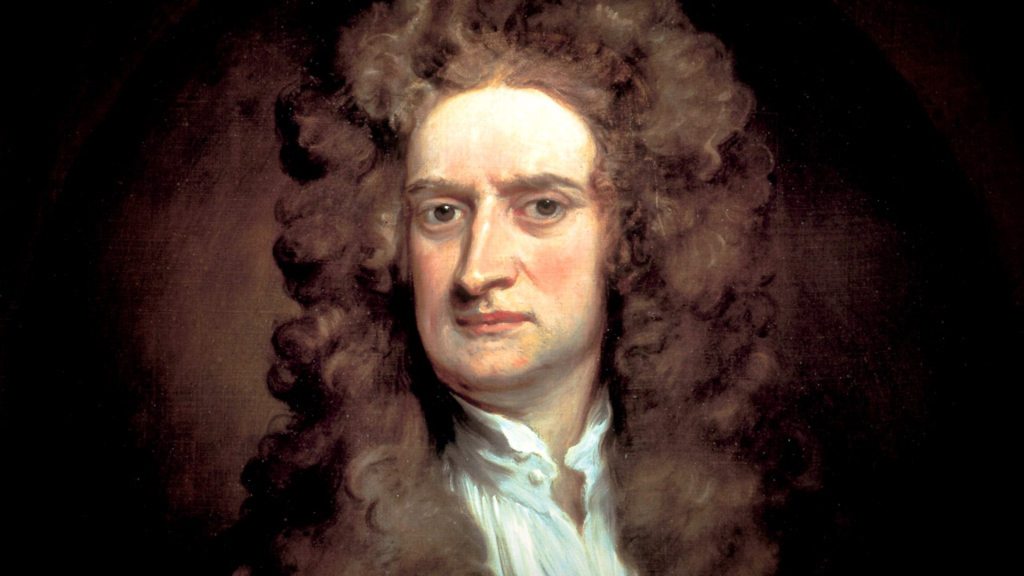
In the seventeenth century, the English mathematician, physicist, astronomer, alchemist, and theologian Sir Isaac Newton believed that the number “1260” had particular significance in the prophetic books of the Bible. Newton theorized that the world would come to an end in the year 2060; that’s 1,260 years after the creation of the Holy Roman Empire. Proponents of Newton’s theory abandoned his point of view in 1806 when the last Holy Roman Emperor, Francis II of the House of Habsburg-Lorraine, abdicated his title and released all Imperial states and officials from their oaths and obligations to the empire.

William Miller was a 19th century American Baptist minister. He proclaimed that the Lord would return on October 22, 1844. His teaching was wildly popular, launching a religious movement known as Millerism. When Miller’s world-ending prophecy failed, his followers called it the Great Disappointment. Hiram Edson, who would go on to establish the Seventh Day Adventist Church, said, “Our fondest hopes and expectations were blasted, and such a spirit of weeping came over us as I never experienced before… We wept, and wept, till the day dawn.”

Jesus warned his followers that “no one knows” when the fateful return of the Son of Man will come. Neither the angels in heaven, nor the Son, but only the Father knows. Bible scholars like to call today’s reading from the thirteenth chapter of Mark’s gospel the “Little Apocalypse.”  As Jesus spoke these scary words, he was surrounded by his disciples.  From the Mount of Olives, they looked across the Kidron Valley to the Holy City of Jerusalem and the splendor of the Temple.  Jesus anticipated the sack of the city and the destruction of the Holy of Holies by the Romans in just a few decades, during the Jewish Rebellion against the empire.  In a coming world that would feel like the heavens were falling and the very fabric of creation was coming apart at the seams, Jesus knew that his followers would need purpose and a long view of God’s work in the world if they were going to endure.

To guide his disciples through the dark days to come, Jesus told a parable. He described a wealthy landowner preparing to depart on a long journey. Before leaving, he entrusted the care of his property to his slaves, knowing that each would be busy with his work until the watchful doorkeeper heralded the master’s return. In the first century world of the Mediterranean, slaves were essential in managing estates.  Cleaning house, tending animals, working fields, preparing meals, nurturing children, keeping accounts, and producing wine and olive oil, all depended upon the work of slaves.  Slaves were considered a part of the landowner’s family. In fact, the Latin word for the extended household of landowners and slaves together was familias—family. The intimacy and affection of the familias is preserved to this day in the ruins of Pompeii, which was destroyed by the eruption of Mt. Vesuvius in the year seventy-nine.  There we can read the words of a prayer inscribed on the walls of a household shrine, asking God for the safe return of a beloved master from a journey.

When we consider that social and historical context of slaves, masters, and the familias, we see that in today’s reading, Jesus was characterizing himself as the landowner. His arrest and execution were imminent. Before the week was out, Jesus would be betrayed, convicted, tortured, and executed. Although Jesus would rise and promise to come again in glory, for the disciples it would feel as if Jesus had gone on a very long journey, with no end in sight. In the coming years of watching and waiting, Jesus hoped that his friends would continue to faithfully and conscientiously serve him.  Just as a familias anticipated a master’s impending return with loyalty and service, the disciples would need to keep the faith and keep up the good work.  He trusted his friends to preach the gospel, heal the sick, tend to the vulnerable, and pray always for his speedy return, saying, “Maranatha!”  Come soon, Lord!

Many of us struggle with today’s reading because it is apocalyptic in tone – there is a sense of the immediacy of the Day of Judgment and a nearness of the return of Jesus in glory. Let’s face it. Almost 2,000 years is a long wait. We’re not feeling especially vigilant this Advent. For most of us, we are pretty comfortable with the way things are here and now. We have three square meals a day. We have enough, maybe more than enough. We live in safety in a beautiful part of the world. It’s not a problem for us that the second coming seems to be slow in arriving.

That attitude shifts, though, when we stir some chaos and pain into the recipe of our lives. Just ask the Christians in Gaza and the West Bank. They are praying, “Come, Lord Jesus.” Just ask the neighbor whose spouse has died a few weeks before Christmas—they would like to tear open the heavens so that God might come down. Just ask the friend who is reeling with that unexpected, bleak diagnosis, she wouldn’t mind seeing the Son of Man coming in glory. While we wait for the Second Coming, there are plenty of little apocalypses. There is an abundance of those frightening and unwanted world-changing, life-threatening, perspective-altering events. Those little apocalypses leave us longing for the Lord to be here now.

The Rev. Tracy Daub, who wrote our book study for Advent Holy Disruption, reminds us that the world-changing work of the End Times has already begun. We saw it in Jesus, who showed us what it looks like to live with compassion, forgiveness, inclusion, and love. Jesus called for an essential reordering of our world, an in-breaking of God’s Kingdom, that is yet to be fully realized. That’s where we find ourselves, between the two Advents, the first and second coming. Our work as members of Jesus’ familias is to serve the Kingdom that is “already but not yet.”

What is the work that the Master would have us do in this waiting time? It looks a lot like what Jesus and his faithful servants did. It’s feeding the hungry and welcoming the outsider. It’s forgiving those who have wronged us and praying for those who feel short on hope. It’s sharing the good news with the everyday words and actions of our lives. It’s working for a world where Israelis and Palestinians break bread together. It’s inviting to supper that mournful neighbor who feels lost in grief. It’s holding the hand and walking alongside the friend who feels lousy. We live with bold hope and compassionate love. And if we are very faithful servants of the Master, this world may even sense the coming of the Son of Man as we work with hope and love amid the little apocalypses of our world.

Frank J. Tipler, who teaches math and physics at Tulane University, published a book in 2007 called The Physics of Christianity. In the first chapter, Tipler maintains that the Second Coming of Christ will occur within 50 years—by 2057. I suspect that Tipler, like Irenaeus, Sir Isaac Newton, and William Miller, will be proven wrong by the passage of time. After all, Jesus told us, we “do not know when the time will come.”

We do know that while we wait there is work to be done. Let’s get busy, my friends. Amen.

Resources

Buggs, Courtney.  “Commentary on Mark 13:24-37” in Preaching This Week, Nov. 29, 2020.  Accessed online at workingpreacher.org.

Daub, Tracy S. Holy Disruption: Discovering Advent in the Gospel of Mark, (Louisville: Westminster John Knox Press, 2002).

Siker, Judy Yates. “Exegetical Perspective on Mark 13:24-27” in Feasting on the Word, Year B, vol. 1. Louisville: Westminster John Knox Press, 2008.

Sheldon, Natasha. “Roman Domestic Slavery” accessed online at Ancient History and Archaeology.com.


Mark 13:24-37

24“But in those days, after that suffering,

the sun will be darkened,and the moon will not give its light,
25and the stars will be falling from heaven,and the powers in the heavens will be shaken.

26Then they will see ‘the Son of Man coming in clouds’ with great power and glory. 27Then he will send out the angels, and gather his elect from the four winds, from the ends of the earth to the ends of heaven.

28“From the fig tree learn its lesson: as soon as its branch becomes tender and puts forth its leaves, you know that summer is near. 29So also, when you see these things taking place, you know that he is near, at the very gates. 30Truly I tell you, this generation will not pass away until all these things have taken place. 31Heaven and earth will pass away, but my words will not pass away.

32“But about that day or hour no one knows, neither the angels in heaven, nor the Son, but only the Father. 33Beware, keep alert; for you do not know when the time will come. 34It is like a man going on a journey, when he leaves home and puts his slaves in charge, each with his work, and commands the doorkeeper to be on the watch. 35Therefore, keep awake—for you do not know when the master of the house will come, in the evening, or at midnight, or at cockcrow, or at dawn, 36or else he may find you asleep when he comes suddenly. 37And what I say to you I say to all: Keep awake.”


Portrait of Sir Isaac Newton by Godfrey Kneller, 1702. Public domain, via Wikimedia Commons.