Sabbath Day Thoughts — “Late Comers” Matthew 20:1-16
Many years ago, before I went to seminary, I was a young adult living in a diverse urban neighborhood. My daily path to work took me past the local 7-11 convenience store. What I remember most about the 7-11 was the crowd of Hispanic men who hung out there every morning—rain or shine, weekends, too! I wondered, didn’t they have anything better to do than stand on the corner and hiss at me as I hurried to catch my train?
One morning, as I was rushing by, I saw a big contractor’s van pull up to the curb, the kind a house painter or roofer might use. The driver leaned out the window and gestured to a few of the waiting men. They quickly scrambled into the back of the van and away they went. Another morning, as I hurried by, I saw a big pick-up truck stop. The back was full of the plants and tools of the landscaping business. The driver held up his hand to show that he was looking for five workers. Immediately five men vied to climb into the bed of the truck and away it rolled.
I soon realized that the 7-11 wasn’t so much a hang-out spot as it was a job-seeking spot. There was some unwritten law of the city that told day laborers to show up at the 7-11 because tradesmen of all sorts would stop there, looking for help. I’m guessing that many of the men who waited at the 7-11 were undocumented. I’m also fairly certain that the bosses who hired them paid less than a living wage for very hard work. It was probably also true that those bosses couldn’t find anyone else to do that backbreaking, gritty labor.
Occasionally, I’d find myself rushing past the 7-11 later in the day. I would see a few day laborers still lingering, looking up anxiously as vehicles slowed, still hoping that someone might stop, invite them to hop in, and put them to work. These workers were often old and gray or barely past puberty or physically frail. There were always more men eager for work than there were bosses ready to hire them. It was a whole world of hard physical work and meager wages that I never knew existed. All those day laborers were dependent upon the initiative and generosity of folks who were much more fortunate than they were.
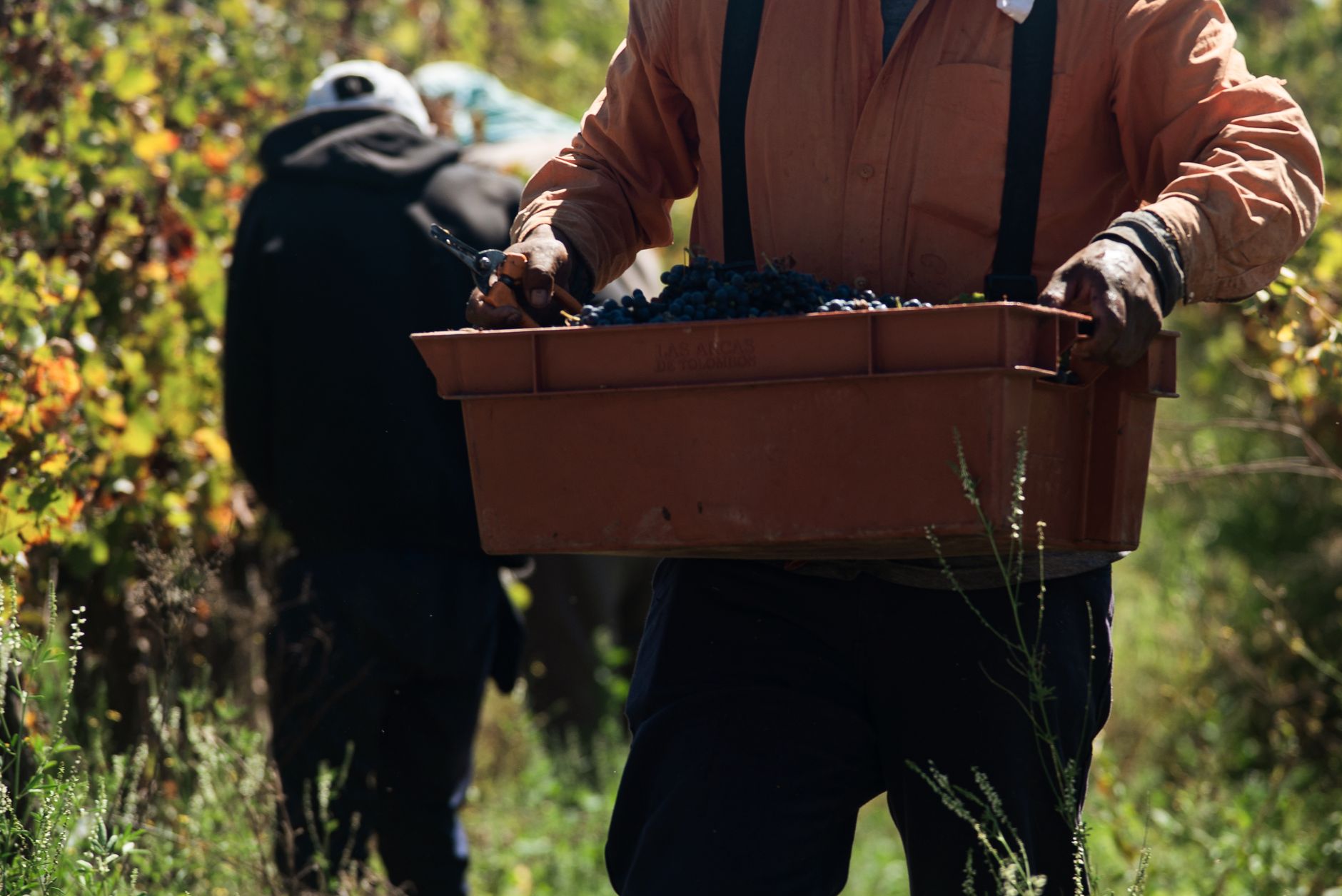
In our gospel lesson today, Jesus described a similar scenario. In Jesus’ time, workers also congregated in the marketplace to seek employment. These were everyday folks who eked out a subsistence living from a garden plot and a goat or two. They depended upon seasonal labor to make ends meet. Jesus says that the kingdom of heaven is like a vineyard owner, seeking workers for his vineyard. At the crack of dawn, the vineyard owner recruited a few early risers and agreed to pay them each a denarius, just enough to meet the daily need of a large, poor family. Then, he sent them into the vineyard to work. Again and again throughout the day, the vineyard owner recruited workers, even at the eleventh hour, at 5:00, when the sun was sinking low and the shadows were lengthening, the vineyard owner hired folks waiting for work and promised to pay them what is right.
When quitting time came, the vineyard owner sent his manager to pay the workers, handing him a generous purse and instructing him to make sure the last were paid first. The workers lined up, last hired to first hired, and as the manager went down the line, he reached into the vineyard owner’s purse and fished out a silver denarius, pressing the same wage into each worker’s palm. The lucky one-hour workers couldn’t believe their good fortune, and those hard working twelve-hour-laborers grumbled that those one-hour-slackers shouldn’t receive the same wage. They’d worked harder and longer. They had the blisters, sore backs, and sunburns to prove it. But the vineyard owner would hear none of it. If he chose to be generous with those who were late in coming, why was that of any concern to them?
Jesus tells us that this is the way the kingdom of heaven works. How we feel about this parable has a lot to do with whether we see ourselves as early risers or latecomers. Among Jesus’ critics were scribes, Pharisees, and devout Jews who had been laboring in God’s vineyard—serving the Kingdom of God—all their lives. They looked at the sinners, tax collectors, lepers, and no-account-losers whom Jesus welcomed into the Kingdom. It wasn’t fair that people like that should receive the same divine love and heavenly reward that they expected. I’m not sure whether the story Jesus told eased the tension with his critics or just ruffled more feathers. The outrageous love and mercy of God can be hard to wrap our heads around. Think of Jesus, telling this shocking and uncomfortable story to people who didn’t want to hear it. Think of Jesus, who knew he would one day be brutally killed to reveal God’s limitless love and mercy for us.
Now, here’s what would really ruffle the feathers of Jesus’ critics. This story sounds like it is all about work. Doesn’t it? But it is really all about grace. God loves us—not because we are the hardest workers, keeping every jot and tittle of the Torah, wearing God out with our prayers, and impressing the neighbors with our exceptional piety. Rather, God simply chooses to love us because God is love. Whether we find this truth and come to God at the eleventh hour or we have known our belovedness from the cradle, we are loved and welcomed. There is a place for us in the Kingdom.
The story of the workers in the vineyard sounds less unfair and unsettling when we realize that we are actually all one-hour workers. We are all latecomers who get the whole denarius, who find salvation late in the day, despite our meager efforts. We are the tax collectors and sinners. We are the uppity women. We are the lepers, and gentile outsiders. We all come to the Kingdom of Heaven late in the day, undeserving of the whole denarius.
We have our reasons for that. We waited all day to go to the vineyard, but no one wanted us because we were too old and infirm, too green and inexperienced, too weak and unclean. We didn’t make it to the vineyard on time because we had overwhelming crises at home that needed our undivided attention. We showed up late because we got lost down that wrong road of addiction or compulsion or sin. We almost didn’t make it to the vineyard at all because we were so depressed that we couldn’t pick our heads off the pillow. We rolled into the vineyard at the eleventh hour because we didn’t even know that the vineyard was hiring.
We are the latecomers. How happy we are to learn that we are accepted and welcomed, loved and rewarded! How happy we are that God generously shares without measuring our worth! That crazy vineyard owner gives and gives and gives without counting the cost. Thank you, Lord.
I doubt that the 7-11 in my old neighborhood is still an open-air labor market. Aggressive immigration enforcement has disrupted local economies, especially those employment opportunities that others don’t want, employment opportunities that are hard and gritty and poorly compensated. I’m sure there are bosses out there still in need of workers. I’m sure there are workers, both early risers and latecomers, wondering how they can support families.
I’m sure the vineyard owner hopes that we will one day realize that grace is freely given for all, whether we are early risers or we are those who come to the vineyard at the eleventh hour. Perhaps we will one day move past our ruffled feathers. Perhaps one day we will know that the love and welcome of Jesus are intended for all.
Resources
Karl Jacobson. “Commentary on Matthew 20:1-16” in Preaching This Week, Sept. 18, 2011. Accessed online at https://www.workingpreacher.org/commentaries/revised-common-lectionary/ordinary-25/commentary-on-matthew-201-16-3
Ira Brent Driggers. “Commentary on Matthew 20:1-16” in Preaching This Week, Sept. 21, 2008. Accessed online at https://www.workingpreacher.org/commentaries/revised-common-lectionary/ordinary-25/commentary-on-matthew-201-16-4
Kimberly Wagner. “Commentary on Matthew 20:1-16” in Preaching This Week, March 5, 2023. Accessed online at https://www.workingpreacher.org/commentaries/narrative-lectionary/laborers-in-the-vineyard-2/commentary-on-matthew-201-16-8
Matthew 20:1-16
20 “For the kingdom of heaven is like a landowner who went out early in the morning to hire laborers for his vineyard. 2 After agreeing with the laborers for a denarius for the day, he sent them into his vineyard. 3 When he went out about nine o’clock, he saw others standing idle in the marketplace, 4 and he said to them, ‘You also go into the vineyard, and I will pay you whatever is right.’ So they went. 5 When he went out again about noon and about three o’clock, he did the same. 6 And about five o’clock he went out and found others standing around, and he said to them, ‘Why are you standing here idle all day?’ 7 They said to him, ‘Because no one has hired us.’ He said to them, ‘You also go into the vineyard.’ 8 When evening came, the owner of the vineyard said to his manager, ‘Call the laborers and give them their pay, beginning with the last and then going to the first.’ 9 When those hired about five o’clock came, each of them received a denarius. 10 Now when the first came, they thought they would receive more; but each of them also received a denarius. 11 And when they received it, they grumbled against the landowner, 12 saying, ‘These last worked only one hour, and you have made them equal to us who have borne the burden of the day and the scorching heat.’ 13 But he replied to one of them, ‘Friend, I am doing you no wrong; did you not agree with me for a denarius? 14 Take what belongs to you and go; I choose to give to this last the same as I give to you. 15 Am I not allowed to do what I choose with what belongs to me? Or are you envious because I am generous?’ 16 So the last will be first, and the first will be last.”