Sibling Rivalry

Sabbath Day Thoughts — “Sibling Rivalry” Genesis 25:19-34

Sibling rivalry is a form of competition among brothers and sisters. It’s normal and healthy, as long as it doesn’t become destructive to the children involved or their families. Unless we are only children, we all experience it. The newborn infant comes home from the hospital and the older child wants to send him back. Siblings bicker over who gets to sit up front in the car and who has to ride in back. Sisters vie over favorite toys, clothes, or friends. Brothers and sisters compete for top grades, best athletic achievements, greatest popularity, and most awards at graduation. Does any of this sound familiar?

When sibling rivalry is healthy, it can be helpful. As children navigate their relationship with a sibling, they develop social skills that are needed in life. We learn to communicate with one another. We learn to negotiate for what we want and need. That involves compromise, working it out by giving a little and getting a little. It also demands that we learn to share. Communicating, negotiating, compromising, and sharing, mastering those abilities serves us well across our lifespan.

Social scientists tell us that, at its heart, sibling rivalry is the competition for the love, affection, or attention of one or both parents.  When a parent consistently favors one child over another, it fans the flames of sibling rivalry and may drive it in an unhealthy direction. Over half of adults report continued competition with their siblings far into adulthood. Even when healthier bonds are formed, rivalry can reappear later in life, especially when making decisions about aging parents. Does any of this sound familiar?

Our reading from Genesis considers the rivalry between twin brothers Jacob and Esau. Last week, we learned of the promising marriage between Isaac and Rebekah, but twenty years passed without children to bless the union and continue the covenant with God. When Isaac’s prayers were answered and Rebekah’s womb was opened, she wondered if she would survive her pregnancy as the brothers struggled violently within her. We listened in as God reassured the despairing Rebekah that God’s plan was unfolding within her: two nations would be born, each longing to best the other with the younger ultimately rising to ascendancy.

From the start, the brothers were very different. Esau was born first, big, hairy, and red. He would be named accordingly. Esau means hairy, and his nickname Edom means red. Jacob came next, hairless and grabby, reaching out to grasp his brother’s heel, and he would be named accordingly, too.  Ya’aqov means the grabber, the supplanter, the heel, the trickster. Esau was a man of the great outdoors, a hunter. Jacob was a man of the camp, a shepherd. The sibling rivalry that started in Rebekah’s womb was inflamed over the course of childhood as each parent preferentially favored one boy. Isaac doted upon Esau. Rebekah adored Jacob.

This rivalry was further incited by what was at stake for the two boys. Even though they were twins, Esau had a preferential birthright. He was entitled to the bekora, that’s Hebrew for the inheritance of the firstborn, a two thirds share of the inheritance of the family’s wealth. Jacob would only receive one third. Esau would also follow his father as the patriarch of the family, with greater social responsibility and standing. Esau was further entitled to the baraka, that’s Hebrew for blessing—the blessing of the patriarch would be conferred by Isaac to Esau, including the covenant with God.

Jacob wanted what Esau had. First, he exploited his brother’s hunger after a failed hunting trip. A tasty bowl of lentil stew passed as a suitable exchange for the bekora, the birthright. Later, as Father Isaac aged and lost his vision, his preferential love for Esau continued, so Jacob, with the help of his mother, conspired to also steal the baraka. Disguising himself as his hairy twin and tempting his blind father with a savory meat stew, Jacob received the patriarch’s blessing and the generational passing of the covenant. When news of the trickery came to light, Isaac grieved, Esau exploded into murderous rage, and Jacob ran for his life.

Sibling rivalry is a repeated theme of scripture. Firstborn Cain slew his younger brother Abel in a fit of jealousy. Jacob, who was preferentially loved by his mother, would do the same with his boy Joseph, setting up a bitter rivalry among his sons. Generations later, when Israel needed a king, the older sons of Jesse were passed over for younger brother David, whom they saw as a bratty little bragger. Even Jesus had to contend with sibling rivalry among his followers, including two sets of brothers. They sparred repeatedly over who was the greatest, like brothers James and John wrangling with one another over a preferential seat in the coming Kingdom of God.

As only Jesus could, he used the rivalry of his followers to teach a lesson about discipleship. In response to the question of who was the greatest, Jesus placed a child as a role model in the midst of his friends—this was greatness: humility, vulnerability, and obedience. In response to Jame’s and John’s rivalry over preferred status in the Kingdom, Jesus taught his friends that if we wish to be master of all, we must be servant of all. Greatness was found in following him in the way of self-giving, self-sacrificial love.

That wise and wily Jesus! He knew a thing or two about human development. To be a disciple, the childhood spirit of rivalry and our longing to be best-loved must be transformed. Instead of selfish interest, disciples must pursue other-interest. The skills we acquire in the natural course of our sibling rivalries, like communicating, negotiating, compromising, and sharing, aren’t meant to serve only ourselves. Those skills are meant to serve God and the world around us. In truly following Jesus, as our self-interest transforms to other-interest, the hungry are fed, the sick are healed, the stranger is welcomed, and the vulnerable are provided for. As we live fully into our calling as disciples, we forge a world where the bekora and the baraka (the inheritance and the blessing) abound for all God’s children, sisters and brothers all.

This ancient story of the sibling rivalry between Esau and Jacob has something to say to us today. It’s a message for parents to love freely and equally, to see and affirm each child as special and unique. It is also an encouragement to come alongside our children as they cope with rivalry. We can encourage our children to share their feelings. We can teach them strategies for conflict resolution. We can model for them our own healthy communication, reasonable negotiation, compromise, and sharing. We can trust that the healthy lessons learned as children will be a blessing to our sons and daughters at any age.

This ancient story of the sibling rivalry can also be a calling to renewed discipleship. It’s a call to self-examination about core questions. Where must our self-interest and personal preoccupation be tempered by Jesus’ invitation to humility, vulnerability, and obedience? If greatness is found in being servant of all, how are we doing?  Jesus, the beloved Son, forfeited his power and privilege to live among us, love freely, and share abundantly. It’s an example that can move churches and communities past division and nudge us closer to the Kingdom.

Finally, this ancient story of the sibling rivalry is a word to the nations. When our Israelite ancestors told this story they saw in it the rivalry between two neighboring nations. Edom would arise from the descendants of Esau. Israel would emerge from the descendants of Jacob. Throughout their history, Edom and Israel had a tumultuous relationship characterized by both conflict and cooperation. The Edomites were often seen as adversaries, and they occasionally allied with other nations—like the Babylonians—against Israel, leading to military confrontation.

This age-old spirit of rivalry and conflict between nations continues to plague our world. Russia invades Ukraine. Congo and Rwanda wage repeated wars over natural resources. Pakistan and Afghanistan skirmish over borders and militant attacks. Even our nation is at odds with brothers and sisters on the world stage whether we are engineering regime change in Venezuela and Cuba or battling it out in the Straits of Hormuz. Jesus might encourage the nations of the world to transform those sibling rivalries, to put down our weapons and pick up those essential skills that our childhood disputes can foster: healthy communication, reasonable negotiation, compromise, and sharing. Perhaps we could even forge a world where there is bekora and baraka—inheritance and the blessing—for all God’s children. What a world that would be!

Jacob may have sought to steal both inheritance and blessing, but he would end up alienated and exiled from kin and country for twenty years. Both inheritance and blessing would pass from generation to generation in God’s time, at God’s discretion. Both brothers, Jacob and Esau, would be blessed in their own ways. We’ll learn more about that in the coming weeks. Sibling rivalry may be healthy and universal, but let’s learn the lessons it is meant to teach and move on. May we go forth to love generously, follow Jesus more nearly, and build a world where there is bekora and baraka for all. Amen.

Resources:

Claire McCarthy, Howard LeWine, ed. “Sibling Rivalry Is Normal—but Is It Helpful or Harmful?” In Harvard Health Publishing: Pediatric Health, April 15, 2026. Accessed online at health,harvard.edu.

Carole Moore Pfaffly. “Sibling Rivalry” In EBSCO Research Starters, 2024. Accessed online at https://www.ebsco.com/research-starters/psychology/sibling-rivalry

Kathryn Schifferdecker. “Commentary on Genesis 25:19-34” in Preaching This Week, July 16, 2017. Accessed online at https://www.workingpreacher.org/commentaries/revised-common-lectionary/ordinary-15/commentary-on-genesis-2519-34-4

Matthew Schlimm. “Commentary on Genesis 25:19-34” in Preaching This Week, July 12, 2026. Accessed online at https://www.workingpreacher.org/commentaries/revised-common-lectionary/ordinary-15/commentary-on-genesis-2519-34-7

Valerie Bridgeman. “Commentary on Genesis 25:19-34” in Preaching This Week, July 16, 2023. Accessed online at https://www.workingpreacher.org/commentaries/revised-common-lectionary/ordinary-15/commentary-on-genesis-2519-34-6


Genesis 25:19-34

19 These are the descendants of Isaac, Abraham’s son: Abraham was the father of Isaac, 20 and Isaac was forty years old when he married Rebekah, daughter of Bethuel the Aramean of Paddan-aram, sister of Laban the Aramean. 21 Isaac prayed to the Lord for his wife because she was barren, and the Lord granted his prayer, and his wife Rebekah conceived. 22 The children struggled together within her, and she said, “If it is to be this way, why do I live?” So she went to inquire of the Lord. 23 And the Lord said to her,

“Two nations are in your womb,
and two peoples born of you shall be divided;
the one shall be stronger than the other;
the elder shall serve the younger.”

24 When her time to give birth was at hand, there were twins in her womb. 25 The first came out red, all his body like a hairy mantle, so they named him Esau. 26 Afterward his brother came out, with his hand gripping Esau’s heel, so he was named Jacob. Isaac was sixty years old when she bore them.

27 When the boys grew up, Esau was a skillful hunter, a man of the field, while Jacob was a quiet man, living in tents. 28 Isaac loved Esau because he was fond of game, but Rebekah loved Jacob.


29 Once when Jacob was cooking a stew, Esau came in from the field, and he was famished. 30 Esau said to Jacob, “Let me eat some of that red stuff, for I am famished!” (Therefore he was called Edom.) 31 Jacob said, “First sell me your birthright.” 32 Esau said, “I am about to die; of what use is a birthright to me?” 33 Jacob said, “Swear to me first.” So he swore to him and sold his birthright to Jacob. 34 Then Jacob gave Esau bread and lentil stew, and he ate and drank and rose and went his way. Thus Esau despised his birthright.

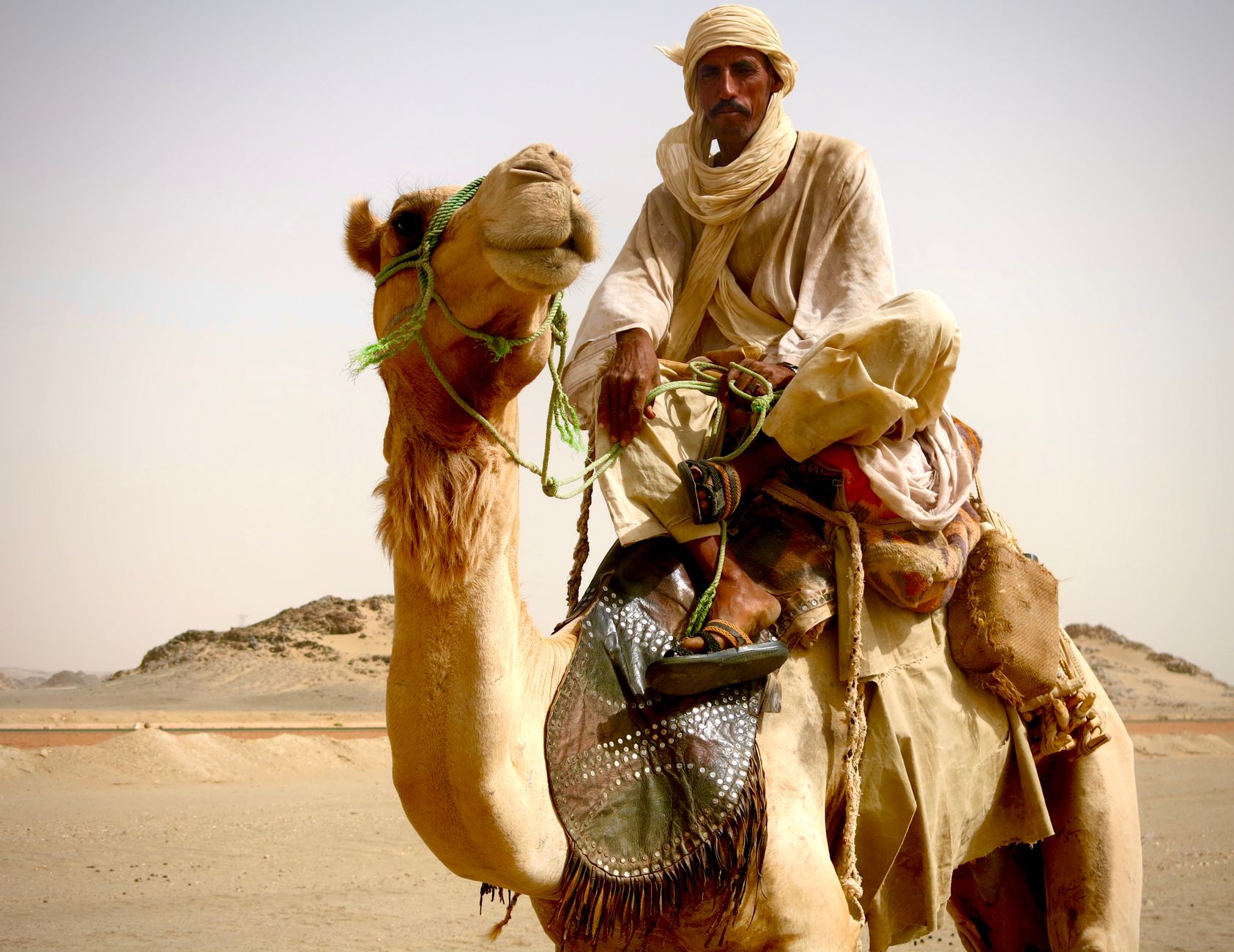
Photo by Jep Gambardella on Pexels.com

The Hidden Hand of God

Sabbath Day Thoughts — “The Hidden Hand of God” Genesis 24

“I see three.” It was Sheilah, the wife of a retired pastor. Sheilah attended the church where I was serving as an intern. She was a deeply spiritual person, who spearheaded the church’s prayer chain. Sheilah’s most noted and controversial gift was the ability to see angels. That’s right angels, which she perceived as orbs of light surrounding individuals or institutions. The church was struggling with multi-million dollar building projects on the horizon and not much money in the bank. “Don’t worry,” Sheilah told us, “The angels have promised that God will provide.” That sounded like some pie-in-the-sky wishful thinking, but God did provide. A community partnership, an influx of generous gifts, a surprising bequest, and the needed repairs were miraculously accomplished.

Now Sheilah had me in her sights, “I see three angels,” she said, as if this were the most obvious of facts. Apparently, I had a hidden vanguard of angels accompanying me.

I looked around. No visibly discernible orbs of light. “Three? Really? Is that, like, a lot.”

Sheilah wasn’t fazed by my question, “Well, some people have more, some less. They’re there. I promise. They are always with you.”

I found her promise both reassuring and a little creepy. I think I said something lame in response, like “Gee, thanks.” I wished I had Sheilah’s spiritual vision, so that when faced with big and uncertain tasks, like discerning a call to ministry, I could tune-in to angels and trust God’s constant presence.

Genesis 24 tells the story of the search for a bride for Isaac. Abraham’s son had been through a lot. First, his big brother was driven from the camp. Next, his father tried to sacrifice him on Mt. Moriah. But God had acted in dramatic ways in both instances to assure the safety of the banished brother and to stay the hand of his father’s execution. Now, Isaac’s mother Sarah had died. Isaac needed some good news.

The quest for a bride was assigned to the senior-most servant in Abraham’s camp, a man who oversaw the patriarch’s vast herds and accumulated wealth. He was loyal and capable, but the job was big and uncertain. Really, Abraham should have gone himself, but he was old and unwilling to make the 570-mile round-trip journey on camelback. There would be difficulties along the way: no hotels, no rest stops, no gas stations, no police to call if bandits should appear. It would be a long trip to a place that the servant had never seen, and he was in search of a family he had never met, a family that Abraham and Sarah had left behind sixty-two years before. Even if the servant did find the right family, how would he convince a bride to leave home, country, and kin to marry a stranger sight unseen. The poor guy didn’t even have a choice in the matter. Abraham owned him. Imagine the doubt and uncertainty that arose within the servant as he considered the task that Abraham commanded him to undertake.

We are no strangers to big, uncertain tasks. Just ask any parent who has felt the overwhelming sense of responsibility as they brought their newborn home from the hospital. We are no strangers to big, uncertain tasks. Just ask any caregiver who provides support for a beloved one, whether it is a spouse with healthcare needs, a child with disability, or that sandwich generation who provides support for both kids at home and aging parents. We are no strangers to big, uncertain tasks. Just ask anyone who is stepping into a new and weighty endeavor, like jumping to a new job, returning to school, or accepting a big community responsibility. We have all faced duties that feel daunting, maybe even impossible.

Abraham must have known that his servant was feeling a lot like a new parent or an overburdened caregiver or a worker jumping into a different job, because he assured the man that he would not be alone on his big undertaking. The angel of the Lord would go before him. With holy help like that, success was assured. Abraham may have felt certain, but I suspect that the servant felt a little like me when Sheilah said I had three angels on my side—questioning and unsure.

In the Jewish tradition, when the rabbis have read this story of the servant in search of Isaac’s wife, they have seen what they call hester panim. That’s Hebrew for the hidden face of God. Yes, God shows up in scripture as God did when Ishmael was banished and Abraham tried to sacrifice Isaac. God shows up in spectacular, undeniable ways. Yet, God may also be unseen and unheard. Behind the scenes, God’s providential hand is actively guiding outcomes. The Lord is at work, even when we feel that the angels are hidden and God is indiscernible. When faced with those big, uncertain tasks, we can trust that God is there.

We may not be able to see angels up ahead of us, but when faced with those big, uncertain tasks, we can lean-in to the hidden hand of God. Our courage, prayer, and actions can play a role in aligning our purpose with God’s purpose. If we aren’t sure where to begin, we can consider Abraham’s servant and the three steps he took to achieve his daunting mission.

He began with prayer, making a holy vow with Abraham. He prayed again when he reached Aram, “Lord, God of my master Abraham, give me success today, and show kindness to my master.” He went on in prayer, imagining before God a young woman with gifts of kindness and hospitality who would welcome him and his camels. Then, when he found Rebekah, he rejoiced, praising God in prayer.

Big, uncertain tasks need lots of prayer. Prayer to get us started. Prayer when we aren’t sure what’s next. Prayer when the going gets tough. Prayer when things finally come together. Prayer reminds us that we are not alone. Prayer invites the hidden hand of God to be at work. Prayer rejoices in God’s providence. Pray, my friends.

Next, the servant paid careful attention and took appropriate action. Among the women of Nahor who came to the well to draw water, the servant spotted Rebekah, young, beautiful, and strong. All it took was a request for a little water and the servant was drinking from her jug. She then voluntarily offered to water the ten camels. Bible scholars like to point out that a camel can drink between twenty and thirty gallons of water. Rebekah was a worker! The servant could hardly wait to put the bracelets on her wrist, slip the ring in her nose, and visit the family with his master’s proposal.

When we are in the midst of our big, uncertain undertakings, it helps to attend to the moment. We often worry about what is next and ruminate about what has been. But it is the present moment that calls for our attention. When we are grounded in the here and now, we see things as they truly are. We watch for God at work in the earthy details. We see the hand of God in the everyday, ordinary, and mundane. When we are fully present, it is easier to see, to know, and to act. Be present, my friends.

Finally, the servant sought the wisdom of the community. First, he told her father and brother the whole story, and they affirmed his conclusion, “This is the Lord’s doing.” Next, Rebekah chimed in, agreeing to leave everything, return with the servant, and marry a man she had never met. At last, upon return to Canaan, the servant told his story a third time to Isaac, who affirmed the servant’s work by taking Rebekah into his mother’s tent.

We need community as we tackle our big, uncertain tasks. We need others to listen to our story, offer wisdom, and provide affirmation or thoughtful redirection. We need others, who will make time for us and support us. We need folks to hold our dreams and help us stay our course. We need people to offer helping hands and caring smiles. Are we seeking the support of the community my friends?

Abraham’s servant disappeared from scripture after he completed his impossible mission. But I like to imagine that Abraham raised a glass to him at the wedding feast. I like to imagine that Isaac thanked him often for finding the love of his life. I like to think that when Rebekah gave birth to twin boys, the servant felt like a proud uncle. I like to think that when Abraham assigned him his next impossible mission, he took a deep breath and remembered that the hidden hand of God was always at work, and he would be okay.

We have all faced responsibilities that feel daunting, maybe even impossible. I suspect that this week will be no different for any of us. Unless we suddenly develop the holy certainty of Abraham or the angel-vision of Sheilah, we may think we aren’t up to the task. Let’s dare to trust that the hidden hand of God is at work and lean-in with prayer, attention, and the help of the community. We’ve got this—God’s got this.

Resources

Matthew Schlimm. “Commentary on Genesis 24” in Preaching This Week, July 5, 2026. Accessed online at https://www.workingpreacher.org/commentaries/revised-common-lectionary/ordinary-14/commentary-on-genesis-2434-38-42-49-58-67-7

Valerie Bridgeman. “Commentary on Genesis 24” in Preaching This Week, July 9, 2023. Accessed online at https://www.workingpreacher.org/commentaries/revised-common-lectionary/ordinary-14/commentary-on-genesis-2434-38-42-49-58-67-6

Amanda Benckhuysen. “Commentary on Genesis 24” in Preaching This Week, July 5, 2020. Accessed online at https://www.workingpreacher.org/commentaries/revised-common-lectionary/ordinary-14/commentary-on-genesis-2434-38-42-49-58-67

Kathryn Schifferdecker. “Commentary on Genesis 24” in Preaching This Week, July 9, 2017. Accessed online at https://www.workingpreacher.org/commentaries/revised-common-lectionary/ordinary-14/commentary-on-genesis-2434-38-42-49-58-67-4


Genesis 24

24 Now Abraham was old, advanced in years, and the Lord had blessed Abraham in all things. 2 Abraham said to his servant, the oldest of his house, who had charge of all that he had, “Put your hand under my thigh, 3 and I will make you swear by the Lord, the God of heaven and earth, that you will not get a wife for my son from the daughters of the Canaanites, among whom I live, 4 but will go to my country and to my kindred and get a wife for my son Isaac.” 5 The servant said to him, “Perhaps the woman may not be willing to follow me to this land; must I then take your son back to the land from which you came?” 6 Abraham said to him, “See to it that you do not take my son back there. 7 The Lord, the God of heaven, who took me from my father’s house and from the land of my birth and who spoke to me and swore to me, ‘To your offspring I will give this land,’ he will send his angel before you, and you shall take a wife for my son from there. 8 But if the woman is not willing to follow you, then you will be free from this oath of mine; only you must not take my son back there.” 9 So the servant put his hand under the thigh of Abraham his master and swore to him concerning this matter.

10 Then the servant took ten of his master’s camels and departed, taking all kinds of choice gifts from his master, and he set out and went to Aram-naharaim, to the city of Nahor. 11 He made the camels kneel down outside the city by the well of water; it was toward evening, the time when women go out to draw water. 12 And he said, “O Lord, God of my master Abraham, please grant me success today and show steadfast love to my master Abraham. 13 I am standing here by the spring of water, and the daughters of the townspeople are coming out to draw water. 14 Let the young woman to whom I shall say, ‘Please offer your jar that I may drink,’ and who shall say, ‘Drink, and I will water your camels’—let her be the one whom you have appointed for your servant Isaac. By this I shall know that you have shown steadfast love to my master.”

15 Before he had finished speaking, there was Rebekah, who was born to Bethuel son of Milcah, the wife of Nahor, Abraham’s brother, coming out with her water jar on her shoulder. 16 The young woman was very fair to look upon, a virgin, whom no man had known. She went down to the spring, filled her jar, and came up. 17 Then the servant ran to meet her and said, “Please let me sip a little water from your jar.” 18 “Drink, my lord,” she said and quickly lowered her jar upon her hand and gave him a drink. 19 When she had finished giving him a drink, she said, “I will draw for your camels also, until they have finished drinking.” 20 So she quickly emptied her jar into the trough and ran again to the well to draw, and she drew for all his camels. 21 The man gazed at her in silence to learn whether or not the Lord had made his journey successful.

22 When the camels had finished drinking, the man took a gold nose ring weighing a half shekel and two bracelets for her arms weighing ten gold shekels 23 and said, “Tell me whose daughter you are. Is there room in your father’s house for us to spend the night?” 24 She said to him, “I am the daughter of Bethuel son of Milcah, whom she bore to Nahor.” 25 She added, “We have plenty of straw and fodder and a place to spend the night.” 26 The man bowed his head and worshiped the Lord 27 and said, “Blessed be the Lord, the God of my master Abraham, who has not forsaken his steadfast love and his faithfulness toward my master. As for me, the Lord has led me on the way to the house of my master’s kin.”

28 Then the young woman ran and told her mother’s household about these things. 29 Rebekah had a brother whose name was Laban, and Laban ran out to the man, to the spring. 30 As soon as he had seen the nose ring and the bracelets on his sister’s arms and when he heard the words of his sister Rebekah, “Thus the man spoke to me,” he went to the man, and there he was, standing by the camels at the spring. 31 He said, “Come in, O blessed of the Lord. Why do you stand outside when I have prepared the house and a place for the camels?” 32 So the man came into the house, and Laban unloaded the camels and gave him straw and fodder for the camels and water to wash his feet and the feet of the men who were with him. 33 Then food was set before him to eat, but he said, “I will not eat until I have told my errand.” He said, “Speak on.”

34 So he said, “I am Abraham’s servant. 35 The Lord has greatly blessed my master, and he has become wealthy; he has given him flocks and herds, silver and gold, male and female slaves, camels and donkeys. 36 And Sarah my master’s wife bore a son to my master when she was old, and he has given him all that he has. 37 My master made me swear, saying, ‘You shall not take a wife for my son from the daughters of the Canaanites in whose land I live, 38 but you shall go to my father’s house, to my kindred, and get a wife for my son.’ 39 I said to my master, ‘Perhaps the woman will not follow me.’ 40 But he said to me, ‘The Lord, before whom I walk, will send his angel with you and make your way successful. You shall get a wife for my son from my kindred, from my father’s house. 41 Then you will be free from my oath, when you come to my kindred; even if they will not give her to you, you will be free from my oath.’

42 “I came today to the spring and said, ‘O Lord, God of my master Abraham, if now you will only make successful the way I am going! 43 I am standing here by the spring of water; let the young woman who comes out to draw, to whom I shall say, “Please give me a little water from your jar to drink,” 44 and who will say to me, “Drink, and I will draw for your camels also”—let her be the woman whom the Lord has appointed for my master’s son.’

45 “Before I had finished speaking in my heart, there was Rebekah coming out with her water jar on her shoulder, and she went down to the spring and drew. I said to her, ‘Please let me drink.’ 46 She quickly let down her jar from her shoulder and said, ‘Drink, and I will also water your camels.’ So I drank, and she also watered the camels. 47 Then I asked her, ‘Whose daughter are you?’ She said, ‘The daughter of Bethuel, Nahor’s son, whom Milcah bore to him.’ So I put the ring on her nose and the bracelets on her arms. 48 Then I bowed my head and worshiped the Lord and blessed the Lord, the God of my master Abraham, who had led me by the right way to obtain the daughter of my master’s kinsman for his son. 49 Now then, if you will deal loyally and truly with my master, tell me; and if not, tell me, so that I may turn either to the right hand or to the left.”

50 Then Laban and Bethuel answered, “The thing comes from the Lord; we cannot speak to you anything bad or good. 51 Look, Rebekah is before you, take her and go, and let her be the wife of your master’s son, as the Lord has spoken.”

52 When Abraham’s servant heard their words, he bowed himself to the ground before the Lord. 53 And the servant brought out jewelry of silver and of gold and garments and gave them to Rebekah; he also gave to her brother and to her mother costly ornaments. 54 Then he and the men who were with him ate and drank, and they spent the night there. When they rose in the morning, he said, “Send me back to my master.” 55 Her brother and her mother said, “Let the young woman remain with us a while, at least ten days; after that she may go.” 56 But he said to them, “Do not delay me, since the Lord has made my journey successful; let me go that I may go to my master.” 57 They said, “We will call the young woman and ask her.” 58 And they called Rebekah and said to her, “Will you go with this man?” She said, “I will.” 59 So they sent away their sister Rebekah and her nurse along with Abraham’s servant and his men. 60 And they blessed Rebekah and said to her,

“May you, our sister, become
thousands of myriads;
may your offspring gain possession
of the gates of their foes.”

61 Then Rebekah and her maids rose up, mounted the camels, and followed the man, and the servant took Rebekah and went his way.

62 Now Isaac had come from Beer-lahai-roi and was settled in the Negeb. 63 Isaac went out in the evening to walk in the field, and, looking up, he saw camels coming. 64 And Rebekah looked up, and when she saw Isaac, she slipped quickly from the camel 65 and said to the servant, “Who is the man over there, walking in the field to meet us?” The servant said, “It is my master.” So she took her veil and covered herself. 66 And the servant told Isaac all the things that he had done. 67 Then Isaac brought her into his mother Sarah’s tent. He took Rebekah, and she became his wife, and he loved her. So Isaac was comforted after his mother’s death.


Photo by Carmen Soler on Pexels.com