The Lord Is in This Place

Sabbath Day Thoughts — “The Lord Is in This Place” Genesis 28:10-19a

Author, artist, and playwright Carrie Jane Knowles tells the story of a family trip to Brittany in France. Looking for the perfect picnic spot, they headed to a local trailhead. There they encountered an unexpected sign, “You have entered a sacred Druid forest. You are welcome to hike and picnic in silence.” Silence? Everyone was really hungry, so rather than jump back in the car, the family walked in silence, single-file, along a narrow, heavily wooded trail. At the top of a rise, they discovered a “sun-drenched clearing.” In the center, they found an ancient circle of large flat rocks. Silently, parents and children took seats upon the rocks, got out their lunches and ate. Then, they quietly walked back to their car. Later, when they talked about their lunch experience, everyone shared that their time in the clearing was an unforgettable entry to a sacred space, where the wall between heaven and earth had grown thin.

Our Celtic ancestors believed that “heaven and earth are only three feet apart,” and in some special places, the veil grows thinner still. The boundary between the material world and the spiritual realm feels permeable, as if one could almost reach through and touch the eternal. There are dozens of well-known “thin places” around the world. Along the wild Atlantic coast of Scotland on the Isle of Iona, they say the veil is thin where the sea sings the soul. On Mount Karlash in Tibet, Buddhist, Hindu, and Jain pilgrims walk a circular path around what they believe is the holy center of the universe. At Glastonbury Tor in Somerset England, visitors sense a spiritual link to the mystical Isle of Avalon, the location of the holy grail. In Sedona, AZ, seekers claim that the four “vortexes”—Bell Rock, Cathedral Rock, Airport Mesa, and Boynton Canyon—emit a special kind of energy that fosters healing, meditation, and self-exploration. If the veil between heaven and earth does, indeed, grow thin, then it seems that we want to be there.

In our reading from Genesis, Jacob encountered the holy in an unexpectedly thin place as he journeyed almost 300 miles on foot from Beer Sheba to Haran. Bedded down for the night on a lonely hilltop, Jacob dreamed of a ladder stretching from heaven to earth. The ladder was alive with the back-and-forth traffic of holy messengers as they did God’s bidding. Suddenly, Yahweh stood next to Jacob and promised him a beautiful future: land, children, and—through him—a blessing for all the families of the world. Upon waking, the awe-struck Jacob worshiped God, upending his stone pillow to create a spontaneous altar and sanctifying it with oil. He even gave his thin place a holy name—Bethel, House of God.

Perhaps what was most remarkable about Jacob’s midnight encounter with God was how little Jacob seemed to deserve it. Jacob was running for his life. He had first tricked his older twin Esau into selling him the privileged birthright of the firstborn. Then, Jacob had conspired with his mother Rebekkah to deceive his visually-impaired father into conferring upon him the Patriarch’s Blessing. Fearing the righteous, murderous wrath of brother Esau, Jacob fled quickly with little more than the tunic on his back. As Jacob bedded down for night in that deserted place, all his schemes and deceptions had achieved nothing. He was homeless, penniless, and utterly vulnerable. Despite Jacob’s scandalous behavior, God showed up with words of blessing that were sheer, unmerited grace. Jacob, who had no future, became Jacob the father of a nation and a blessing to the world.

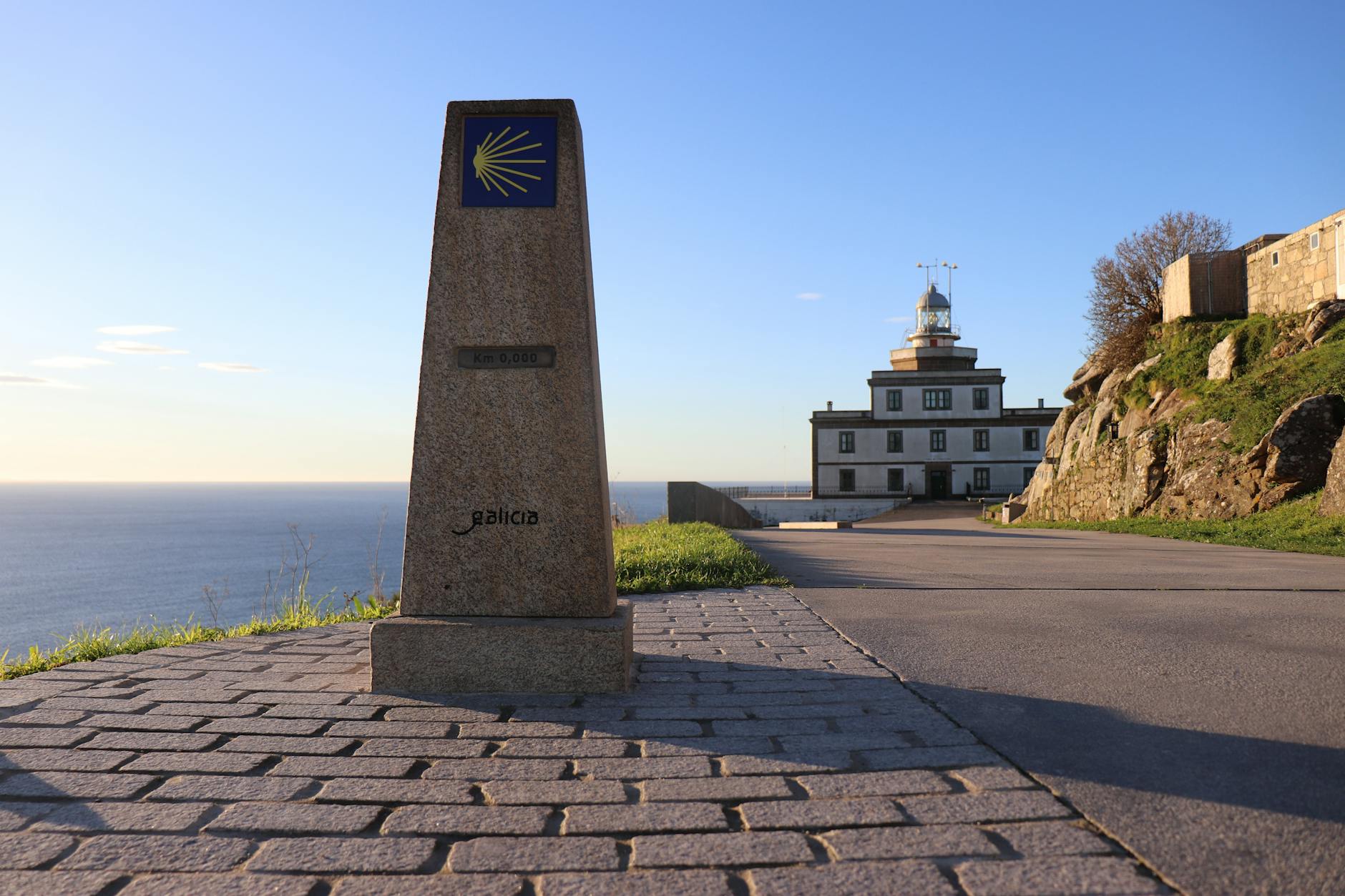
Those thin places find us at unexpected times as God shows up in the moments when we are feeling vulnerable and overwhelmed. Last summer as Duane and I walked the ancient pilgrim route to Santiago de Compostella, I sensed the nearness of God. It wasn’t at the Agro dos Monteiros, the highest elevation on the Camino, where pilgrims fall to their knees as they catch their first glimpse of the cathedral towers in the distance. It wasn’t in the Plaza del Obradoiro in Santiago where we reached our destination and shed our backpacks. It wasn’t the next day when we sat in the pilgrim’s mass and worshipped with travelers from around the world.

My thin place found me on the fourth and hottest day of our journey. The temperature climbed into the eighties, the nineties, and stretched close to 100 degrees. The southern summer sun beat down mercilessly, and our path climbed away from the coast and into the hills. It was brutal as we gulped water and perspired through our clothes. We noticed fellow pilgrims dropping out. I felt old and overheated. It was only our fourth day. We had weeks of walking ahead of us. I began to doubt that I had what it would take to make it all the way to Santiago. At the top of a ridge, we found The Church of St. James de Castelo de Neiva, the oldest church on the Iberian Peninsula dedicated to Saint James. Feeling nauseous and exhausted, I took a seat inside, which was only slightly cooler than outside, while Duane went in search of water. Then, I did what I did a lot on the Camino—I prayed hard.

After a while, I noticed the wall of the church directly to my right. There the plaster had been chipped away and an ancient inscription could be read, carved into the stone. It was left behind by pilgrims almost 1,200 years earlier to mark their resting spot on the Way to Santiago. I thought of all the other travelers who had trod the same path with much greater challenges. They walked without the benefits of clean water, zero-drop trail shoes, cool-max sun shirts, an ambulance to call if they keeled over, or a welcoming B&B waiting ahead. They had suffered, prayed hard, and trusted in their holy purpose. I stopped feeling so hot, old, weak, and sorry for myself. In that moment, I knew I was within time and beyond time, near to God and to all the ancestors who were on the trail with me. It was a thin place.

Jacob’s story reminds us that we don’t have to walk the Camino de Santiago de Compostella or go to other extraordinary lengths in pursuit of God.  Yahweh assured Jacob, “Know that I am with you and will keep you wherever you go.” Jacob would sojourn with his Uncle Laban in Haran for twenty years. He would return to Bethel a paunchy, middle-aged man with two cantankerous wives, two concubines, and thirteen squabbling children. Later, Jacob would spend his final years as a refugee in Egypt, fleeing famine. Throughout his wandering, God was with Jacob. God occasionally showed up in sensational moments of revelation, like that ladder from heaven to earth. But God was mostly there for Jacob in the ordinary and mundane, in the everyday blessings and difficulties of family, home, and belonging.

The thin places that we encounter are like that, the numinous surprises us in the routine. The holy moment finds us as we paddle a canoe or reach a lonely summit. The sacred unfolds in the gathering of family and the celebration of special days. Some Sundays, we feel the Lord is with us as we worship in this sanctuary, with all the saints—present and past. Yet God also shows up amid the dirty dishes and the garden that needs weeding. God is with us when there is ill-will in the marriage, the children won’t mind, and the workplace is stressful. God shows up amid our cries for peace and voting rights and racial justice.  God is with us to keep us. We learned that lesson, once and for all, when an angel of the Lord descended Jacob’s Ladder to seek out a poor Galilean carpenter named Joseph and told him that Mary’s boychild would be Emmanuel, which means God with us. 

We may never see Jacob’s Ladder or make the trek to Iona Abbey. We may never be a pilgrim circumnavigating Mount Karlash in Tibet or catch a glimpse of Avalon and the holy grail at Glastonbury Tor. We might never become a seeker in Sedona. But take heart, my friends. Everywhere and everywhen may be a thin place. God’s promise to Jacob remains God’s promise to us. “Know that I am with you, I will keep you wherever you go.”

Resources

Valerie Bridgeman. “Commentary on Gen. 28:10-19a” in Preaching This Week, July 23, 2023. Accessed online at https://www.workingpreacher.org/commentaries/revised-common-lectionary/ordinary-16/commentary-on-genesis-2810-19a-6

Esther Menn. “Commentary on Gen. 28:10-19a” in Preaching This Week, July 19, 2020. Accessed online at https://www.workingpreacher.org/commentaries/revised-common-lectionary/ordinary-16/commentary-on-genesis-2810-19a

Kathryn Schifferdecker. “Commentary on Gen. 28:10-19a” in Preaching This Week, July 23, 2017. Accessed online at https://www.workingpreacher.org/commentaries/revised-common-lectionary/ordinary-16/commentary-on-genesis-2810-19a-4

Carrie J. Knowles. “Thin Places: Where the Veil between This World and Another Is Thin” in Psychology Today, Aug. 25, 2022.

Philip James Tabb. “Beyond the Ordinary: Thin Places” in Biophilic Cities, April 2025.


Genesis 28:10-19a

10 Jacob left Beer-sheba and went toward Haran. 11 He came to a certain place and stayed there for the night, because the sun had set. Taking one of the stones of the place, he put it under his head and lay down in that place. 12 And he dreamed that there was a stairway set up on the earth, the top of it reaching to heaven, and the angels of God were ascending and descending on it. 13 And the Lord stood beside him and said, “I am the Lord, the God of Abraham your father and the God of Isaac; the land on which you lie I will give to you and to your offspring, 14 and your offspring shall be like the dust of the earth, and you shall spread abroad to the west and to the east and to the north and to the south, and all the families of the earth shall be blessed in you and in your offspring. 15 Know that I am with you and will keep you wherever you go and will bring you back to this land, for I will not leave you until I have done what I have promised you.” 16 Then Jacob woke from his sleep and said, “Surely the Lord is in this place—and I did not know it!” 17 And he was afraid and said, “How awesome is this place! This is none other than the house of God, and this is the gate of heaven.” 18 So Jacob rose early in the morning, and he took the stone that he had put under his head and set it up for a pillar and poured oil on the top of it. 19 He called that place Bethel.
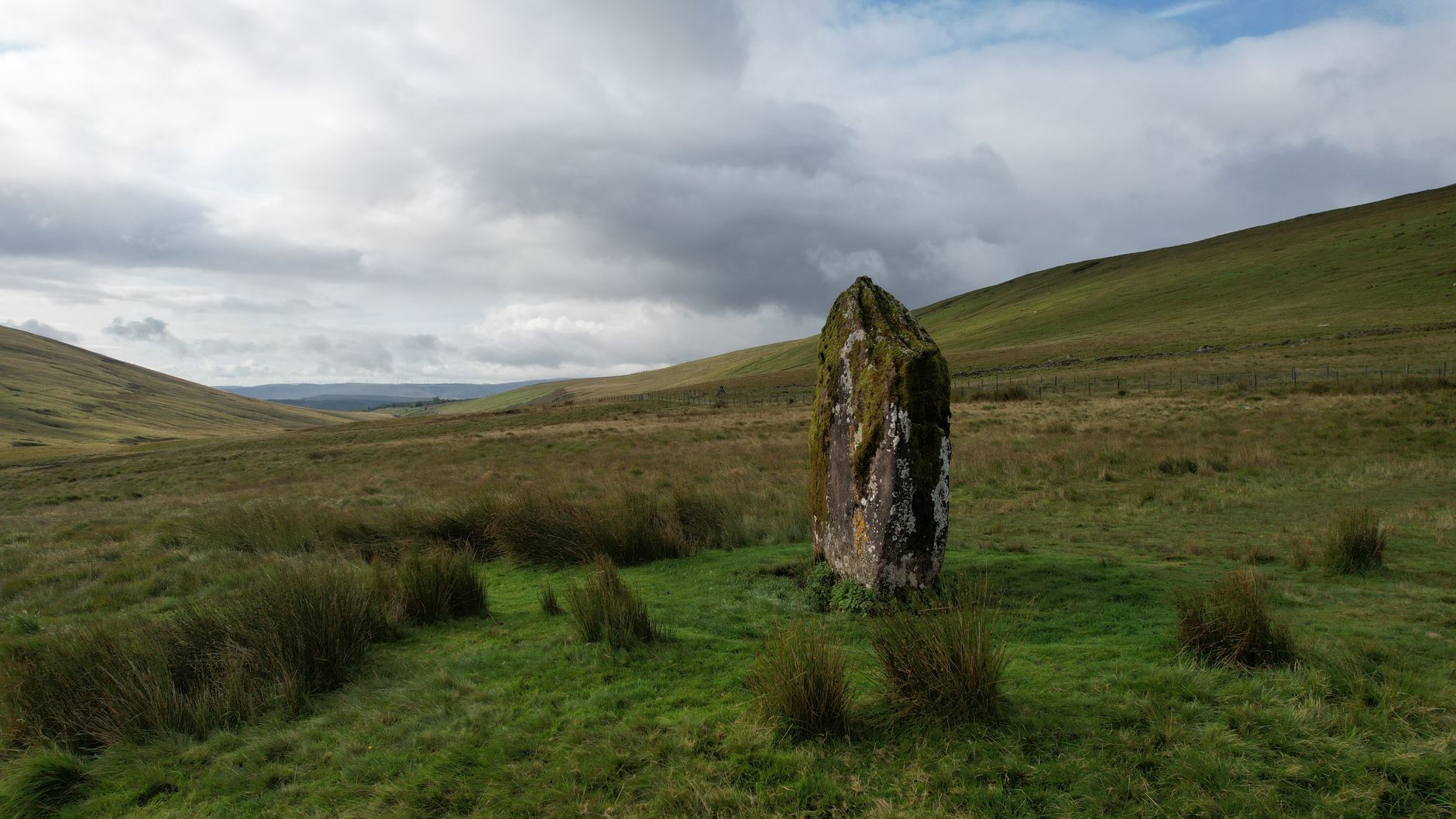

Photo by Dave Cox on Pexels.com

The Great Cloud of Witnesses

Sabbath Day Thoughts — “The Great Cloud of Witnesses” Hebrews 11:29-12:2

In June, Duane and I traveled to Portugal and Spain to walk the Camino de Santiago. It’s an extended network of medieval pilgrim paths that crisscross the European countryside, all leading to the burial site of the Apostle James, the son of Zebedee. Our Camino journey would take us over 230 miles of trail from Porto, Portugal’s second largest city, to Santiago, and then on to the coast to Finisterre.

There were companions on our journey. About 75,000 people from all around the world will walk the coastal Camino from Portugal this year. They walk for many reasons. Some are expressing religious devotion. Others are in search of spiritual insight or self-knowledge. Some just want a good workout. One of the first pilgrims I met while walking was Karen, a Lutheran from Sweden. Karen narrowly escaped an aortic dissection when an x-ray for a persistent cough revealed a big bubble on the major artery near her heart. Her emergency surgery and journey to healing made her realize she wanted to walk the Camino. Less than two years out from my own experience of breast cancer, we connected with a shared sense of gratitude for restored health. The tough miles flew by as we talked, shared, and laughed together.

The Letter to the Hebrews was written for early Christians who were struggling in their journey of faith. They had made a good start on their pilgrim path. Enlightened by the gospel of Jesus Christ, the Hebrews had been filled with the Holy Spirit. They forged a caring community, loving and serving one another. But weariness, suspicion, and persecution, had challenged their faith. Neighbors who had once been friends now shunned them. Local authorities threatened them with prison. Even the emperor had begun to target them as enemies of Rome. Beset by adversity, the faith of the Hebrews was beginning to flag and fail. They questioned if the suffering was worth it, or if they could persevere through adversity. Some were neglecting to meet together.

We, too, can grow weary on the journey. Our chronic health issues wear us down and dim our hopes. Family troubles ramp up our worries and anxiety. Grief at the loss of loved ones feels like we are sojourning in the dark. Vitriol and chaos in American politics has us fearing for the future of our nation. As bombs fall in Ukraine and food aid is dangerously slow to relieve Gaza, man’s inhumanity to man tears our heartstrings and troubles our spirits. We know how it feels to be weary and overwhelmed. We know how it feels to struggle to find hope. We know how easy it is to become paralyzed, held fast by concerns that overwhelm us and in a quandary about what to do in response to circumstances that feel beyond our control.

The author of the Letter to the Hebrews reminded his friends that others had trod the pilgrim path before them. In seeking a good life with God, their ancestors had experienced trouble and hardship along the way. The Israelites had been only one step ahead of the Egyptian army as they ran for it thought the Red Sea. Gideon, Samson, Jephthah, and David had all fought impossible battles against better equipped enemies to defend their people. The Hebrew prophets may have had a holy hotline to God, but they were roundly persecuted and martyred. Somehow, those ancestors had found the temerity to persevere in faith, trusting that they were following the will of God and would one day fully know God.

Our journeys can be hard. The Camino was hard. I had trained and thought I was ready for the challenge. My trail walks and Adirondack hikes felt like the perfect preparation, but nothing really prepares you for the long miles, day after day, week after week. There were blisters for me and heel pain for Duane. There were temperatures soaring well into the 90s and a sun so intense that it burned me through my clothes. Washed out trails sometimes meant we had to walk on busy roads. Bathrooms were few and far between. Sometimes trail markers were missing or just plain wrong. It helped on our Camino journey to remember those who had gone before us. After all, pilgrims had been walking those paths for more than 1,200 years. They didn’t have the advantage of Adirondack training, zero-drop trail shoes, or Gregory packs. If they could do it, I could do it.

On the Camino, hardship is also faced as pilgrims support one another. My Swedish companion Karen and I met Suzie. A stewardess from Idaho, Suzie was about to turn 50 and had decided to celebrate her big birthday by walking the Camino. She looked great in her brand-new matching gear, clothes, and pack, but when we wished her a Buen Camino, we could see she was near tears. We stopped to listen: her knee hurt, her pack was painful, she didn’t have a place to stay that night, and she had gotten lost the day before and a farmer had needed to give her a ride for miles back to the trail. Soon, we were adjusting Suzie’s pack, sharing blister plasters, and commiserating about the journey. That night, another friend we met along the way, Laura from Texas, shared her lodging with Suzie—and Laura continued to do so all the way to Santiago.

We, too, have encountered those who make our way easier. Healthcare providers take a special interest in our recovery. Caring friends compassionately listen to our family woes and offer words of wisdom. Companions for the journey show up when we feel like we are walking though the Valley of the Shadow of Death. Level-headed leaders remind us of our nation’s founding principles and call us to be a better people, a better nation, a better world. We find encouragement for the journey as we attend to that great cloud of witnesses who have lived in faith and call us onward to the better path and the brighter kingdom.

The closing scene of our reading from Hebrews is borrowed from the first century athletic arena: a marathon race nears its end as competitors turn into a stadium for a final lap. An overflowing crowd cheers them on. Waiting to welcome them at the finish line is the glorified Jesus, now revealed in holy splendor. He has gone on before through sorrow, unimaginable suffering, and even death—and he is the victor. The Hebrews were reminded that they could run this race in faith because they were surrounded by that great cloud of cheering witnesses. Jesus had gone ahead of them and waited to welcome them to his Kingdom where sorrow and suffering and sighing would be transformed to never ending joy.

On the second day of our Camino journey, when the realization sank in that this would not be a cake walk, I remembered a word of advice from the spiritual reading that I had done in preparation for the journey. Traditionally, pilgrims have coped with their physical suffering by praying for others, sometimes even carrying a stone or a token that represents the burden of the other. As you walk the Camino, you can see impromptu trailside shrines, piles of stones, tokens, notes, and photos where pilgrims have left behind the burden they are carrying for another. As I posted to Facebook and Instagram that evening, I sent out a plea to the Metaverse—send me your special prayer requests.

In they came, from this church and from other churches that I have served, from friends and family, from the community. There were prayers for personal struggles, for health concerns, for beloved ones going through tough times, for the nation, and more. Each morning, as I set my feet on the pilgrim path, I began to pray. My silent prayers found the rhythm of my breath and unfurled into the beauty of the Galician countryside. As the miles unraveled, I found that I hurt a lot less, I felt more at peace, and there was joy. I began to see that I was surrounded by a great cloud of witnesses. It wasn’t just those who were pilgrims around me and those who had walked the Camino before me over the eons. It was also those who had coveted my prayers, and all the people they had asked me to intercede for—and all the people who I knew were praying for me. We were all in it together. Best of all, Jesus was on the pilgrim path, Jesus who always walks this pilgrim journey with us.

May we follow in the footsteps of the Hebrews. Persist in the faith, my friends. Rise above weariness, hardship, and suffering. Draw strength from that great cloud of witnesses. Be confident in the meaning, purpose, and salvation that we have found in the Lord.

May we also know that we have a part to play in the faithful journeys of others. Indeed, we are part of that great cloud of witnesses, for we are all made one in Christ, our pioneer, our protector, our trailblazer. We are called to help and pray, to show up and cheer on, to point the way and keep the faith. We can make a difference in the lives of those who feel the journey is long, the way is dark, and there is no end in sight. Let’s open our eyes to those who need our witness. Let’s open our hearts and hands to make a caring difference. They say the journey of a thousand miles begins with one step. Let’s step out in faith. Amen.

Resources:

Madison N. Pierce. “Commentary on Hebrews 11:29-12:1” in Preaching This Week, Aug. 17, 2025. Accessed online at https://www.workingpreacher.org/commentaries/revised-common-lectionary/ordinary-20-3/commentary-on-hebrews-1129-122-6

Mary Foskett. “Commentary on Hebrews 11:29-12:1” in Preaching This Week, Aug. 18, 2019. Accessed online at https://www.workingpreacher.org/commentaries/revised-common-lectionary/ordinary-20-3/commentary-on-hebrews-1129-122-4

Amy L.B. Peeler. “Commentary on Hebrews 11:29-12:1” in Preaching This Week, Aug. 14, 2016. Accessed online at https://www.workingpreacher.org/commentaries/revised-common-lectionary/ordinary-20-3/commentary-on-hebrews-1129-122-2

Erik Heen. “Commentary on Hebrews 11:29-12:1” in Preaching This Week, Aug. 18, 2023. Accessed online at https://www.workingpreacher.org/commentaries/revised-common-lectionary/ordinary-20-3/commentary-on-hebrews-1129-122-3

John Piper. “Running with the Witnesses” in Desiring God, August 17, 1997. Accessed online at desiringGod.org.


Hebrews 11:29-12:2

29 By faith the people passed through the Red Sea as if it were dry land, but when the Egyptians attempted to do so they were drowned. 30 By faith the walls of Jericho fell after they had been encircled for seven days. 31 By faith Rahab the prostitute did not perish with those who were disobedient, because she had received the spies in peace.

32 And what more should I say? For time would fail me to tell of Gideon, Barak, Samson, Jephthah, of David and Samuel and the prophets, 33 who through faith conquered kingdoms, administered justice, obtained promises, shut the mouths of lions, 34 quenched the power of fire, escaped the edge of the sword, were made strong out of weakness, became mighty in war, put foreign armies to flight. 35 Women received their dead by resurrection. Others were tortured, refusing to accept release, in order to obtain a better resurrection. 36 Others suffered mocking and flogging and even chains and imprisonment. 37 They were stoned to death; they were sawn in two; they were killed by the sword; they went about in skins of sheep and goats, destitute, persecuted, tormented— 38 of whom the world was not worthy. They wandered in deserts and mountains and in caves and holes in the ground.

39 Yet all these, though they were commended for their faith, did not receive what was promised, 40 since God had provided something better so that they would not, apart from us, be made perfect.

12 Therefore, since we are surrounded by so great a cloud of witnesses, let us also lay aside every weight and the sin that clings so closely, and let us run with perseverance the race that is set before us, looking to Jesus, the pioneer and perfecter of faith, who for the sake of the joy that was set before him endured the cross, disregarding its shame, and has taken his seat at the right hand of the throne of God.


Photo by Steffen A. Pfeiffer on Pexels.com