Sabbath Day Thoughts — “The Lord Is in This Place” Genesis 28:10-19a
Author, artist, and playwright Carrie Jane Knowles tells the story of a family trip to Brittany in France. Looking for the perfect picnic spot, they headed to a local trailhead. There they encountered an unexpected sign, “You have entered a sacred Druid forest. You are welcome to hike and picnic in silence.” Silence? Everyone was really hungry, so rather than jump back in the car, the family walked in silence, single-file, along a narrow, heavily wooded trail. At the top of a rise, they discovered a “sun-drenched clearing.” In the center, they found an ancient circle of large flat rocks. Silently, parents and children took seats upon the rocks, got out their lunches and ate. Then, they quietly walked back to their car. Later, when they talked about their lunch experience, everyone shared that their time in the clearing was an unforgettable entry to a sacred space, where the wall between heaven and earth had grown thin.
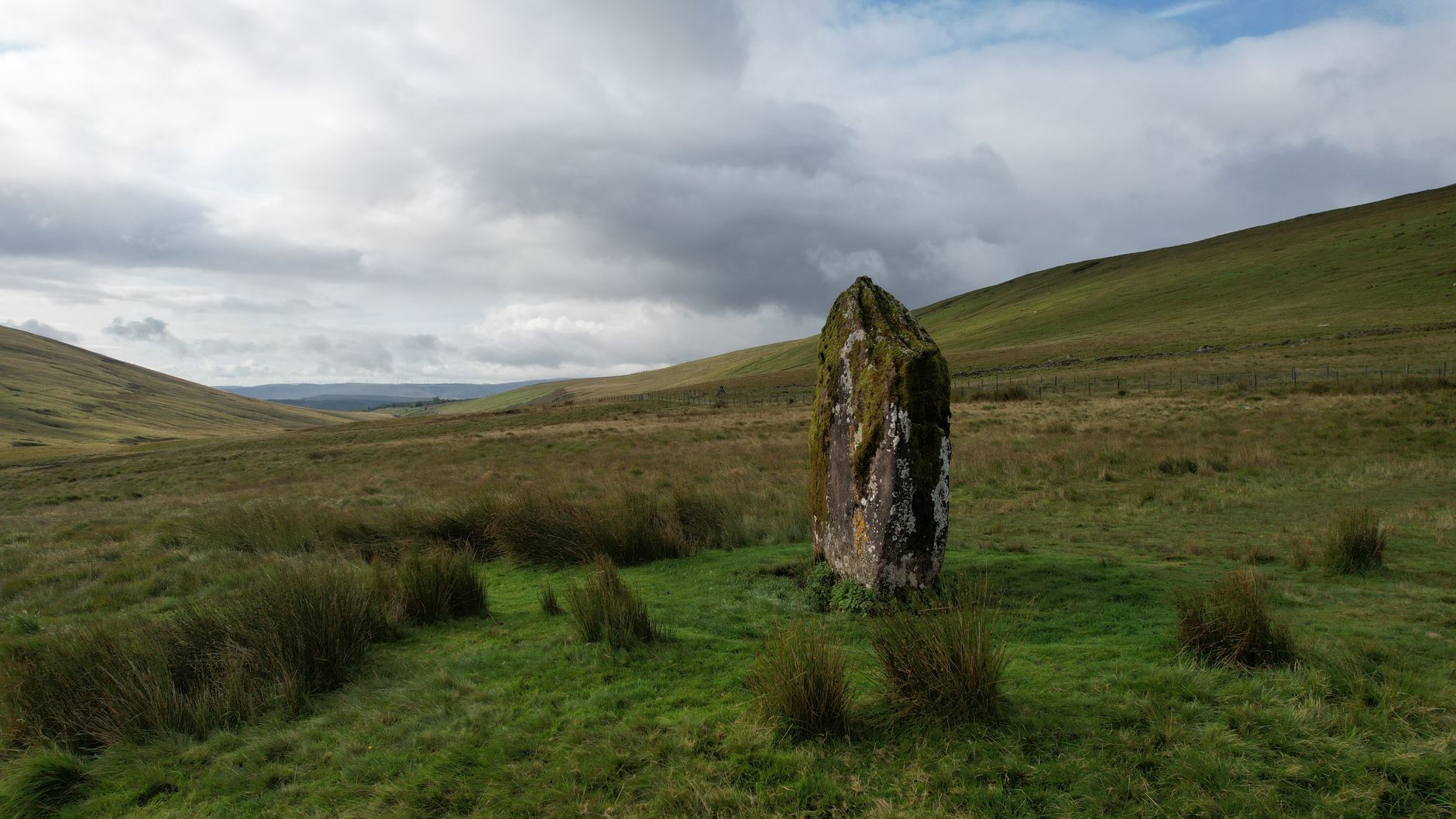
Our Celtic ancestors believed that “heaven and earth are only three feet apart,” and in some special places, the veil grows thinner still. The boundary between the material world and the spiritual realm feels permeable, as if one could almost reach through and touch the eternal. There are dozens of well-known “thin places” around the world. Along the wild Atlantic coast of Scotland on the Isle of Iona, they say the veil is thin where the sea sings the soul. On Mount Karlash in Tibet, Buddhist, Hindu, and Jain pilgrims walk a circular path around what they believe is the holy center of the universe. At Glastonbury Tor in Somerset England, visitors sense a spiritual link to the mystical Isle of Avalon, the location of the holy grail. In Sedona, AZ, seekers claim that the four “vortexes”—Bell Rock, Cathedral Rock, Airport Mesa, and Boynton Canyon—emit a special kind of energy that fosters healing, meditation, and self-exploration. If the veil between heaven and earth does, indeed, grow thin, then it seems that we want to be there.
In our reading from Genesis, Jacob encountered the holy in an unexpectedly thin place as he journeyed almost 300 miles on foot from Beer Sheba to Haran. Bedded down for the night on a lonely hilltop, Jacob dreamed of a ladder stretching from heaven to earth. The ladder was alive with the back-and-forth traffic of holy messengers as they did God’s bidding. Suddenly, Yahweh stood next to Jacob and promised him a beautiful future: land, children, and—through him—a blessing for all the families of the world. Upon waking, the awe-struck Jacob worshiped God, upending his stone pillow to create a spontaneous altar and sanctifying it with oil. He even gave his thin place a holy name—Bethel, House of God.
Perhaps what was most remarkable about Jacob’s midnight encounter with God was how little Jacob seemed to deserve it. Jacob was running for his life. He had first tricked his older twin Esau into selling him the privileged birthright of the firstborn. Then, Jacob had conspired with his mother Rebekkah to deceive his visually-impaired father into conferring upon him the Patriarch’s Blessing. Fearing the righteous, murderous wrath of brother Esau, Jacob fled quickly with little more than the tunic on his back. As Jacob bedded down for night in that deserted place, all his schemes and deceptions had achieved nothing. He was homeless, penniless, and utterly vulnerable. Despite Jacob’s scandalous behavior, God showed up with words of blessing that were sheer, unmerited grace. Jacob, who had no future, became Jacob the father of a nation and a blessing to the world.
Those thin places find us at unexpected times as God shows up in the moments when we are feeling vulnerable and overwhelmed. Last summer as Duane and I walked the ancient pilgrim route to Santiago de Compostella, I sensed the nearness of God. It wasn’t at the Agro dos Monteiros, the highest elevation on the Camino, where pilgrims fall to their knees as they catch their first glimpse of the cathedral towers in the distance. It wasn’t in the Plaza del Obradoiro in Santiago where we reached our destination and shed our backpacks. It wasn’t the next day when we sat in the pilgrim’s mass and worshipped with travelers from around the world.
My thin place found me on the fourth and hottest day of our journey. The temperature climbed into the eighties, the nineties, and stretched close to 100 degrees. The southern summer sun beat down mercilessly, and our path climbed away from the coast and into the hills. It was brutal as we gulped water and perspired through our clothes. We noticed fellow pilgrims dropping out. I felt old and overheated. It was only our fourth day. We had weeks of walking ahead of us. I began to doubt that I had what it would take to make it all the way to Santiago. At the top of a ridge, we found The Church of St. James de Castelo de Neiva, the oldest church on the Iberian Peninsula dedicated to Saint James. Feeling nauseous and exhausted, I took a seat inside, which was only slightly cooler than outside, while Duane went in search of water. Then, I did what I did a lot on the Camino—I prayed hard.
After a while, I noticed the wall of the church directly to my right. There the plaster had been chipped away and an ancient inscription could be read, carved into the stone. It was left behind by pilgrims almost 1,200 years earlier to mark their resting spot on the Way to Santiago. I thought of all the other travelers who had trod the same path with much greater challenges. They walked without the benefits of clean water, zero-drop trail shoes, cool-max sun shirts, an ambulance to call if they keeled over, or a welcoming B&B waiting ahead. They had suffered, prayed hard, and trusted in their holy purpose. I stopped feeling so hot, old, weak, and sorry for myself. In that moment, I knew I was within time and beyond time, near to God and to all the ancestors who were on the trail with me. It was a thin place.
Jacob’s story reminds us that we don’t have to walk the Camino de Santiago de Compostella or go to other extraordinary lengths in pursuit of God. Yahweh assured Jacob, “Know that I am with you and will keep you wherever you go.” Jacob would sojourn with his Uncle Laban in Haran for twenty years. He would return to Bethel a paunchy, middle-aged man with two cantankerous wives, two concubines, and thirteen squabbling children. Later, Jacob would spend his final years as a refugee in Egypt, fleeing famine. Throughout his wandering, God was with Jacob. God occasionally showed up in sensational moments of revelation, like that ladder from heaven to earth. But God was mostly there for Jacob in the ordinary and mundane, in the everyday blessings and difficulties of family, home, and belonging.
The thin places that we encounter are like that, the numinous surprises us in the routine. The holy moment finds us as we paddle a canoe or reach a lonely summit. The sacred unfolds in the gathering of family and the celebration of special days. Some Sundays, we feel the Lord is with us as we worship in this sanctuary, with all the saints—present and past. Yet God also shows up amid the dirty dishes and the garden that needs weeding. God is with us when there is ill-will in the marriage, the children won’t mind, and the workplace is stressful. God shows up amid our cries for peace and voting rights and racial justice. God is with us to keep us. We learned that lesson, once and for all, when an angel of the Lord descended Jacob’s Ladder to seek out a poor Galilean carpenter named Joseph and told him that Mary’s boychild would be Emmanuel, which means God with us.
We may never see Jacob’s Ladder or make the trek to Iona Abbey. We may never be a pilgrim circumnavigating Mount Karlash in Tibet or catch a glimpse of Avalon and the holy grail at Glastonbury Tor. We might never become a seeker in Sedona. But take heart, my friends. Everywhere and everywhen may be a thin place. God’s promise to Jacob remains God’s promise to us. “Know that I am with you, I will keep you wherever you go.”
Resources
Valerie Bridgeman. “Commentary on Gen. 28:10-19a” in Preaching This Week, July 23, 2023. Accessed online at https://www.workingpreacher.org/commentaries/revised-common-lectionary/ordinary-16/commentary-on-genesis-2810-19a-6
Esther Menn. “Commentary on Gen. 28:10-19a” in Preaching This Week, July 19, 2020. Accessed online at https://www.workingpreacher.org/commentaries/revised-common-lectionary/ordinary-16/commentary-on-genesis-2810-19a
Kathryn Schifferdecker. “Commentary on Gen. 28:10-19a” in Preaching This Week, July 23, 2017. Accessed online at https://www.workingpreacher.org/commentaries/revised-common-lectionary/ordinary-16/commentary-on-genesis-2810-19a-4
Carrie J. Knowles. “Thin Places: Where the Veil between This World and Another Is Thin” in Psychology Today, Aug. 25, 2022.
Philip James Tabb. “Beyond the Ordinary: Thin Places” in Biophilic Cities, April 2025.
Genesis 28:10-19a
10 Jacob left Beer-sheba and went toward Haran. 11 He came to a certain place and stayed there for the night, because the sun had set. Taking one of the stones of the place, he put it under his head and lay down in that place. 12 And he dreamed that there was a stairway set up on the earth, the top of it reaching to heaven, and the angels of God were ascending and descending on it. 13 And the Lord stood beside him and said, “I am the Lord, the God of Abraham your father and the God of Isaac; the land on which you lie I will give to you and to your offspring, 14 and your offspring shall be like the dust of the earth, and you shall spread abroad to the west and to the east and to the north and to the south, and all the families of the earth shall be blessed in you and in your offspring. 15 Know that I am with you and will keep you wherever you go and will bring you back to this land, for I will not leave you until I have done what I have promised you.” 16 Then Jacob woke from his sleep and said, “Surely the Lord is in this place—and I did not know it!” 17 And he was afraid and said, “How awesome is this place! This is none other than the house of God, and this is the gate of heaven.” 18 So Jacob rose early in the morning, and he took the stone that he had put under his head and set it up for a pillar and poured oil on the top of it. 19 He called that place Bethel.