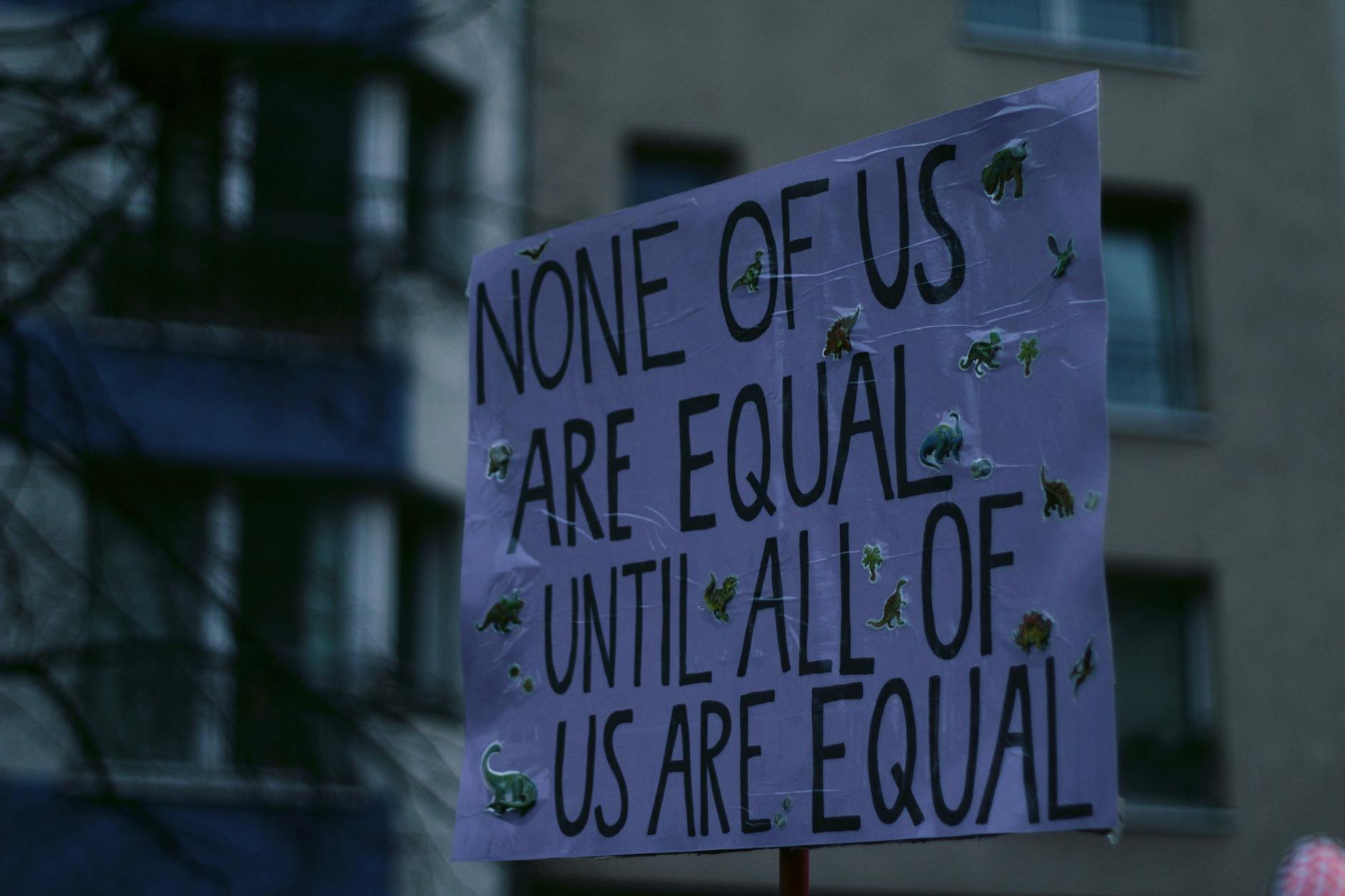
God Who Hears

Sabbath Day Thoughts — “God Who Hears” Genesis 21:8-21

Children are crying.

Children are crying in Malawi this morning. One of the least developed nations in the world, more than 70% of Malawi’s people live in poverty. 69% of Malawians have access to clean water, thanks to initiatives like the shallow well program, but the country lags woefully behind in sanitation. Only 26% of Malawians have access to essential sanitation, like toilets and sewers. Only 9% have access to resources for basic hygiene, like running water, showers, or baths.

For many children, food scarcity means chronic hunger. 37% of Malawi’s children experience stunting—they don’t receive sufficient nutrition for the development of their bodies and brains. Malnutrition affects health. 40,000 of Malawi’s children under five die each year from preventable and treatable diseases. 39% of Malawi’s children, some as young as 5-years-old, work to help provide for their families. Economic pressure means that children are pushed into early marriages. About half of all girls are married before their 18th birthday. That may explain why Malawi’s premature births and maternal deaths are among the highest in the world.

Children are crying.

Children are crying in our nation this morning. 10.35 million of America’s children live in poverty—that’s 14.3% of our children. Even more children—14.1 million—live in families that contend with food insecurity—not enough monthly income to ensure that nutritious food is consistently on the table. They depend on local food pantries and school lunch programs. Those numbers are worse here in the North Country. 20.1% of Franklin County’s children—that’s one in five kids—live in poverty.

Poverty detrimentally shapes the future of our children. They do not receive adequate medical care and have poorer health outcomes that will affect their well-being for a lifetime. 70% of fourth graders who live in poverty are unable to read at their grade level. 73% of eighth graders who live in poverty are not proficient in math. They are significantly less likely to graduate from high school. As adults, they will earn less money than their prosperous peers, perpetuating a cycle of generational poverty.

Mothers living in poverty in America often describe their struggle as a constant, invisible battle that shapes their children’s lives. In the documentary Born Poor, one mother told her 10-year-old daughter, “When we can’t afford to pay our bills, like, our house bills and stuff, I’m afraid, like, we’ll get homeless… You never know what’ll happen in your life.” Children living in poverty often know exactly when bills are due or when food is scarce. They describe “always worrying” about whether the electricity will get cut off or if there will be enough dinner. They feel embarrassed and hide their living situation from peers. They miss out on typical childhood experiences—sports, camps, and family vacations.

Ishmael was crying.

In our reading from Genesis 21, God heard the cry of young Ishmael. Just the day before, the child was celebrating the weaning of his little brother Isaac. As the firstborn son by Abraham’s lesser wife Hagar, Ishmael was his father’s heir, destined to inherit a double-share of property, possessions, and blessing. But as the family rejoiced and the boys played, Sarah, Abraham’s first wife, watched Ishmael and Isaac laughing together. One boy was already strong and bold; the other boy was just taking his first steps toward independence. As Sarah watched, jealousy like a dark beast rose within her heart. God’s promise didn’t seem big enough for both children. Why should her child Isaac, the child long-promised by God, share with the child of her maidservant Hagar? Sarah asserted her authority as first wife. Hagar and Ishmael had to go.

Scripture tells us that Abraham found the matter—this banishment and disowning of Ishmael and Hagar—“very distressing” (v. 11). A closer reading of the Hebrew here suggests that Abraham found Sarah’s ultimatum “very bad” or “morally wrong” in his eyes. Abraham knew that what Sarah asked him to do was not right, yet he did it anyway. He sent Hagar and Ishmael into the Wilderness of Beer-sheba. When the food was gone and the water ran out, Hagar despaired and Ishmael cried.

In a world where Sarah wished to claim God’s blessing for Isaac alone, we learn that God hears the cries of people like Ishmael, like Hagar, people who have been pushed out of the blessing and sent forth to live at the margins. Prof. Carolyn Helsel, who teaches at Austin Presbyterian Seminary, points out that the Hebrew verb used for “hear”—shema—describes a listening that leads to action. God heard Ishmael’s cries and took action in response, making of him a great nation. God hears, God acts, God blesses.

Children are crying.

Do we hear the children crying, my friends? It’s “very distressing,” the cries of Malawi’s children. It’s “very distressing,” the day-to-day circumstances of a country where 70% of people live in poverty, children are stunted, and basic sanitation is a luxury unknown to most households. Tyler Holm and Rochelle Holm have lived in Malawi for 14 years. They first began serving there through short-term mission trips in 2008, but they fell in love with the land and the people. They moved to Malawi permanently at the end of 2012 as Presbyterian Mission Co-workers, serving at Mzuzu University and the Church of Central Africa Presbyterian (CCAP). The next year, they adopted their daughter Mphatso, one of Malawi’s orphans. Tyler teaches at the University of Livingstonia and Rochelle manages the Centre of Excellence in Water and Sanitation at Mzuzu University. The Holms are deeply committed to making a helping and healing difference in Malawi through education and improved sanitation. They hear the cries of Malawi’s children and believe that God provides enough blessing for all people, even the vulnerable children of Malawi. Our Father’s Day offering today will support their life-changing work.

Children are crying.

It’s “very distressing,” you might say morally wrong, that in this nation of amazing bounty more than ten million of our children live in poverty. It’s “very distressing” that right here in Franklin County 20% of our kids face the everyday worry, fear, and shame that come from growing up in homes with more month than money. If we are feeling the pinch at the gas pump and the grocery checkout, imagine how families that were already struggling feel. Our friends in the Community Schools program report that the number of Petrova kids who participate in the weekly backpack program (taking home food to help on the weekends when they don’t have school lunches) has soared this school year from 49 households in the fall to 89 as the school year ends.

Can we hear the children crying? Can we believe that in this land of goodness, God’s blessing is for all children, even the Ishmael’s, even our neighbors who live in poverty? Or will we insist that there isn’t enough blessing to go around and some are meant to wander in the wilderness?

I know we believe that God’s blessing is for all. That’s why we set aside two-cents-a-meal for the Food Pantry, and we have made a beautiful home for the pantry, right here at church. That’s why we grow those healthy, organic vegetables at the Jubilee Garden and host a free farm stand in the churchyard. That’s why Coral keeps the little food pantry in Bloomingdale well-stocked. That’s why we cook for the Community lunchbox, play music at the Wednesday supper, and deliver meals for Meals on Wheels.

One of the surprising learnings of the pandemic is that we can end childhood poverty in this country—if we want to. The expansion of the Child Tax Credit in 2021 dropped the national childhood poverty rate to 5.2% and lifted millions of children out of poverty. When the credit expired, childhood poverty returned to pre-pandemic levels with growing food insecurity, housing instability, and limited healthcare. We have the wherewithal to level the playing field and change the experience of our impoverished children, but we do not have the national will.

Children are crying.

Jesus who welcomes and blesses the children, God who hears the cries of Ishmael, the Lord who continues to listen and act on behalf of those who are cast out might tell us that our complacency with child poverty is “greatly distressing.” God might even say it is morally wrong. God still listens for the voices of children who bear the burden of want and need, and God calls us to stand with them. There is plenty of love and blessing to go around, my friends. Will we hear, will we act, will we bless?

Resources

American Psychological Association. “Mental health effects of poverty, hunger, and homelessness on children and teens,” May 2024. Accessed online at https://www.apa.org/topics/socioeconomic-status/poverty-hunger-homelessness-children

“Child Poverty Statistics in US 2026 | Rates, States & Facts,” The World Data, April 28, 2026. Accessed online at https://theworlddata.com/child-poverty-statistics-in-us/

US Census Bureau. Small Area Income and Poverty Estimates, Accessed online at https://fred.stlouisfed.org/series/PPU18NY36033A156NCEN

Unicef. “The situation of children and women in Malawi.” Accessed online at  https://www.unicef.org/malawi/situation-children-and-women-malawi

Amanda Benckhuysen. “Commentary on Genesis 21:8-21” in Preaching This Week, June 21, 2020. Accessed online at https://www.workingpreacher.org/commentaries/revised-common-lectionary/ordinary-12/commentary-on-genesis-218-21

Carolyn B. Helsel. “Commentary on Genesis 21:8-21” in Preaching This Week, June 25, 2023. Accessed online at https://www.workingpreacher.org/commentaries/revised-common-lectionary/ordinary-12/commentary-on-genesis-218-21-5

Vanessa Lovelace, “Commentary on Genesis 21:8-21” in Preaching This Week, June 21, 2026. Accessed online at https://www.workingpreacher.org/commentaries/revised-common-lectionary/ordinary-12/commentary-on-genesis-218-21-6


Genesis 21:8-21

The child grew and was weaned, and Abraham made a great feast on the day that Isaac was weaned. But Sarah saw the son of Hagar the Egyptian, whom she had borne to Abraham, playing with her son Isaac. 10 So she said to Abraham, “Cast out this slave woman with her son, for the son of this slave woman shall not inherit along with my son Isaac.” 11 The matter was very distressing to Abraham on account of his son. 12 But God said to Abraham, “Do not be distressed because of the boy and because of your slave woman; whatever Sarah says to you, do as she tells you, for it is through Isaac that offspring shall be named for you. 13 As for the son of the slave woman, I will make a nation of him also, because he is your offspring.” 14 So Abraham rose early in the morning and took bread and a skin of water and gave it to Hagar, putting it on her shoulder, along with the child, and sent her away. And she departed and wandered about in the wilderness of Beer-sheba.

15 When the water in the skin was gone, she cast the child under one of the bushes. 16 Then she went and sat down opposite him a good way off, about the distance of a bowshot, for she said, “Do not let me look on the death of the child.” And as she sat opposite him, she lifted up her voice and wept. 17 And God heard the voice of the boy, and the angel of God called to Hagar from heaven and said to her, “What troubles you, Hagar? Do not be afraid, for God has heard the voice of the boy where he is. 18 Come, lift up the boy and hold him fast with your hand, for I will make a great nation of him.” 19 Then God opened her eyes, and she saw a well of water. She went and filled the skin with water and gave the boy a drink.

20 God was with the boy, and he grew up; he lived in the wilderness and became an expert with the bow. 21 He lived in the wilderness of Paran, and his mother got a wife for him from the land of Egypt.
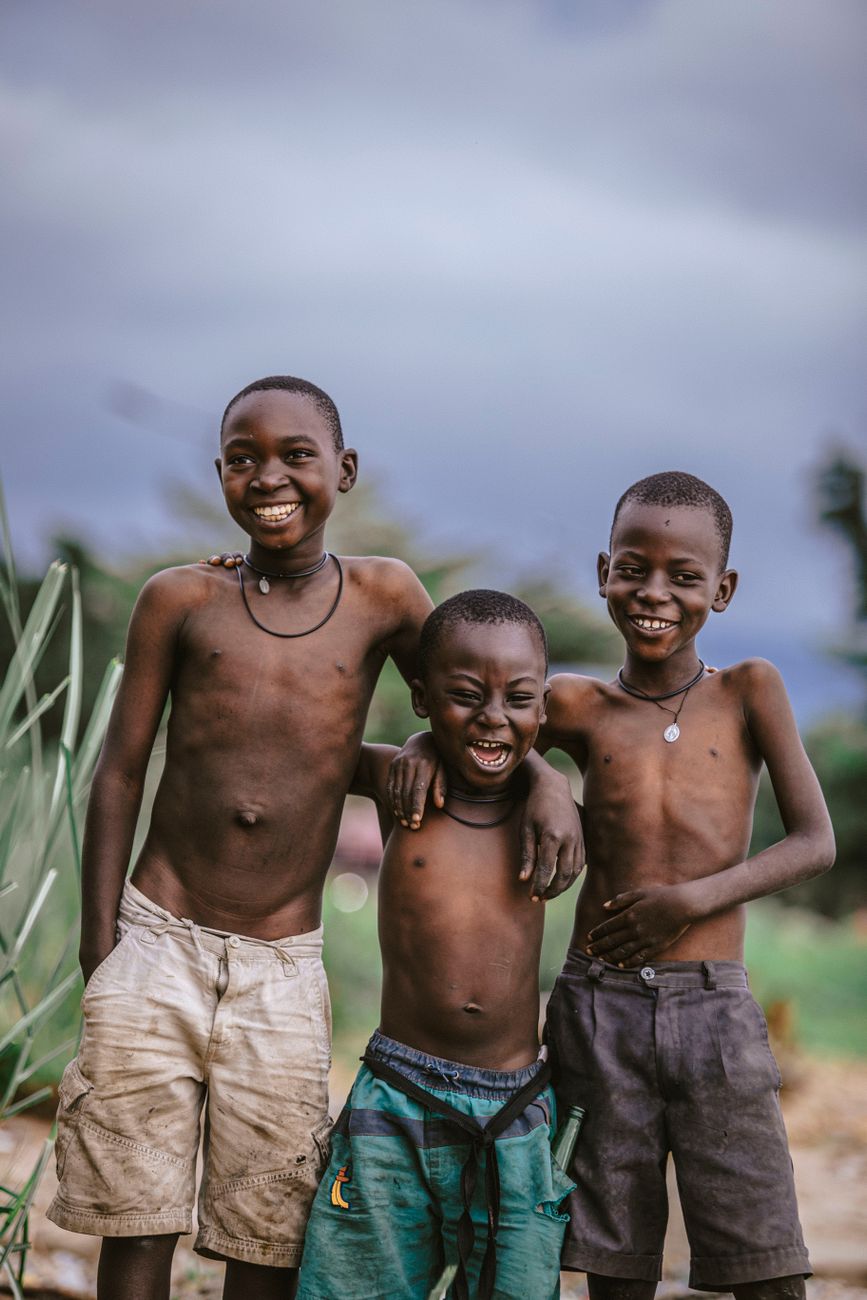
Photo by Safari Consoler on Pexels.com

Repair and Restore

Sabbath Day Thoughts — “Repair and Restore” Isaiah 58:1-12

On December 4, 1967, Martin Luther King was in Atlanta for a press conference. Dr. King had come to Georgia to announce his newest initiative in the pursuit of American social justice, The Poor People’s Campaign. In recent years, his activism had taken him north to tackle the problems of racism and poverty endemic in our cities. He chose to live in solidarity with the poor, moving Coretta and their four children to a tiny walk-up apartment in the Lawndale neighborhood on the West-side of Chicago, a community better known by its local nickname “Slumdale.”  The entryway of the building where the Kings lived was used as a public toilet, and a hastily applied coat of paint couldn’t hide years of neglect that are the hallmark of low income, substandard housing. In Chicago, while peacefully demonstrating with an interracial group in Marquette Park, Dr. King was hit by a stone, hurled by an anonymous hate-filled hand. He had fewer friends in those days. Malcolm X had rejected his non-violent ethic as too soft and slow to wrest change from white oppressors. One-time white political allies, like LBJ, had come to see King’s radical commitment to the poor and his call for economic change as dangerous. When he stepped up to the microphone that night in Ebenezer Baptist Church, Dr. King looked tired and in need of a friend as he called the nation to “the total, direct, and immediate abolition of poverty.”

Dr. King, in his justice work across the United States, had come to understand that the problem of inequality and injustice is not just about race. It’s about economics. Even as visible lines of color were being crossed and overcome, invisible lines of hopelessness and want kept generations of Americans of all races bound in poverty and need. King saw neighbors “locked inside ghettos of material privation and spiritual debilitation” in urban ghettos, in southern shanties, in rural small towns. Everywhere there was a yawning chasm between prosperity’s children and those for whom the American Dream was unfulfilled, whose lives were defined by hunger, low wages, and substandard housing. 

With his Poor People’s Campaign, King resolved to bring Americans together across dividing lines of race to change the plight of the poor. He envisioned a massive, widespread campaign of civil disobedience aimed at the federal government. The poor and disenfranchised of our nation, and those who stood in solidarity with them, would march on Washington, DC, beginning in ten key cities and five rural areas. They would make a cross-country pilgrimage to the very seat of national power.  Once there, poor folk would peacefully demonstrate for economic reform by day and camp out in a massive tent city by night.  They would stay, as a visible witness to the breach in America’s social fabric, until change was enacted and the promise of dignity was made real for all. Dr. King saw this movement as a direct response to God’s challenge to care for poor and vulnerable neighbors. “It must not be just black people,” King told the press in December 1967, “it must be all poor people.  We must include American Indians, Puerto Ricans, Mexicans, and even poor whites.”

The plight of the poor and oppressed is nothing new. In our reading from the Hebrew Bible, God through the prophet Isaiah took Israel to task for their neglect of the poor.  “Is not this the fast that I choose: to loose the bonds of injustice, to undo the thongs of the yoke, to let the oppressed go free, and to break every yoke? Is it not to share your bread with the hungry, and bring the homeless poor into your house; when you see the naked, to cover them, and not to hide yourself from your own kin?”

Isaiah’s bold words were addressed to good church folks, Israelites who had returned from exile in Babylon. God the great liberator, who had long ago freed the people from Pharaoh’s yoke and led them through the Sinai wilderness into a land flowing with milk and honey, God had again been at work to free Israel from captivity. God had raised up Cyrus of Persia to topple the Babylonian empire and release Israel from bondage. A hurting people had crossed desert sands and through the Jordan’s muddy waters, returning home to their Promised Land. There, they began to repair the walls and repave the streets. Their rebuilding efforts were only outmatched by their piety. They worshipped and fasted, in penance and thanksgiving, seeking to be holy as God is holy. 

Yet as God looked at our Israelite ancestors, God saw something terribly wrong with the community. While some in Israel returned from exile to find prosperity and a promising future, others had found only want and privation. God brought liberation to Israel, yet there in the very land meant to be a blessing for all its citizens there was hunger, poverty, and oppression. Children went to bed hungry. Widows had no place to call home. People with disabilities begged in the streets. Despite their fasting and outward signs of piety, the Israelites had missed the point of what it really means to be a faithful people. They could not love God with worship and fasting if they did not love their neighbors, especially their hurting and at-risk neighbors.

Isaiah teaches us that it is only when we choose the fast of righteous living that we can be healed. It is only through care, compassion, and justice that a nation may mend the gaping holes in the fabric of society.  It is only by knowing that our well-being is inseparably bound to the well-being of all our neighbors that we begin to understand God’s vision for our world. As long as Israel endured as a land where want co-existed with plenty, the promise of the land would remain unfulfilled.  Sabbath day piety must be matched by week day action that feeds the hungry, houses the homeless, clothes the naked, and welcomes all God’s children into the bounty of the Promised Land. It is only then that we become repairers of the breach and restorers of the streets to live in. It is only then that our light shines.

58 years after Dr. King’s insistence that the breach in American society be healed, the chasm between rich and poor gapes wider than ever in our nation.  Nowhere is that more apparent than right here in the North Country where multi-million-dollar camps coexist with rusted out trailers, dirt-floored cabins, and substandard, tumble-down housing. In Franklin County, 23% of our children and 13% of our seniors live in poverty.  9,870 people in Franklin County live with food insecurity.  That means 9,870 people don’t have the economic resources to put enough food on the table each month to meet their basic nutritional needs. Those numbers do not include the recent cuts to SNAP benefits. Even families who live above the poverty line struggle. 80% of our children are eligible for federal nutrition programs.

We know the two Americas that Dr. King described, and we are challenged today to be repairers of the breach and restorers of the streets to live in. We are needed to stand in solidarity with the poor and oppressed and to share the time, talents, and wealth entrusted to us for the benefit of all God’s children. We may worship God on Sunday, but we also worship God on Monday and Tuesday and Wednesday and more when we reach out to care and make a helping difference in the lives of our at-risk neighbors. We are called to join God’s work of healing and transformation for our community, our nation, and our world.

We will never know how Dr. King’s Poor People’s Campaign would have changed of our nation. One month before the campaign was to be unleashed, five months after that press conference in Atlanta, an assassin’s bullet found Dr. King on the balcony of a Memphis motel, ending his life and cutting the Poor People’s Movement off at the knees.  Under the leadership of King’s old friend Ralph Abernethy, the Southern Christian Leadership Conference orchestrated a Poor People’s demonstration in Washington, DC. A tent city, Resurrection City, sprang up on the green lawn of the Lincoln Memorial. But after 40 days and 40 nights of non-violent direct action against a recalcitrant government, the movement crumbled, and the poor returned to their slums and tumble-down cabins, hopeless, silenced, and rejected. Dr. King’s great second phase in the Civil Rights Movement remained unfulfilled. The gap between rich and poor stood as a seemingly irreparable breach.

But the story doesn’t have to end there. Does it? Help and healing are more needed now than perhaps any time since Dr. King stood at the microphone in the Ebenezer Baptist Church. Over the last three and a half decades, the richest 1% of households in the United States have accumulated almost 1,000 times more wealth than the poorest 20% of Americans, and economic inequality is getting worse at a rapid pace. Our nation needs people of faith that love God and stand in solidarity with those who still wait for a seat at prosperity’s table. Are we with Dr. King? Are you with me? May we go forth to be repairers of the breach and restorers of the streets to live in.

Resources

Jonathan Alther, “King’s Final Years,” in Newsweek, Jan. 9, 2006

Josie Cox. “Income Inequality Is Surging In The U.S., New Oxfam Report Shows” in Forbes, Nov. 3, 2025. Accessed online at https://www.forbes.com/sites/josiecox/2025/11/03/income-inequality-is-surging-in-the-us-new-oxfam-report-shows/

Kevin Thurun, “On the Shoulders of King,” an editorial, in The Other Side, Jan-Feb 2003.

Martin Luther King, Jr.  The Papers of Martin Luther King, Jr., “Press Conference Announcing the Poor People’s Campaign,” Atlanta, GA, Dec. 4, 1967.

Statistics for Franklin County were obtained from Census Reporter and Feeding America online at https://censusreporter.org/profiles/05000US36033-franklin-county-ny/ and https://map.feedingamerica.org/county/2019/overall/new-york/county/franklin

Amy G. Oden. “Commentary on Isaiah 58:1-9a (9b-12)” in Preaching This Week, Feb. 9, 2014. Accessed online at https://www.workingpreacher.org/commentaries/revised-common-lectionary/fifth-sunday-after-epiphany/commentary-on-isaiah-581-9-10-12

Gregory Cuellar. “Commentary on Isaiah 58:1-9a (9b-12)” in Preaching This Week, Feb. 9, 2014. Accessed online at https://www.workingpreacher.org/commentaries/revised-common-lectionary/fifth-sunday-after-epiphany/commentary-on-isaiah-581-9a-9b-12-2


Photo by Flavia Jacquier on Pexels.com

Come as a Child

Sabbath Day Thoughts — “Come as a Child” Mark 9:30-37

Perhaps the only positive outcome of the COVID-19 pandemic was a temporary decrease in the number of American children living in poverty. Federal economic security programs kept 53 million people above the poverty line in both 2020 and 2021. Child tax credits, increased food assistance, the extension of unemployment benefits, and three rounds of stimulus checks drove child poverty down to an all-time low of 5.2%. With the expiration of these programs in 2022, child poverty was again on the rise. According to the Annie E. Casie Foundation, 16% of American children now live in poverty. That’s 11.6 million kids. New York’s child poverty rates are among the worst in the nation. We rank forty-first out of the fifty states.

The likelihood of child poverty is higher here in the North Country. In Franklin County, 21.3% of our children live in poverty. Those numbers are higher for families of color. About 32% of racial ethnic children live below the federal poverty line. The impact of child poverty can last a lifetime. Impoverished families have less access to healthy food and quality medical care. A poverty diet is high in processed foods, fat, and carbohydrates. That’s a recipe for childhood obesity. Children in poverty are more likely to live in substandard housing, experience homelessness, and be exposed to crime and substance abuse in at-risk neighborhoods. Children in poverty have lower readiness when entering school and are more likely to have developmental challenges. Families in poverty live in chronic stress that leaves kids feeling anxious, depressed, and frightened.

When we further consider families who work in low wage jobs that lift them above the federal poverty threshold but don’t pay enough to meet monthly expenses, then we begin to see the enormity of the child poverty crisis. The Ouimette family of AuSable Forks is a case in point. William works for the town of Jay’s highway department and also serves as a volunteer firefighter. Miranda is a stay-at-home mom to their three kids between the ages of 6 and 9. William says, “It’s harder and harder for people just to get by on a job like working for the state or the town or anything now.” The Ouimettes struggle to pay for essential things like car repairs and new items for their kids. They fear they will be priced out of the home where their family has resided for generations.

Child poverty is nothing new. In Jesus’ day, 90% of people lived in poverty with little resource for rising above the circumstance of their birth. Within that impoverished time, children were particularly vulnerable. They were considered the lowest status members of society. Children lacked legal standing and protection as individuals and were instead deemed the property of their fathers. Indeed, children could be sold into slavery to settle a father’s debts. Although children were seen as a gift from God, a safeguard against extreme poverty in old age, children were expected to be unconditionally obedient and subject to the strict discipline of parents. The Book of Proverbs instructs, “Those who spare the rod hate their children, but those who love them are diligent to discipline them.” According to Exodus and Leviticus, the punishment for children who curse their parents or fail to honor them was death – judgment and stoning by the community. In the Gentile world, unwanted newborns were routinely exposed, left out in the open to die—or to be taken in by strangers and raised as slaves or prostitutes.

Given the low standing of children in the disciples’ world, we can imagine the shock that they felt when Jesus placed a child among them as someone to be welcomed and emulated. In today’s gospel reading, Jesus warned his friends of the suffering and death that would await him in Jerusalem. But along the way to Capernaum, instead of discussing better ways to protect Jesus and guard against betrayal, the twelve argued about who among them was the greatest. They compared genealogies and miracles, sermons and bank accounts, patrons and illustrious acquaintances, all in an effort to assert their personal worth. That child that Jesus held in his arms didn’t make any sense. Why would Jesus identify with a child? Why would he expect them to welcome and serve the lowest status person in the room?

Biblical scholar J.D.M. Derrett says that when Jesus scooped the little child up in his arms, Jesus was engaging in a symbolic act. In the Hebrew tradition, receiving or placing someone else’s child on your knee or in your embrace in front of the witnessing community was a rite of adoption.  We see this in the Book of Genesis, when the childless Sarah and Rebecca brought their servant women to their husbands to conceive children, insisting that those children would be born “on their knees” as rightful sons of the patriarchs. If J.D.M. Derrett is right, then Jesus was saying that the most vulnerable of people, like children, especially belong to Jesus. The disciples could not love and honor him without loving and honoring them.

Beyond that simple call to humble service, Jesus was reminding his friends, many of whom had left their families behind to follow him, that he had adopted them. They were his children. As his sons and daughters, they must demonstrate toward him the obedience, honor, and respect that they would a father. The disciples were meant to be brothers and sisters in Jesus’ family, not rivals for greatness. That tender embrace that the child found in Jesus’ arms reflected the love and support that the disciples found in Christ, who welcomed them, not because of their great achievements, but simply because he chose to love them, regardless of their status. In that unconditional love, they would find the courage and inspiration to be servants of all.

As messages go, today’s reading is clear. The “least of these” are deserving of the service and welcome that we would extend to the Lord. When we see vulnerable neighbors, we are to think of Jesus, responding with the sort of compassion and care that were the hallmark of Jesus’ earthly ministry. Beyond that, Jesus would have his followers see that in God’s Kingdom there is no us and them—no low-status children and high-status disciples. Rather, we are all God’s children. The social and psychological constructs that we create to assert our greatness—that separate rich from poor, have from have-nots, first world from third world—those constructs are false dichotomies. We are kin, all children of an infinitely loving God. We belong to one another, just as we belong to God.

If the pandemic taught us anything, it is that we can end childhood poverty. If we can lower the rate of childhood poverty to 5.2% in only two years, imagine what we could do if people really cared, if we had public policy that regarded vulnerable children the way that Jesus embraced that child. There is enough. We just lack the social and political will to make a lasting difference in the lives of families who need it most. We do not believe that every child is deserving of unconditional love and welcome. We pitch a paltry ten percent of our federal budget at programs that address poverty while income inequality in our nation—the gap between rich and poor—grows and grows and grows. Lord, have mercy upon us.

Jesus thinks his disciples can do better. We can do better. He imagines a world where no child lives in poverty. It’s a world where our most vulnerable neighbors are known and held, blessed and helped. It’s a world where disciples realize that true greatness is found not in our professional titles or advanced degrees, not in our big bank accounts or public accolades, not in our athletic prowess or our physical beauty. It’s a world where the greatest of all are servants of all. It’s a world that looks a lot like his Father’s Kingdom. He hopes that we will imagine that world, too. May it be so.

Resources

Danilo Trisi. “Government’s Pandemic Response Turned a Would-Be Poverty Surge into a Record Poverty Decline” in Center on Budget and Policy Priorities Reports, August 29, 2023. Accessed online at Government’s Pandemic Response Turned a Would-Be Poverty Surge Into a Record Poverty Decline | Center on Budget and Policy Priorities (cbpp.org)

Alek LaShomb. “Efforts to Address Child Poverty in New York’s North Country” in WCAX News, June 14, 2024. Accessed online at Efforts to address child poverty in New York’s North Country (wcax.com)

Courtney V. Buggs. “Commentary on Mark 9:30-37” in Preaching This Week, Sept. 22, 2024. Accessed online at Commentary on Mark 9:30-37 – Working Preacher from Luther Seminary

Micah D. Kiel. “Commentary on Mark 9:30-37” in Preaching This Week, Sept. 20, 2015. Accessed online at Commentary on Mark 9:30-37 – Working Preacher from Luther Seminary

C. Clifton Black. “Commentary on Mark 9:30-37” in Preaching This Week, Sept. 19, 2021. Accessed online at Commentary on Mark 9:30-37 – Working Preacher from Luther Seminary

Thomas P. Napoli. “New York Children in Need,” a report of the Office of the NYS Comptroller, May 2024. Accessed online at Report Titl (ny.gov)


Mark 9:30-37

30 They went on from there and passed through Galilee. He did not want anyone to know it, 31 for he was teaching his disciples, saying to them, “The Son of Man is to be betrayed into human hands, and they will kill him, and three days after being killed, he will rise again.” 32 But they did not understand what he was saying and were afraid to ask him. 33 Then they came to Capernaum, and when he was in the house he asked them, “What were you arguing about on the way?” 34 But they were silent, for on the way they had argued with one another who was the greatest. 35 He sat down, called the twelve, and said to them, “Whoever wants to be first must be last of all and servant of all.” 36 Then he took a little child and put it among them, and taking it in his arms he said to them, 37 “Whoever welcomes one such child in my name welcomes me, and whoever welcomes me welcomes not me but the one who sent me.”


Photo by Pixabay on Pexels.com